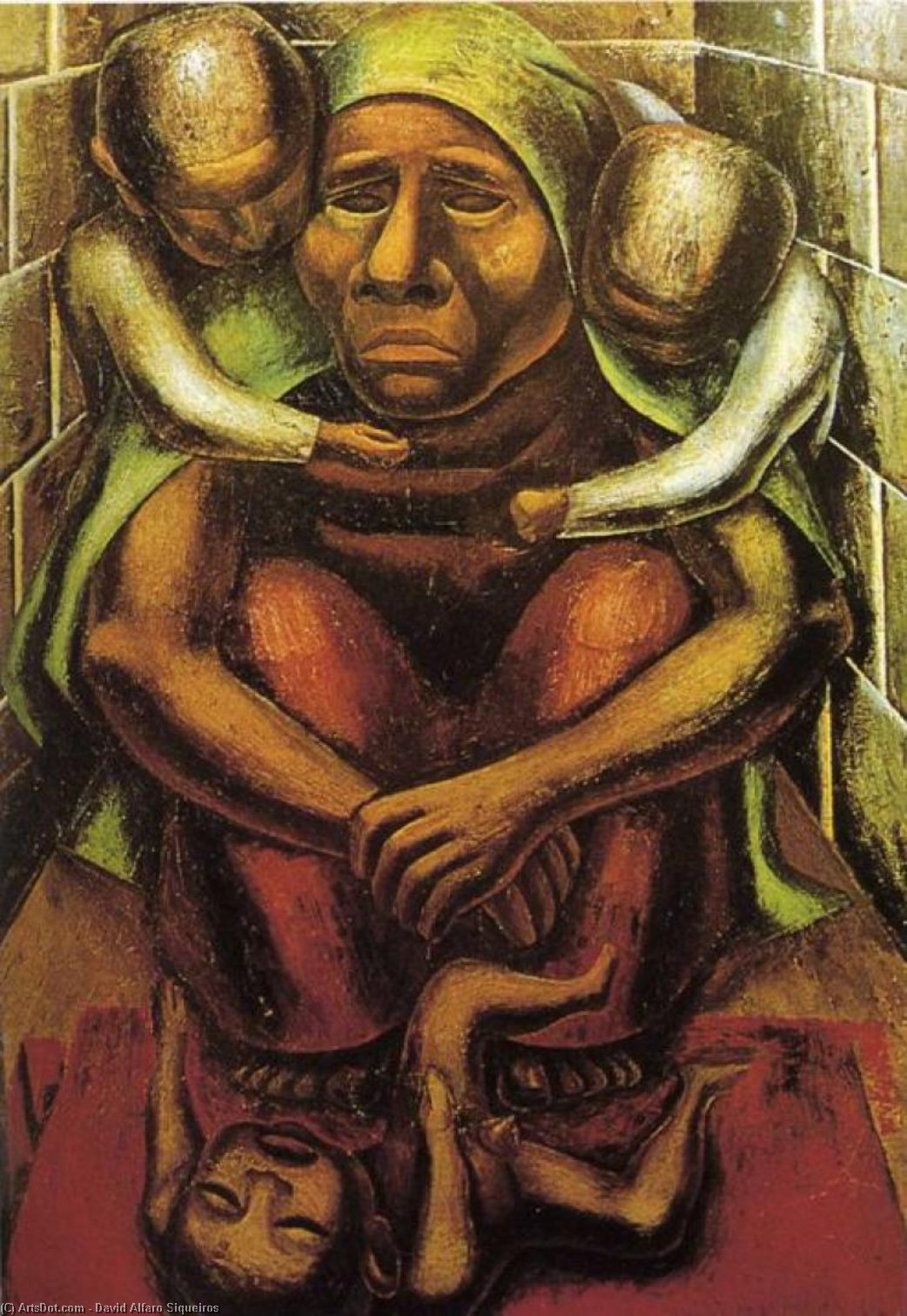
The
Proletarian Mother is a powerful and emotive painting created by the renowned Mexican artist
David Alfaro Siqueiros in 1929. This masterpiece is a prime example of
Expressionism, a style that emphasizes the expression of intense emotions and inner experiences. The painting measures 249 x 180 cm and is executed in
oil on burlap, giving it a unique texture and depth.
Composition and Elements
The painting depicts a woman, symbolizing the
Proletarian Mother, surrounded by her children in a small, brick-walled room. The woman's face is filled with anxiety and worry, reflecting the harsh realities of poverty and struggle faced by the working class. The use of bold colors and distorted forms adds to the emotional intensity of the scene, creating a sense of urgency and desperation.
Key elements of the painting include:
- The woman's green shawl, which represents her cultural heritage and identity
- The children clinging to their mother, symbolizing the vulnerability and dependence of the working class
- The small, cramped room, which highlights the poverty and lack of resources faced by the proletariat
Artistic Significance
The
Proletarian Mother is considered one of the most important works of Mexican art, showcasing Siqueiros's unique style and technique. The painting has been exhibited at various museums, including the
Museo Nacional de Arte, and is widely regarded as a masterpiece of
Expressionist art. For more information on Siqueiros and his works, visit
/art/list/?Filter=8XXSL3-David-Alfaro-Siqueiros-Proletarian-Mother or
https://en.wikipedia.org/wiki/David_Alfaro_Siqueiros.
The
Proletarian Mother is a powerful reminder of the struggles faced by the working class and the importance of social justice. As a masterpiece of
Expressionist art, it continues to inspire and educate audiences around the world, offering a glimpse into the lives of those who have been marginalized and oppressed.