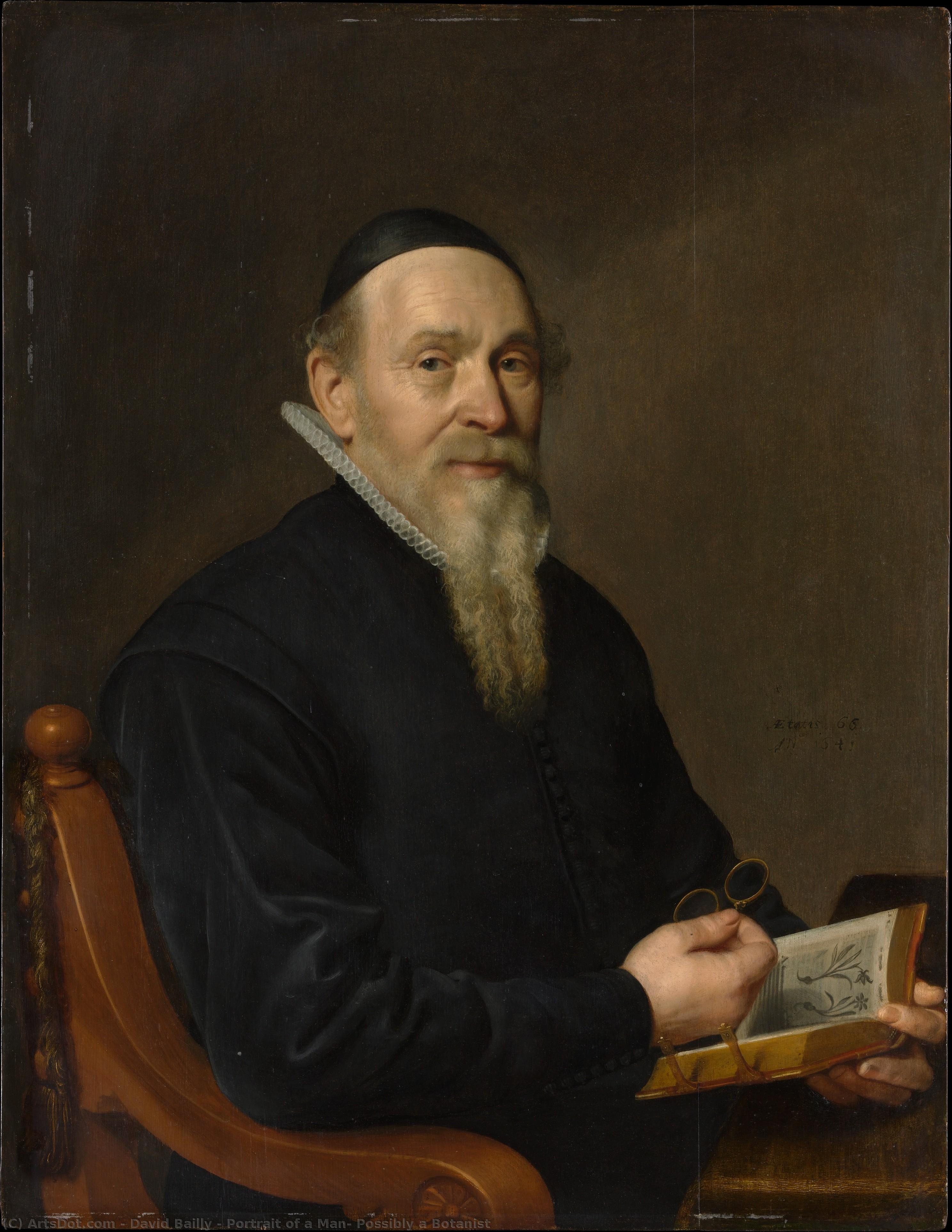
Experience the luminous detail of David Bailly's 1641 Dutch Golden Age portrait, capturing scholarly contemplation with masterful chiaroscuro; discover this timeless piece today.
David Bailly (1584-1657): Dutch Golden Age painter of realistic portraits, still lifes & poignant vanitas works exploring life's transience. Explore his art!
Explore The Metropolitan Museum of Art: 5,000 years of art from around the world! Discover masterpieces, ancient artifacts & immersive exhibitions – a global art destination awaits.
A Window into Leiden’s Golden Age: David Bailly's Portrait of an Uncertain Scholar
This captivating oil painting by David Bailly, created in 1641 during the zenith of Dutch artistic achievement—the Dutch Golden Age—offers a glimpse into the intellectual and aesthetic sensibilities of its time. Attributed to Bailly after recent scholarly research bolstered this claim, it stands alongside two other remarkable portraits executed by the artist: Anthony de Wale and an unnamed professor or pastor, demonstrating Bailly’s consistent mastery of portraiture and his ability to capture nuanced psychological states within meticulously rendered compositions.
Composition and Technique – Precision Meets Observation
The painting depicts a man seated in a chair, holding a book open before him—a deliberate gesture that speaks volumes about the sitter's profession: he is likely a botanist, as evidenced by the inclusion of two detailed depictions of narcissus flowers within the book’s pages. Bailly’s technique showcases remarkable attention to detail; the artist skillfully employs chiaroscuro – dramatic contrasts between light and shadow – to sculpt the man’s face and drapery, creating depth and dimensionality that draws the viewer into the scene. The brushstrokes are smooth yet purposeful, conveying a sense of quiet contemplation and intellectual curiosity. Bailly's masterful handling of pigment contributes significantly to the painting's luminous quality.
Historical Context: Leiden and the Pursuit of Knowledge
Leiden, at the time of Bailly’s creation, was a vibrant center for humanist scholarship and scientific inquiry—a crucible of innovation fueled by patronage from wealthy merchants and nobles. Bailly himself benefited from this intellectual climate through his affiliations with prominent universities and academies, shaping his artistic vision and informing his subject matter choices. The portrait reflects the values of the era: an appreciation for learning, observation, and the pursuit of understanding – themes that resonate powerfully across centuries.
Symbolism Beyond Appearance – Flowers as Vessels of Meaning
The inclusion of narcissus flowers is not merely decorative; it carries symbolic weight within Renaissance iconography. Narcissus represents vanity and introspection—a preoccupation with one’s own beauty and intellect. Bailly subtly communicates these ideas through this visual element, inviting contemplation on the sitter's inner life alongside his outward presentation. The book itself symbolizes knowledge and erudition, reinforcing the botanist’s profession and highlighting the importance of intellectual pursuits during the period.
Emotional Resonance – Tranquility and Dignity Embodied
Ultimately, Bailly’s Portrait of a Man, Possibly a Botanist transcends mere representation; it embodies tranquility and dignity—qualities characteristic of humanist ideals. The man's gaze is direct yet serene, conveying confidence and composure. The painting’s subdued palette enhances this sense of calm, creating an atmosphere that invites viewers to linger on the image and appreciate its understated beauty. It remains a testament to Bailly’s artistic skill and his ability to capture the essence of human intellect within a beautifully crafted artwork.