A Symphony of Steel and Shadow
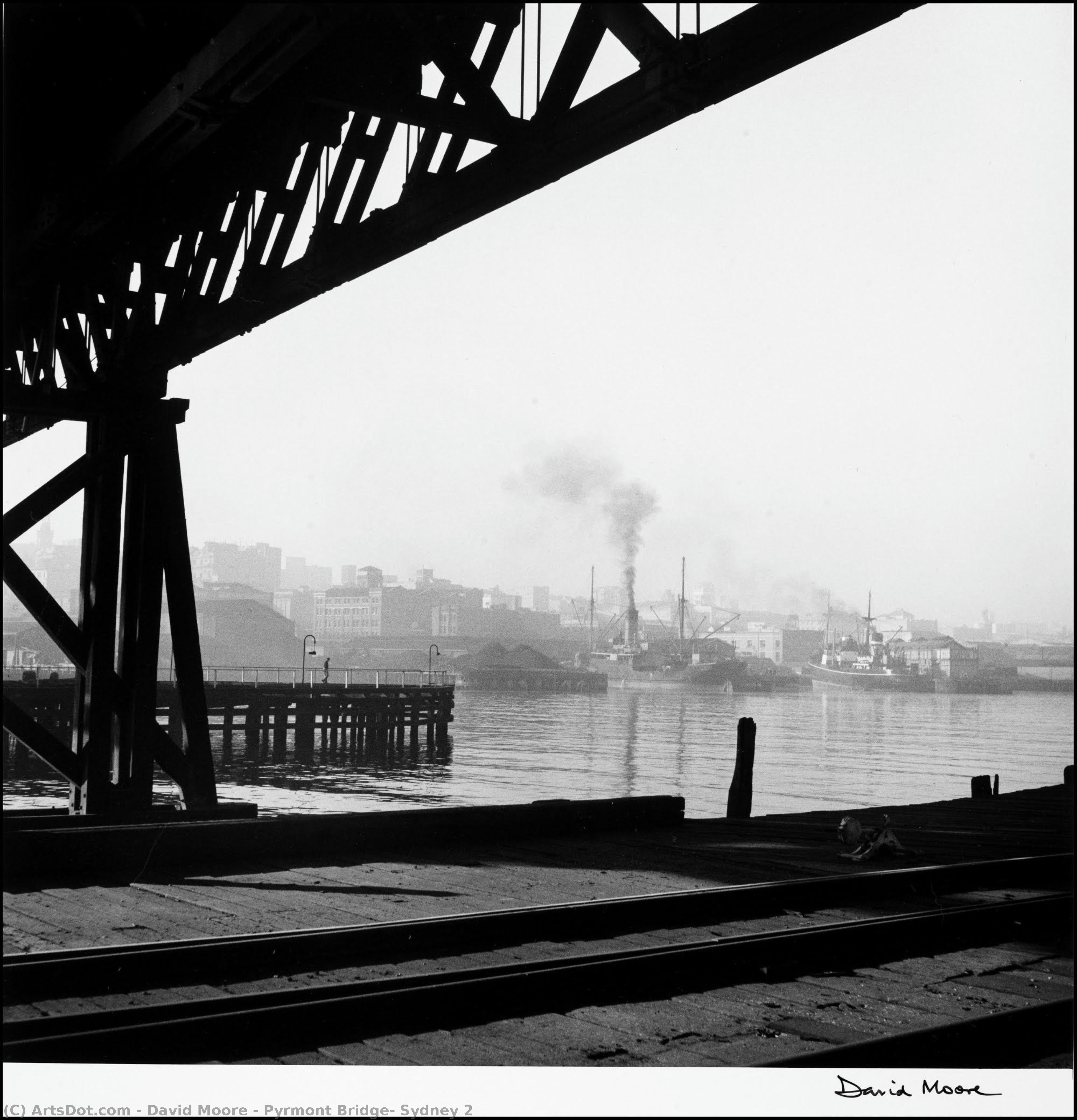
In the quiet, monochromatic depths of David Moore’s “Pyrmont Bridge, Sydney 2,” we find much more than a mere architectural study; we encounter a profound meditation on the soul of a nation. Captured during a period when Sydney was transitioning through its industrial zenith, this photograph serves as a window into an era defined by grit, progress, and the relentless movement of maritime life. The viewer is positioned beneath the imposing weight of the Pyrmont Bridge, looking outward toward the bustling wharves of Darling Harbour. Through Moore’s lens, the heavy, geometric skeleton of the bridge becomes a dramatic gateway, its diagonal lines slicing through an overcast sky to guide the eye toward the hazy promise of the horizon. It is a composition that balances the immense scale of man-made engineering with the soft, atmospheric uncertainty of the Australian elements.
The technical mastery displayed in this silver gelatin print is nothing short of extraordinary. Moore, a titan of Australian photojournalism, utilizes a sophisticated range of tonal values to breathe life into the inanimate. There are no harsh, jarring shadows here; instead, the light is beautifully diffused by a heavy, low-hanging cloud cover, allowing for a subtle gradation of grays that highlight the weathered textures of steel rivets and damp railway tracks. This meticulous control over light and shadow creates a sense of tactile reality—one can almost feel the cold, metallic surface of the bridge and the dampness of the harbor air. The use of strong linear elements, from the horizontal grounding of the tracks to the soaring diagonals of the superstructure, provides a rhythmic structure that lends the image an enduring, classical stability.
The Poetics of Industrial Heritage
Beyond its formal beauty, the photograph carries a deep symbolic resonance that continues to captivate collectors and historians alike. The bridge acts as a metaphor for connection—not just between two shores, but between Australia’s colonial past and its modern aspirations. The industrial landscape, characterized by the interplay of heavy machinery and the fluid movement of water, evokes themes of labor, resilience, and the inevitable passage of time. There is a certain melancholy present in the stillness of the monochrome palette, a quiet reflection on a way of life that has since been transformed by the tides of urban development. For the discerning decorator or art enthusiast, this piece offers a sophisticated anchor for an interior, providing a sense of historical gravity and intellectual depth.
For those seeking to integrate fine art into a contemporary living space, “Pyrmont Bridge, Sydney 2” offers a versatile elegance. Its neutral palette of deep blacks, charcoal grays, and luminous whites allows it to harmonize seamlessly with a variety of design aesthetics, from minimalist modernism to more traditional, textured interiors. As a high-quality reproduction, this work brings the prestige of Australian photographic history into the home, serving as a conversation piece that invites contemplation. It is an invitation to pause, to look beneath the surface of the urban sprawl, and to find beauty in the enduring strength of the structures that define our shared human journey.