A Grand Descent into Victorian Splendor
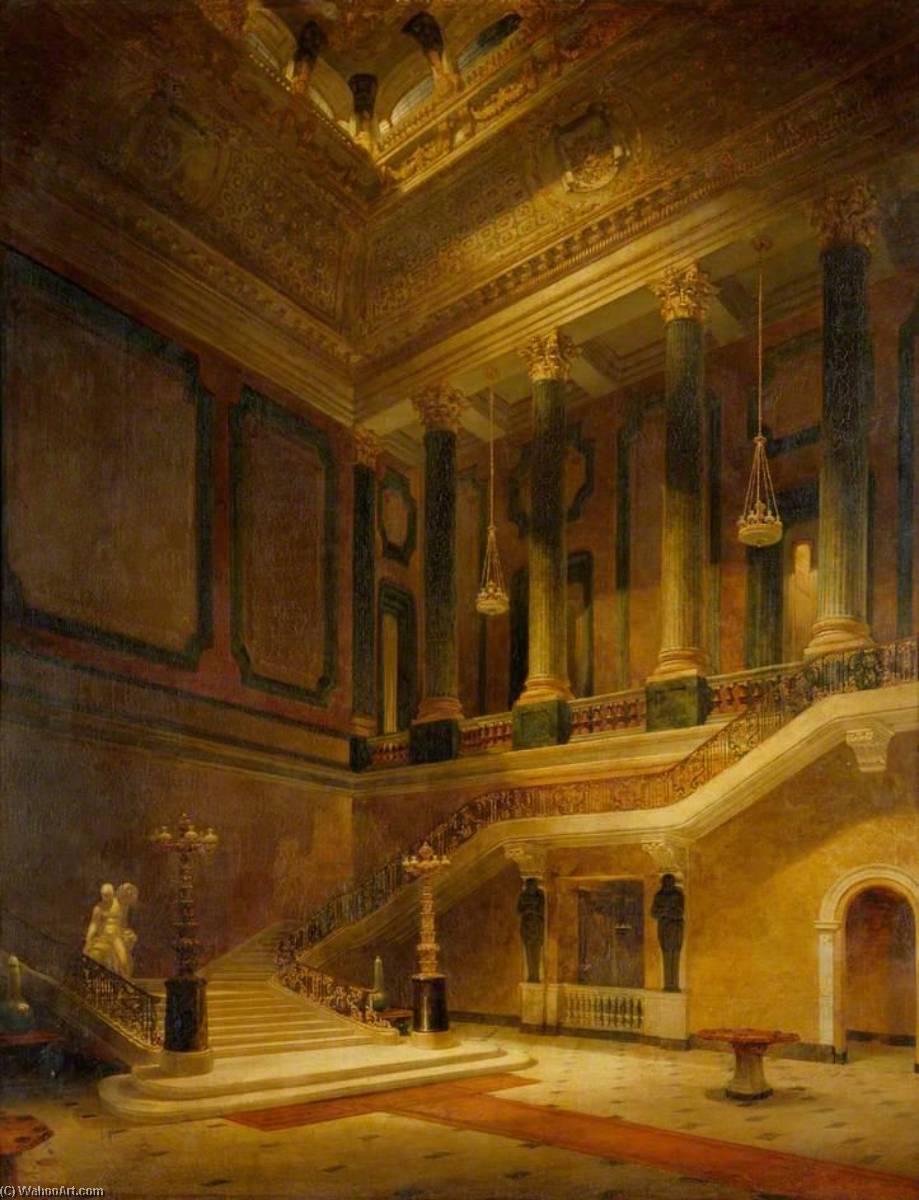
In his 1832 masterpiece, The Great Staircase, Stafford House, David Roberts invites the viewer to step into an era of unparalleled architectural opulence. The painting serves as a breathtaking window into the heart of one of England's most prestigious residences, capturing a moment of stillness within a space designed for spectacle. As your eyes trace the sweeping ascent of the stairs, you are immediately met with the rhythmic elegance of gold trim dancing against deep, regal tones. A lush red carpet runner flows down the steps like a river of velvet, guiding the gaze toward a dining area that promises the refined social rituals of the nineteenth century. Roberts does not merely depict a room; he orchestrates an atmosphere of profound dignity and aristocratic grace.
The composition is masterfully balanced by the presence of light and shadow, anchored by two magnificent chandeliers that hang like frozen constellations from the ceiling. One illuminates the upper reaches of the staircase, while another glows softly in the distance, creating a sense of immense depth and architectural scale. This play of light catches the glint of gilded ornaments and the delicate surface of a vase resting upon a nearby table, adding layers of texture and realism to the scene. For the discerning collector or interior designer, this work offers more than just a visual feast; it provides a focal point of classical sophistication that can transform any contemporary space into a sanctuary of historical prestige.
The Mastery of Detail and Light
Drawing from his early foundations in decorative painting and scene design, Roberts employs a technique that marries meticulous precision with an evocative, painterly warmth. Every brushstroke contributes to the tactile reality of the scene—from the heavy, luxurious weight of the crimson carpet to the shimmering, metallic luster of the gold leafing. His ability to render light is particularly noteworthy; he captures how illumination spills across the polished surfaces, creating a soft, ambient glow that breathes life into the inanimate architecture. This mastery of light allows the viewer to feel the temperature and the quiet acoustics of the great hall, making the experience of viewing the painting deeply immersive.
Beyond its technical brilliance, the artwork carries a profound emotional resonance. It evokes a sense of nostalgia for a period defined by grandeur, stability, and the celebration of beauty. The presence of the dining table, set with quiet elegance, suggests the whispered conversations and high-society gatherings that once animated these halls. For those seeking to infuse their homes with a sense of timelessness, this reproduction serves as an enduring symbol of luxury. It is a piece that commands attention through its quiet strength, offering an inspiring touch of Old World charm that complements both traditional estates and modern, minimalist interiors alike.