A Tapestry of Faith and Grace: David Teniers the Younger’s “Saints George and Cecilia”
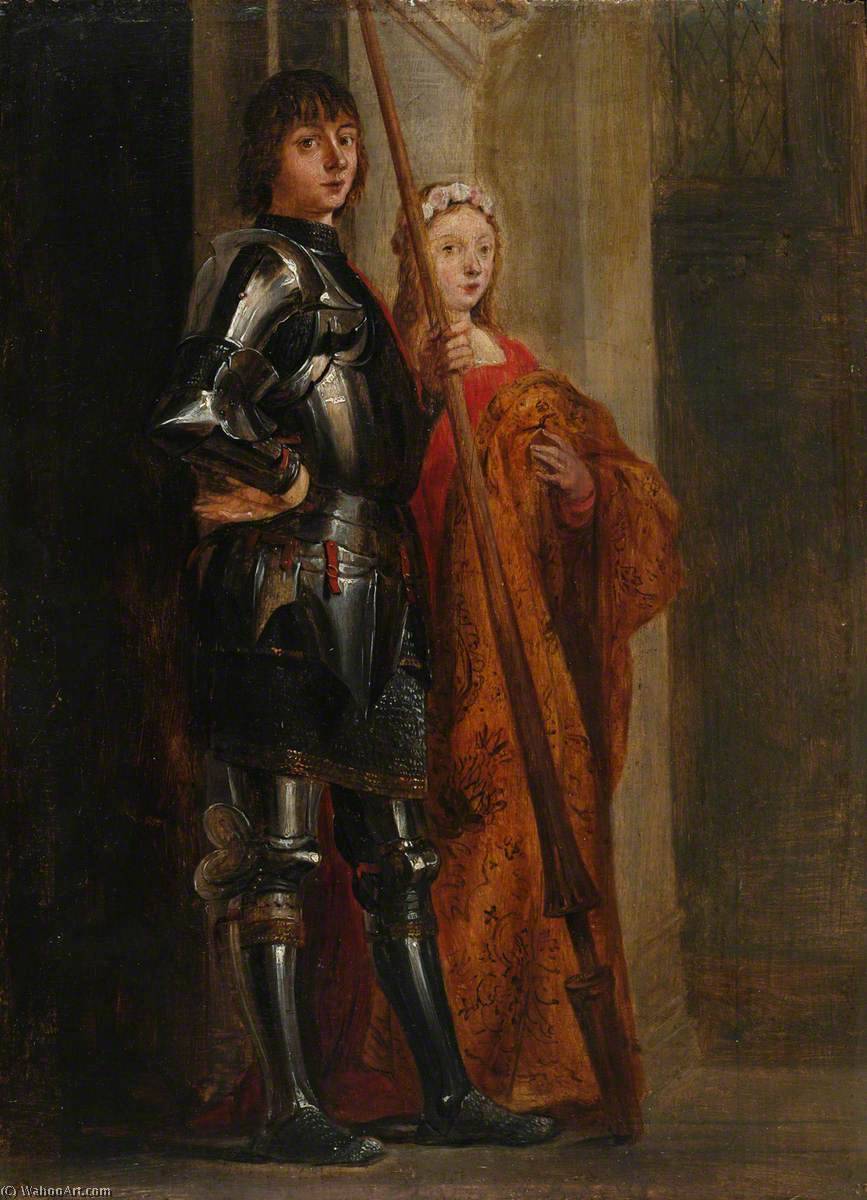
David Teniers the Younger's "Saints George and Cecilia," painted in 1656, is not merely a depiction of two hagiaries; it’s a vibrant distillation of Flemish Baroque artistry, steeped in religious devotion and infused with a palpable sense of human drama. This captivating work, now housed within the Courtauld Gallery in London, offers a glimpse into the artistic sensibilities of a master craftsman who skillfully blended inherited traditions with his own distinctive vision. The painting immediately draws the eye with its rich palette – deep reds, golds, and blues dominate, creating an atmosphere of opulent reverence while simultaneously hinting at earthly pleasures.
At the heart of the composition stand Saint George, clad in gleaming chainmail armor, a symbol of chivalry and Christian virtue, and Saint Cecilia, radiating serenity as she holds aloft a cross. Their postures are imbued with a quiet dignity, yet their gazes meet with an unspoken connection—a shared devotion that transcends mere iconography. The figures aren’t presented as distant saints but rather as relatable individuals caught in a moment of solemn contemplation. The artist masterfully employs chiaroscuro – the dramatic interplay of light and shadow – to sculpt the forms, adding depth and volume to the scene and emphasizing the emotional weight of their faith.
Echoes of Antonello da Messina: A Masterful Adaptation
“Saints George and Cecilia” is fundamentally an adaptation of a celebrated painting by Antonello da Messina, a pivotal figure in the Italian Renaissance. Teniers’s decision to revisit this earlier masterpiece speaks volumes about his artistic understanding and respect for the traditions of his predecessors. The core composition—the arrangement of figures, the gesture of Cecilia holding the cross, even the subtle details of George's armor—are all borrowed from Messina’s original work. However, Teniers doesn’t simply copy; he transforms. He imbues the scene with a distinctly Flemish sensibility – a greater emphasis on detail, a richer color palette, and a more dynamic sense of movement.
The influence of Messina is particularly evident in the painting's use of perspective and the modeling of the figures’ drapery. Teniers skillfully employs atmospheric perspective to create a sense of depth, drawing the viewer into the scene. The meticulous rendering of textures – the sheen of the armor, the folds of the fabric—demonstrates his technical virtuosity and his commitment to capturing the beauty of the material world.
A Window into 17th-Century Flemish Life
Beyond its religious subject matter, “Saints George and Cecilia” offers a fascinating glimpse into the social and cultural landscape of 17th-century Antwerp. The figures are not presented in an idealized, ethereal setting; instead, they are depicted within a domestic interior—a room adorned with tapestries, furniture, and other objects that suggest a comfortable, well-appointed home. This detail reveals Teniers’s interest in portraying everyday life and his ability to capture the nuances of human interaction.
The inclusion of details like the musical instruments – a lute and a drum—hints at the importance of music and entertainment in Flemish society. The scene subtly celebrates the harmony between faith, family, and earthly pleasures, reflecting the values of the time. It’s a testament to Teniers' skill that he can seamlessly blend religious iconography with elements of secular life.
Symbolism and Emotional Resonance
The painting is rich in symbolism, each element contributing to its overall meaning. Saint George, as the slayer of the dragon, represents victory over evil and protection of Christendom. Saint Cecilia, traditionally depicted as a patron saint of music, embodies harmony and devotion. The cross she holds symbolizes her martyrdom and her unwavering faith.
“Saints George and Cecilia” evokes a profound sense of serenity and contemplation. The figures’ expressions are peaceful and dignified, suggesting an inner peace derived from their connection to the divine. The painting's warm colors and harmonious composition create a visually soothing experience for the viewer, inviting them to reflect on themes of faith, devotion, and the beauty of human existence. It remains a powerful testament to Teniers’s artistic skill and his ability to capture the essence of both religious belief and human emotion.