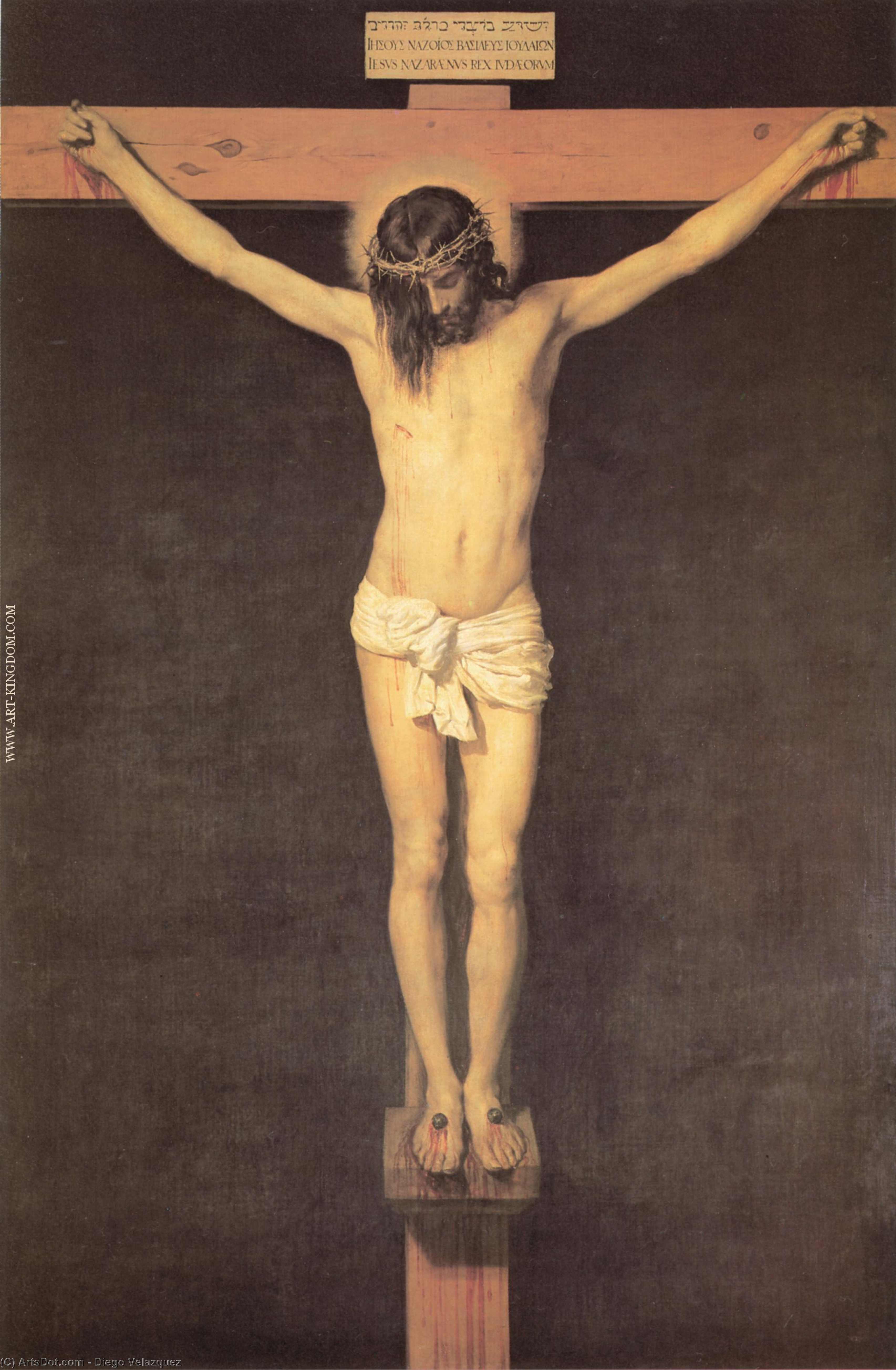
Christ on the Cross, oil on canvas, Museo de
Diego Velázquez, one of the most renowned artists of the Spanish Golden Age, created a profound and emotionally charged painting titled
Christ on the Cross. This masterpiece, dated 1632, is a testament to Velázquez's skill in capturing the essence of human suffering and the significance of religious iconography.
The Painting’s Composition
The painting depicts Jesus Christ hanging from the cross, his arms outstretched in agony. The scene is set against a dark background, which emphasizes the somber mood of the moment. Two figures are seen on either side of Christ, while another person stands further back on the right side of the image. These individuals may be witnesses or participants in the crucifixion event. Careful consideration was given to spatial arrangement—a technique characteristic of Baroque art—to heighten dramatic impact and guide the viewer’s gaze toward the central figure.
Light and Shadow
Velázquez's use of light and shadow is a notable aspect of the painting. The play of light on Christ’s body creates a sense of depth and volume, drawing the viewer’s attention to his suffering. This technique, known as chiaroscuro, was a hallmark of Baroque art and added a dramatic effect to the scene. It wasn't merely illumination; it conveyed spiritual significance—the divine radiance emanating from Jesus despite his mortal torment.
Symbolism and Aesthetic Value
Light in painting has both technical and aesthetic significance. In
Christ on the Cross, light underscores Christ’s divine nature while highlighting his human suffering. The artist skillfully employed sfumato—a subtle blending of tones—to soften contours and create an ethereal atmosphere, furthering the painting's contemplative mood. Beyond its visual beauty, the artwork speaks to universal themes of faith, sacrifice, and redemption.
Artistic Techniques
Velázquez employed various techniques to capture the essence of light in his painting. Shading, chiaroscuro, sfumato, and tenebrism—though tenebrism wasn’t utilized here—were some of the methods used to create the desired effect. These techniques have been pivotal in the evolution of painting throughout history, demonstrating Velázquez's mastery of artistic innovation. His meticulous brushwork and attention to detail are evident in every stroke, resulting in an image that transcends mere representation and achieves profound emotional resonance.
Relevance and Impact
Christ on the Cross is housed at the
Museo de Bellas Artes in Seville, Spain. This museum is a treasure trove of Spanish visual arts from the medieval period to the early 20th century. The painting's presence in this esteemed collection underscores its significance in the history of art and continues to inspire artists today. For those interested in exploring more works by Velázquez, visit /art/list/?Filter=9H5SPM-Diego-Velazquez-Christ-on-the-Cross-oil-on-canvas-Museo-de. To learn more about the technical representation of light in painting, refer to
Light in Painting on Wikipedia.