The Equestrian Vision
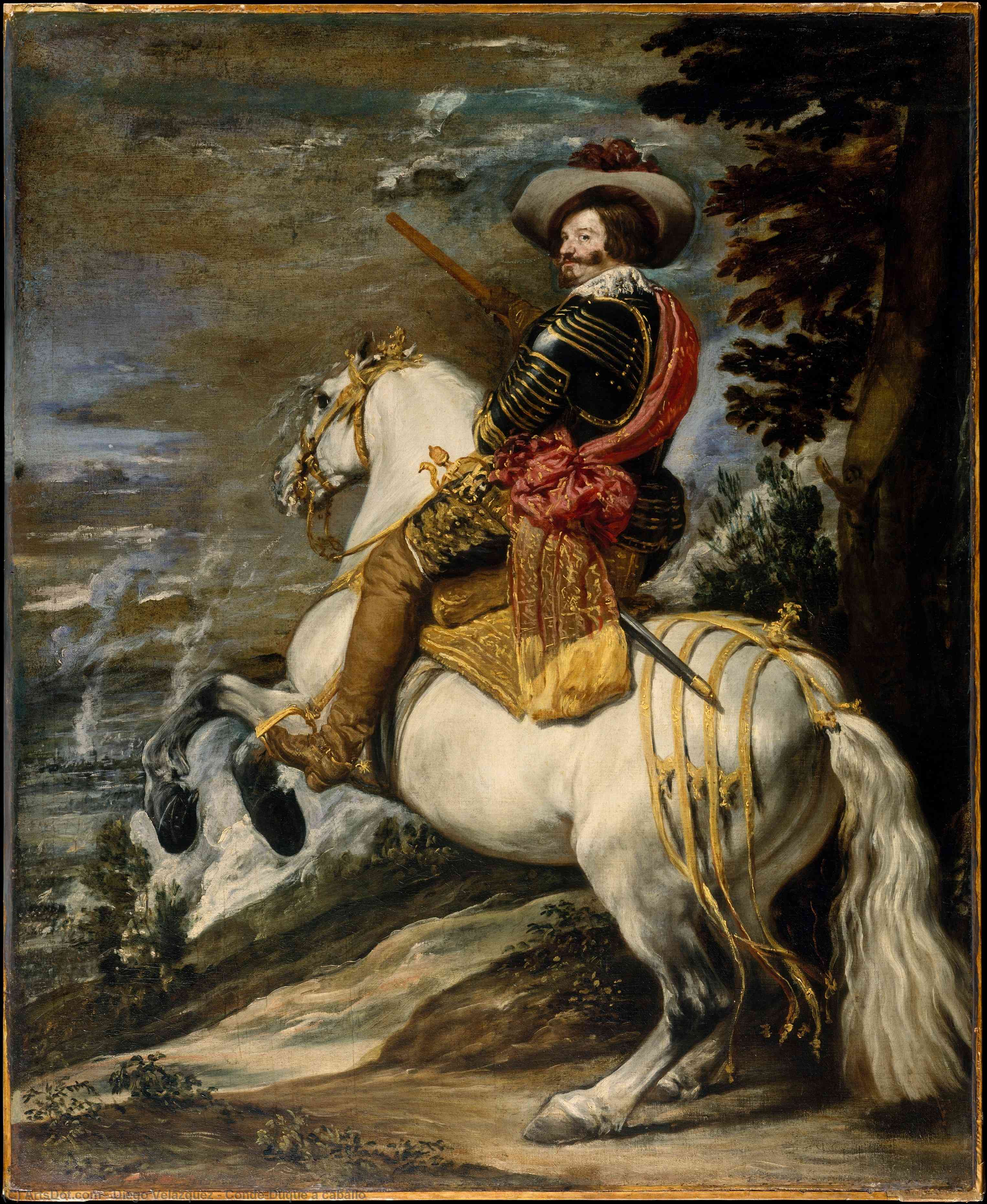
Diego Velázquez’s Conde-Duque a caballo, or “Count-Duke on Horseback,” isn't merely a portrait; it’s a carefully constructed tableau vivant—a frozen moment of power and nobility rendered with an astonishingly modern sensibility. Completed around 1634-35 during Velázquez’s tenure as court painter to King Philip IV of Spain, the painting immediately draws the eye with its commanding subject: the Count-Duke of Olivares, a towering figure of political influence and military might. This imposing equestrian portrait transcends the conventions of traditional royal imagery, offering a glimpse into the complex personality of a man who shaped the destiny of his nation.

Baroque Drama and Velázquez’s Technique
Velázquez was a master of the Baroque style, and Conde-Duque a caballo exemplifies this perfectly. The artist employs dramatic chiaroscuro—a stark contrast between light and shadow—to sculpt the figure and create an intense sense of depth. Notice how the light catches the Count-Duke’s armor, highlighting its intricate details and emphasizing his status, while simultaneously plunging the background into relative darkness. This technique isn't simply decorative; it serves to draw attention to the central subject and imbue the scene with a palpable atmosphere of authority. Velázquez’s brushwork is remarkably loose and expressive, particularly in the rendering of the horse’s musculature and the folds of the Count-Duke’s clothing—a departure from the smoother, more polished styles favored by some of his contemporaries. He utilizes broken color and subtle gradations to achieve a remarkable sense of realism, capturing not just the appearance but also the texture and weight of each element within the composition.
A Study in Power and Symbolism
The equestrian portrait itself is laden with symbolic meaning. The horse—a symbol of strength, nobility, and military prowess—elevates the Count-Duke to a position of unparalleled power. His confident posture, his hand resting lightly on the reins, and his direct gaze all project an image of control and command. The elaborate attire – the gold trim, the rich fabrics, the meticulously rendered details – are not just indicators of wealth but also emblems of rank and authority. The inclusion of two figures in the background—a gentleman and a servant—adds a layer of narrative complexity, suggesting the Count-Duke’s role as a leader overseeing his domain. The subtle landscape behind them hints at the vastness of Spain under his influence.
Legacy and Reproduction
Conde-Duque a caballo stands as a testament to Velázquez's genius and his profound impact on Western art history. It’s a painting that continues to fascinate viewers centuries after its creation, offering insights into the political landscape of 17th-century Spain and showcasing the artist’s unparalleled ability to capture human character and emotion. ArtsDot offers meticulously crafted, hand-painted oil reproduction reproductions of this iconic masterpiece, allowing you to bring a piece of art history into your home or office. Each reproduction is created by skilled artisans using traditional techniques, ensuring that it faithfully captures the original's beauty, detail, and emotional impact. Explore our collection at ArtsDot.com to discover a stunning representation of this timeless work.