The Enigmatic Smile of Democritus
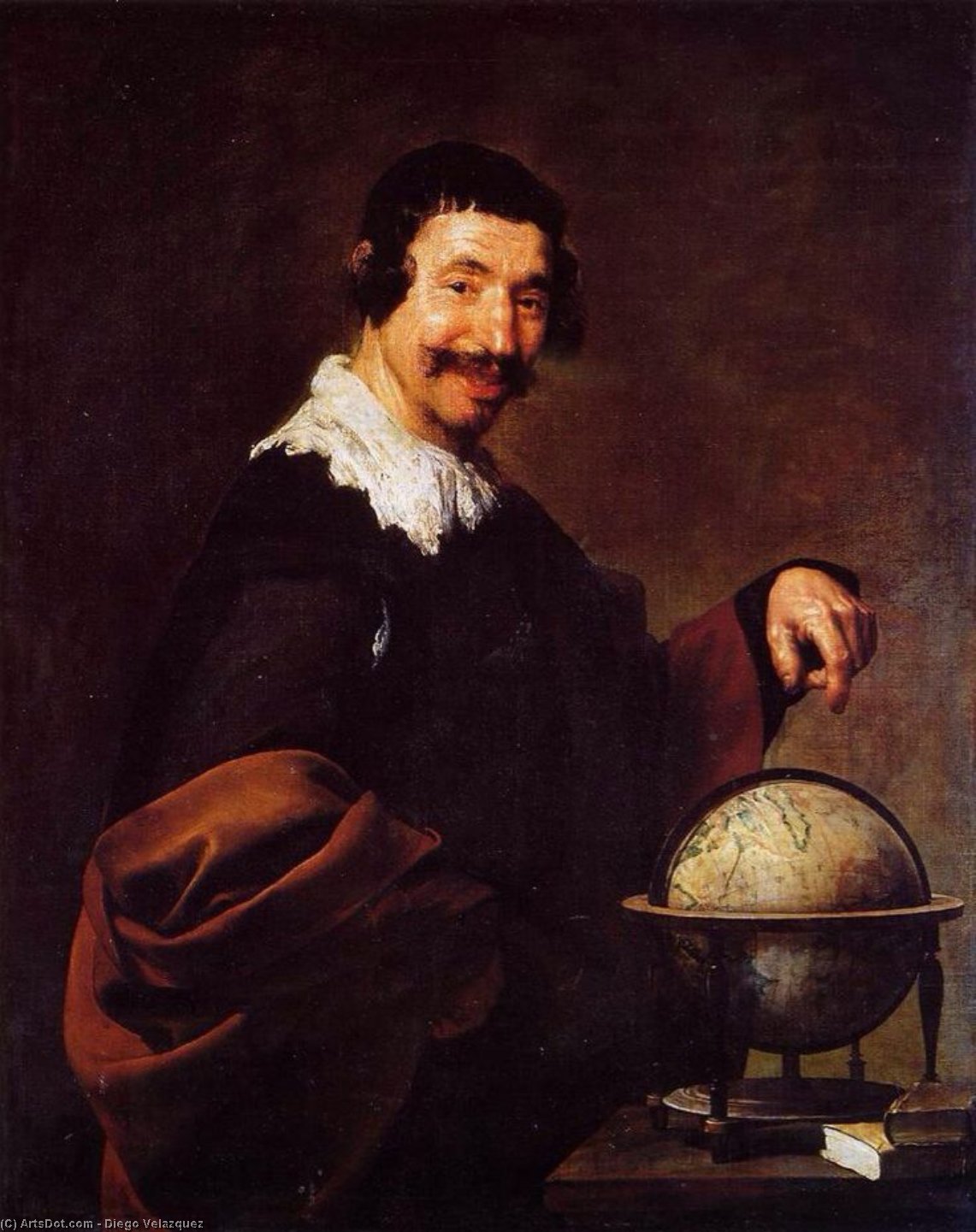
Diego Velázquez’s “Democritus,” painted between 1628 and 1629, is not merely a portrait; it's an invitation into the mind of a philosopher, a subtle meditation on knowledge, laughter, and the very nature of reality. Housed within the Musée des Beaux-Arts et de la Céramique in Rouen, France, this oil painting transcends its modest dimensions (101 x 81 cm) to become a cornerstone of Baroque artistry, showcasing Velázquez’s unparalleled ability to capture not just likeness but also character and an elusive sense of inner life. The subject, believed to be a representation of the ancient Greek philosopher Democritus – though more likely embodying the concept of the ‘laughing philosopher’ – presents a captivating scene of quiet contemplation, his expression a carefully constructed blend of amusement and profound thought.
Velázquez's genius lies in his masterful manipulation of light and shadow, a technique deeply rooted in the Baroque tradition. The background is deliberately subdued, rendered in deep, warm tones that draw the viewer’s eye directly to the figure at the center. This strategic use of chiaroscuro not only creates depth but also serves to heighten the sense of drama and intrigue surrounding Democritus's face. Notice how the light gently caresses his features, highlighting the lines around his eyes and mouth – suggesting a life lived in intellectual pursuit and perhaps, a touch of wry amusement at the follies of humankind. The artist’s meticulous attention to texture is equally remarkable; from the intricate lacework of the collar to the subtly rendered folds of the cloak, every detail contributes to the painting's overall sense of realism and tactile presence.
A Portrait Steeped in Symbolism
Beyond its immediate visual appeal, “Democritus” is rich with symbolic elements that invite interpretation. The subject’s attire – a black cloak adorned with a white ruff – immediately establishes his social standing within the Spanish court. However, it's the inclusion of the globe in his right hand that truly elevates the painting to a higher level of meaning. Globes were frequently used as symbols of knowledge, exploration, and philosophical inquiry during this period, suggesting Democritus’s engagement with the vastness of the universe and the pursuit of understanding its fundamental principles. The carefully chosen pose – relaxed yet alert – further reinforces this interpretation, conveying an image of a man comfortable in his own intellectual world.
The painting's historical context is equally significant. In the early 17th century, Democritus’s ideas were often associated with Heraclitus, ‘the weeping philosopher,’ creating a compelling juxtaposition between two contrasting attitudes toward the world. This pairing—a cheerful, inquisitive mind versus a melancholic one—became a popular theme in Spanish art and literature, prompting artists to explore the complexities of human experience. Velázquez cleverly captures this duality, presenting Democritus not as a rigid intellectual but as a vibrant individual capable of both profound thought and genuine laughter.
Velázquez’s Masterstroke: Technique and Legacy
Diego Velázquez was a revolutionary painter, pushing the boundaries of portraiture with his innovative techniques. “Democritus” exemplifies this approach, demonstrating his ability to capture not just a likeness but also the very essence of his subject. His use of *alla prima* painting—working directly on the canvas without preliminary sketches—allowed him to achieve an unprecedented level of spontaneity and immediacy in his brushwork. The loose, expressive strokes create a sense of movement and vitality, while the subtle variations in color and tone contribute to the painting’s overall atmospheric quality.
“Democritus” stands as one of Velázquez's most celebrated works, admired for its psychological depth, technical brilliance, and enduring appeal. It is a testament to the artist’s extraordinary talent and his profound understanding of human nature. Reproductions of this masterpiece continue to captivate audiences worldwide, offering a glimpse into the mind of a brilliant philosopher and the genius of one of art history's greatest masters. Its quiet dignity and enigmatic smile remain a source of endless fascination, inviting viewers to contemplate the mysteries of knowledge, laughter, and the human condition.