The Enigmatic Figure of Don Sebastian de Morra
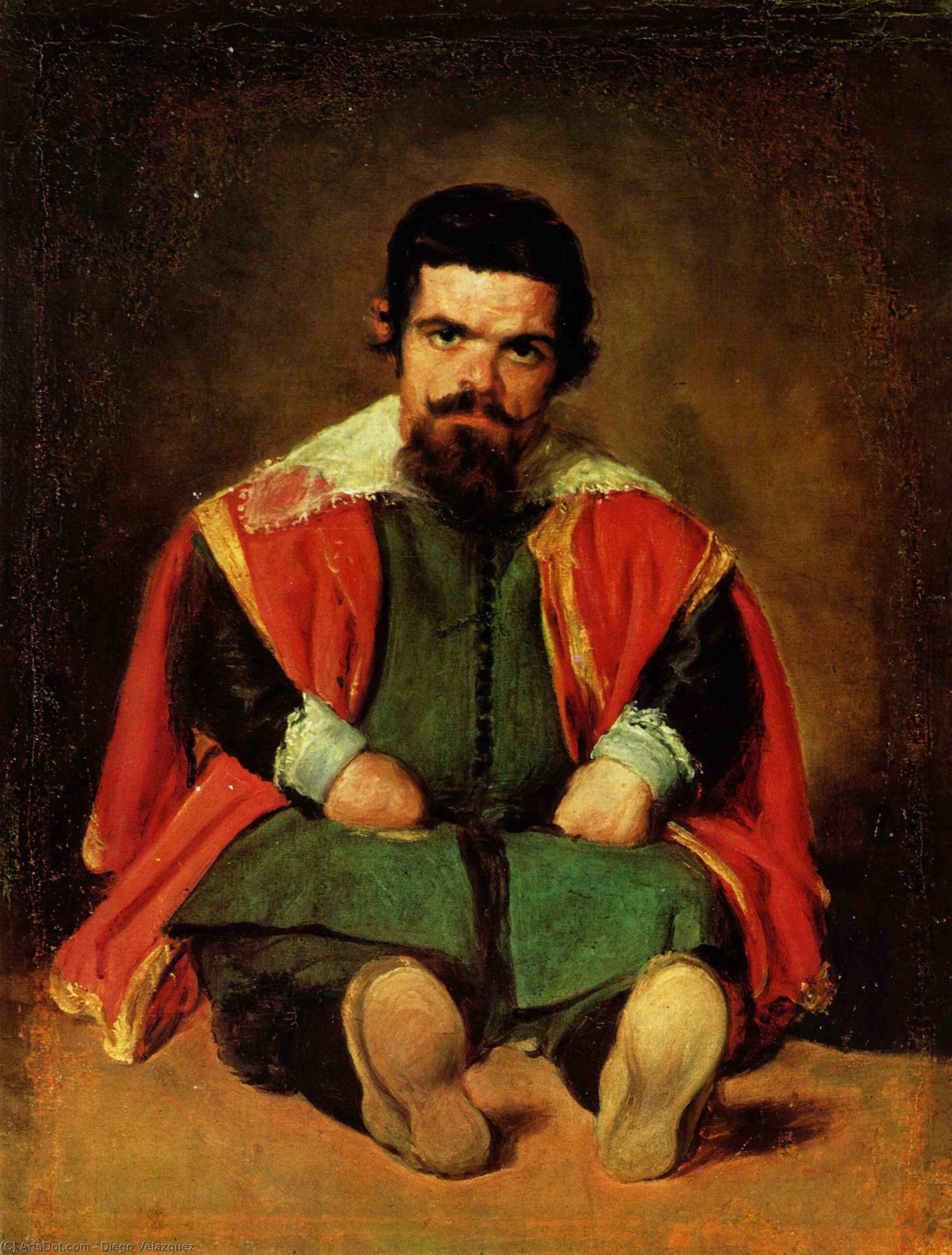
Diego Velázquez’s Portrait of Don Sebastián de Morra, painted around 1644 and now residing in the Museo del Prado in Madrid, is far more than a simple likeness. It's a profound meditation on social status, human dignity, and the often-overlooked lives of those relegated to the fringes of 17th-century Spanish society. The painting depicts a court dwarf and jester, Sebastián de Morra, a man whose life remains shrouded in intriguing mystery – a deliberate choice by Velázquez that elevates the portrait beyond mere representation and into the realm of social commentary.
The subject himself is immediately arresting. De Morra sits with an unnerving directness, his gaze locking onto the viewer with an intensity rarely seen in portraits of the era. His posture is remarkably still, almost frozen in time, leading many critics to interpret this stillness as a reflection on the constraints imposed upon him by his role at court – a silent witness to the machinations and superficiality of royal life. The lack of conventional gestures or expressions further amplifies this sense of contained emotion, suggesting a profound awareness of his position within a hierarchical system.
A Courtly Life, A Hidden Story
Sebastian de Morra’s story is inextricably linked to the court of Philip IV of Spain. Brought into the royal household in 1643, he served for six years before his untimely death in 1649. Despite his prominent position as a dwarf and jester, remarkably little is known about his personal life beyond this role. This deliberate ambiguity is key to Velázquez’s artistic strategy. The painting doesn't offer biographical details; instead, it focuses on capturing the essence of De Morra – his presence, his dignity, and perhaps even a hint of melancholy.
The context surrounding De Morra’s employment at court reveals a complex social reality. Court dwarfs were not simply amusing entertainers; they often held positions of surprising influence, granted access to private conversations and privy to the king's whims. They were, in essence, tolerated figures within the royal household, afforded a degree of freedom rarely extended to other marginalized groups. Velázquez’s portrayal subtly challenges the prevailing attitudes towards these individuals, presenting De Morra not as a caricature or object of ridicule, but as a fully realized human being.
Velázquez's Masterful Technique and Symbolism
What truly distinguishes Portrait of Don Sebastián de Morra is Velázquez’s masterful technique. He employs a naturalistic style that departs significantly from the more stylized portraits prevalent at the time, opting for a directness and realism that draws the viewer into De Morra's world. The use of light and shadow creates a sense of depth and volume, emphasizing the subject’s physicality while simultaneously hinting at an underlying vulnerability.
The muted color palette – dominated by earthy tones and rich reds – contributes to the painting’s somber mood. Notably, Velázquez's choice to depict De Morra in a simple red robe with gold trim subtly elevates his status, suggesting a degree of respect and recognition within the courtly setting. The background is deliberately plain, focusing all attention on the subject himself, reinforcing the idea that he is the central figure of importance.
A Legacy of Humanization
Portrait of Don Sebastián de Morra stands as a testament to Velázquez’s artistic genius and his ability to imbue ordinary subjects with extraordinary dignity. It's a poignant reminder of the social inequalities that existed during the Spanish Golden Age, and a powerful statement about the importance of recognizing the humanity in all individuals – regardless of their circumstances. As a work deeply rooted in historical context, it continues to resonate today, prompting us to consider our own perceptions of difference and marginalization. For those seeking a profound artistic experience, or for collectors desiring a stunning reproduction of this iconic masterpiece, ArtsDot offers exceptional hand-painted reproductions that capture the essence of Velázquez’s vision.