A Glimpse of Habsburg Majesty: Velázquez’s Infanta Margarita Teresa
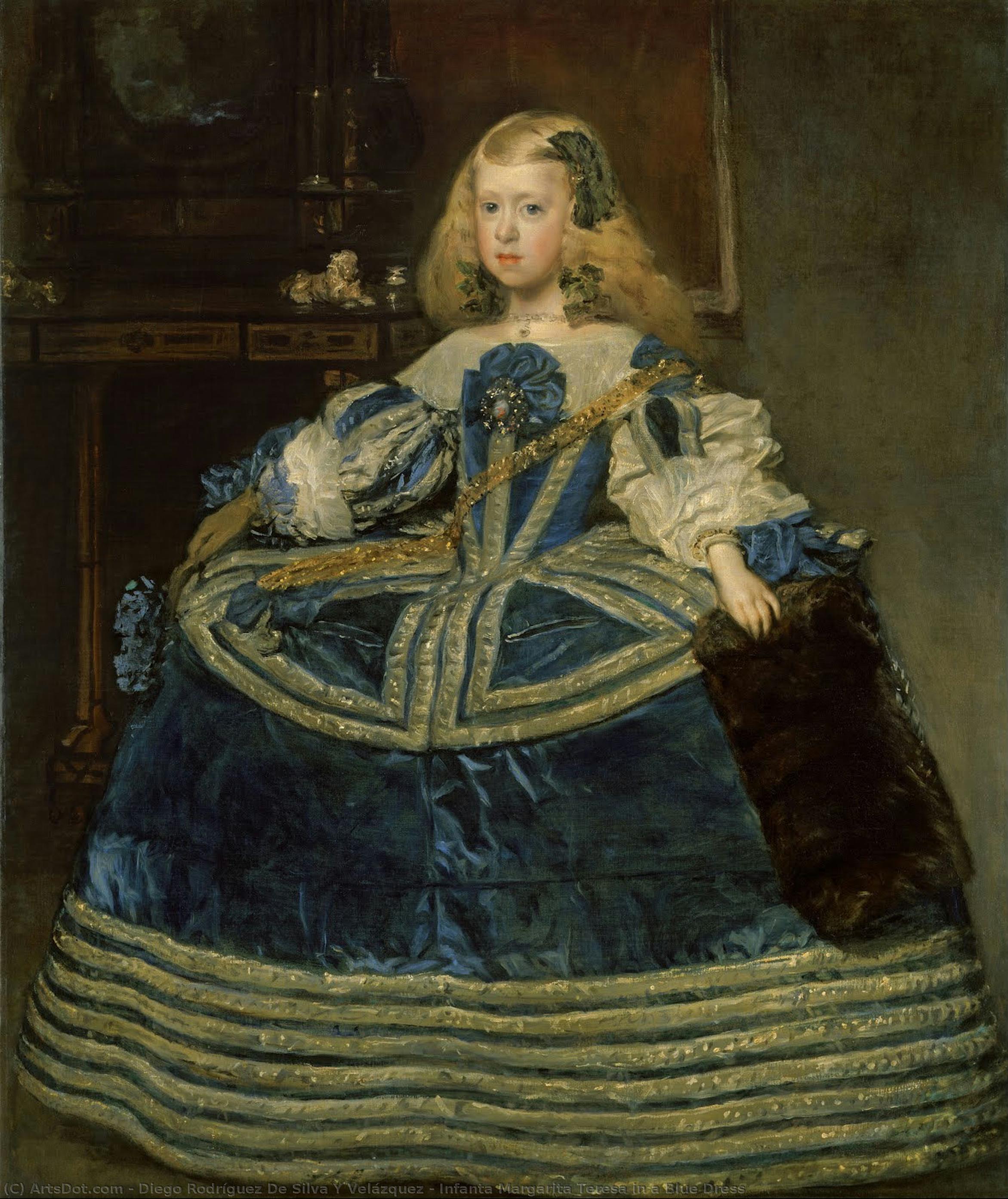
Diego Rodríguez de Silva y Velázquez's "Infanta Margarita Teresa in a Blue Dress," painted in 1659, is more than simply a portrait; it’s a meticulously crafted window into the heart of 17th-century Spain. This exquisite work, now rendered in a monumental size of 1070 x 1270 cm, captures the young infanta at the tender age of eight, a moment frozen in time and imbued with an almost palpable sense of regal poise. The painting’s journey through history – from its initial commission for the Viennese court to its subsequent restoration – adds layers of intrigue, revealing the delicate balance between royal duty and artistic expression that defined Velázquez's career.
The scene unfolds within a carefully orchestrated tableau. Margarita Teresa, dressed in a vibrant blue gown adorned with shimmering gold trim, sits poised on a chair upholstered in matching blue velvet. Her blonde hair is swept back from her face, highlighting the delicate contours of her features and drawing attention to her striking, almost metallic-blue eyes – a remarkable feat of Velázquez’s painterly skill. The cool, reflective quality of the fabric contrasts beautifully with the warmth of her skin, creating a dynamic interplay of light and shadow that lends the portrait an extraordinary sense of depth and realism. A subtle clock hangs on the wall above, anchoring the scene in time while simultaneously emphasizing the fleeting nature of youth and beauty.
The Master’s Technique: Light, Shadow, and Illusion
Velázquez's genius lies not merely in his ability to depict a likeness but in his masterful manipulation of light and color. He employed a technique known as *sfumato*, subtly blurring the edges of forms and creating an atmospheric haze that softens the image and imbues it with a sense of mystery. This is particularly evident in the rendering of the blue dress, which appears almost to shimmer and glow from within. The artist’s use of loose brushstrokes, characteristic of his later style, contributes to the painting's dynamic quality, suggesting movement and life rather than static representation.
- Chiaroscuro: Velázquez expertly utilizes chiaroscuro – the dramatic contrast between light and dark – to sculpt the infanta’s form and create a three-dimensional effect.
- Color Palette: The restrained yet sophisticated color palette, dominated by blues, golds, and creams, reflects the opulence of the Habsburg court while maintaining a sense of elegance and restraint.
- Composition: The composition is carefully balanced, drawing the viewer’s eye to the infanta's face and emphasizing her regal bearing.
A Royal Portrait, A Personal Statement
While commissioned as an official portrait for the Viennese court, “Infanta Margarita Teresa” transcends the conventions of royal representation. Velázquez, bound by his duties as a court painter, skillfully navigated the expectations of the Habsburg regime while simultaneously injecting his own artistic sensibilities into the work. He wasn’t simply documenting a young princess; he was capturing her essence, revealing a glimpse of her personality and inner life.
The painting's history itself offers insight. It was originally cut down in the 18th century, a common practice at the time to adapt portraits for smaller formats. Its subsequent restoration in 1923 sought to return it to its approximate original form, revealing layers of past interventions and adding to the artwork’s rich narrative.
Emotional Resonance and Timeless Beauty
“Infanta Margarita Teresa in a Blue Dress” is more than just a historical artifact; it's a profoundly moving work of art. The infanta’s direct gaze, combined with her poised posture and serene expression, invites the viewer to connect with her on an emotional level. The painting speaks to themes of youth, beauty, power, and mortality – universal concerns that resonate across centuries. A reproduction in this scale offers a remarkable opportunity to experience the full impact of Velázquez’s genius, bringing this captivating portrait into any space as a statement piece of both historical significance and artistic merit.