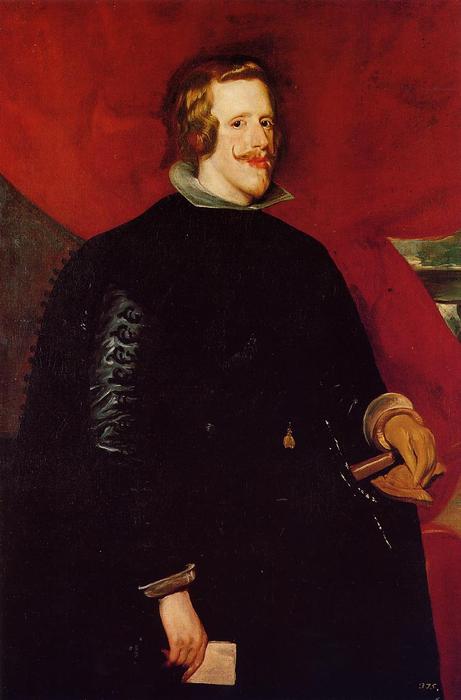
King Philip IV of Spain
Diego Velázquez, one of the most renowned artists of the Baroque period, created a stunning portrait titled King Philip IV of Spain. This painting is not only a testament to Velázquez's skill but also a reflection of the grandeur and majesty of the Spanish monarchy during that era.
The Painting
The painting measures 86 x 127 cm and is executed in oil on canvas. It was completed in 1632, a time when Velázquez was at the height of his career as a court painter to King Philip IV. The portrait captures the king with a beard and mustache, dressed in elegant attire, standing against a dramatic red background. The use of color and composition creates a sense of depth and grandeur, drawing the viewer’s attention to the subject.
Artistic Significance
Velázquez was known for his ability to capture the essence of his subjects with remarkable realism. In King Philip IV of Spain, he masterfully conveys the king’s dignity and authority. The painting is a prime example of Baroque portraiture, characterized by its use of chiaroscuro and detailed rendering of textures.
Historical Context
During the 17th century, portrait paintings were primarily commissioned to memorialize the rich and powerful. Velázquez's work for the Spanish royal court was no exception. His portraits not only served as records of the monarchs but also as symbols of their power and status.
Relevance Today
Today, King Philip IV of Spain is recognized as a masterpiece of Baroque art. It continues to inspire artists and art enthusiasts alike. For those interested in exploring more works by Velázquez, Don Baltasar Carlos with a Dwarf and Christ on the Cross are notable examples of his skill.
This painting is a reminder of the enduring legacy of Diego Velázquez and his contribution to the world of art.