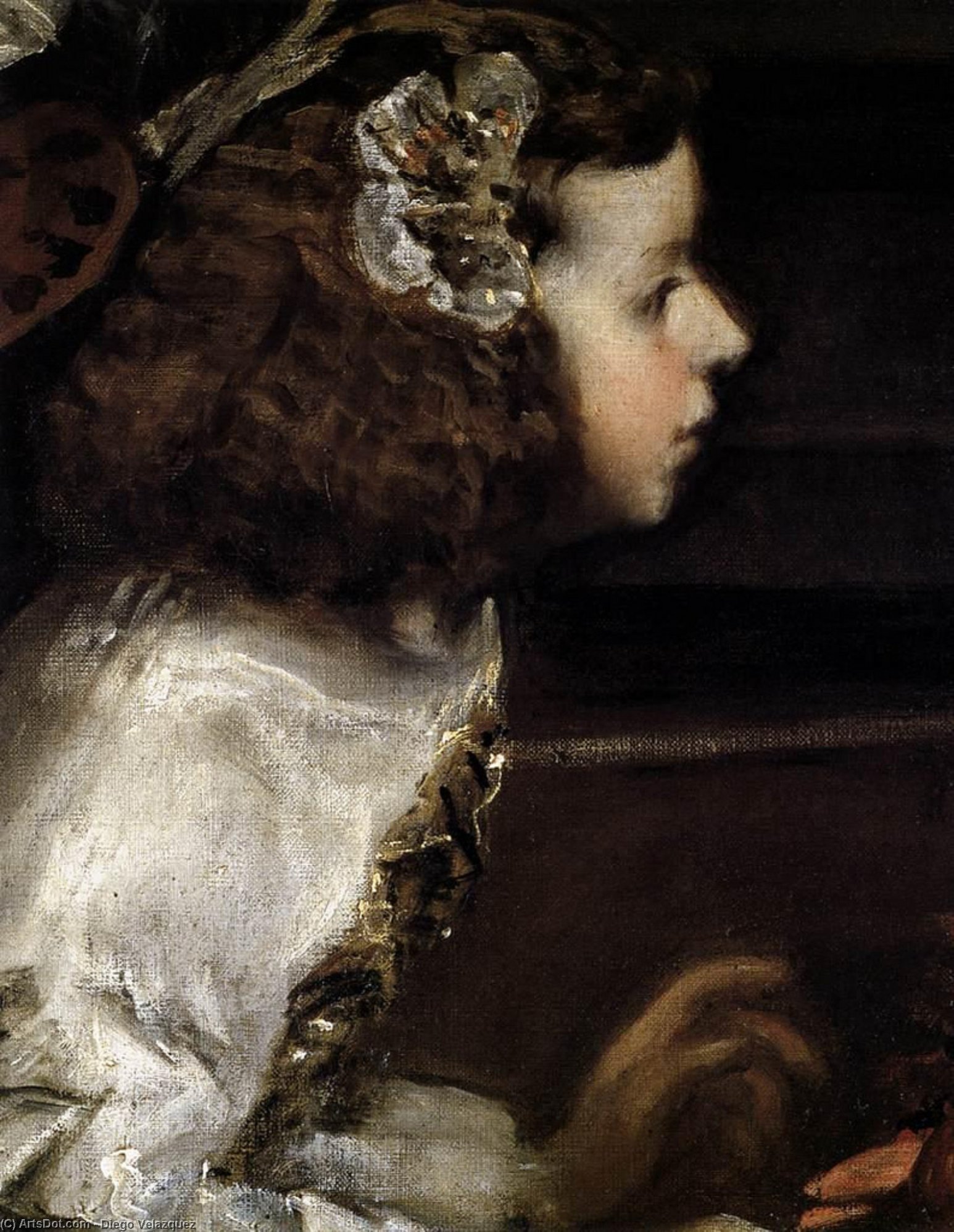
Diego Velázquez’s Las Meninas: A Portrait of Genius and Illusion
Diego Rodríguez de Silva y Velázquez (1599-1660) stands as arguably the pinnacle of Baroque painting, a figure whose mastery captivated contemporaries and continues to inspire awe centuries later. His magnum opus, Las Meninas (1656), transcends mere representation; it’s a profound meditation on artifice, perception, and the very nature of reality itself.
Composition and Spatial Ambiguity
The painting depicts a scene within King Philip IV’s royal palace studio in Madrid. At its core is Infanta Margarita Theresa, accompanied by her entourage – maids of honor, chaperones, guardsmen, dwarfs, and a dog—all posed before Velázquez himself as he diligently applies paint to a large canvas. Crucially, a mirror reflects the king and queen, subtly blurring the boundaries between the depicted space and the viewer’s perspective.
This deliberate layering of images creates an unsettling effect. Scholars debate whether the mirror reflects not just the royal couple but also Velázquez working on his painting, thereby suggesting that he is portraying himself as he sees himself—a painter observing a painter. This conceptual complexity distinguishes Las Meninas from conventional portraits and elevates it to a genre masterpiece.
Technique and Artistic Innovation
Velázquez’s technique exemplifies the Baroque ideal of naturalism combined with masterful illusionism. He employed *sfumato*, a subtle blending of tones that softens contours and creates atmospheric depth, particularly evident in the luminous background and the reflections in the mirror. His brushstrokes are loose and expressive, capturing fleeting moments of movement and emotion.
Furthermore, Velázquez’s use of light—particularly the dramatic illumination from the window—is revolutionary. He skillfully directs light to sculpt forms and highlight key figures, drawing the viewer's eye into the scene and conveying a sense of immediacy. This innovative approach foreshadowed Impressionism and profoundly influenced subsequent generations of artists.
Symbolism and Philosophical Depth
Beyond its visual splendor, Las Meninas is laden with symbolic meaning. The mirror serves as a metaphor for art’s ability to reflect reality while simultaneously constructing it—a concept explored by philosophers like Descartes. The inclusion of the dwarfs and the dog adds layers of social commentary, reflecting the Habsburg court's fascination with exotic curiosities.
Moreover, Velázquez’s depiction of himself at work is a self-conscious gesture, asserting the artist’s role as intellectual observer and challenging viewers to contemplate the process of artistic creation. It underscores the painting's status as “the theology of painting,” as Luca Giordano famously declared—a statement that encapsulates its profound engagement with philosophical ideas.
Legacy and Reproduction
Las Meninas remains one of the most celebrated paintings in Western art history, lauded for its compositional brilliance, technical virtuosity, and intellectual depth. Its influence extends across centuries, inspiring artists from Picasso to Bacon. ArtsDot offers meticulously crafted oil painting reproductions that allow admirers worldwide to experience the beauty and complexity of Velázquez’s masterpiece.
To explore this iconic artwork further, visit /art/list/?Filter=8Y3KUE-Diego-Velazquez-Las-Meninas-(detail) for detailed information and stunning high-resolution images.