A Window into Spanish Royalty & Artistic Innovation
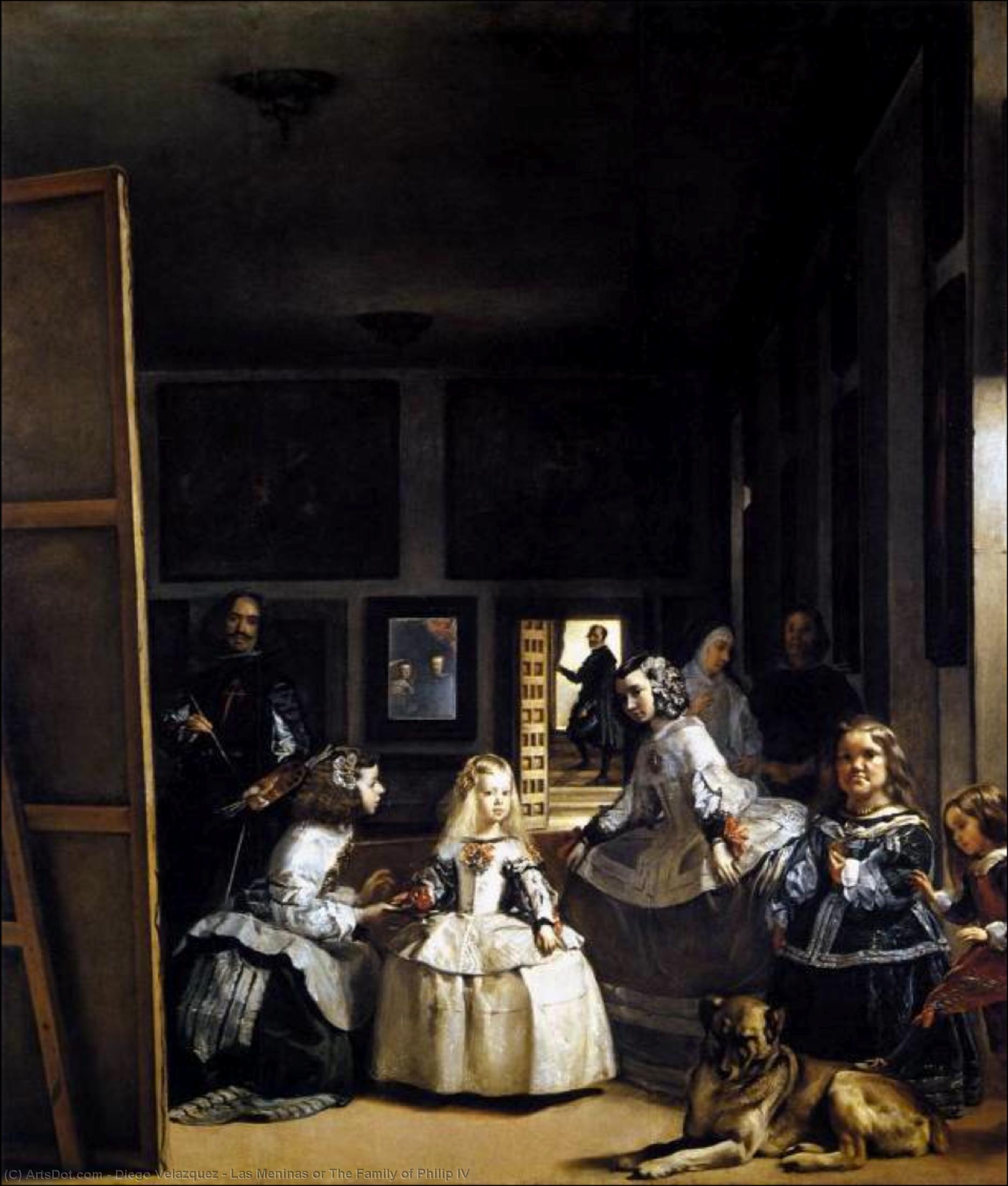
Completed in 1656, this monumental painting offers an unprecedented glimpse into the world of the Spanish Habsburg court during its Golden Age. More than a mere portrait, it’s a complex meditation on representation, reality, and the very act of artistic creation – a work that continues to captivate and challenge viewers centuries later.
The Scene & Its Subjects
At its heart lies Infanta Margarita, the young daughter of King Philip IV and Queen Mariana, surrounded by her meninas (ladies-in-waiting), dwarfs, and other attendants within a lavishly appointed room in Madrid’s Alcázar Palace. However, what sets this work apart is the inclusion of the artist himself, Diego Velázquez, depicted standing before a large canvas, seemingly engaged in painting. This bold self-portrait breaks down traditional boundaries between artist and subject, inviting us to question who is observing whom.
Baroque Mastery & Innovative Technique
Velázquez’s masterful application of Baroque techniques is evident throughout. Dramatic lighting, achieved through contrasting light and shadow, directs the eye and creates a sense of depth and realism. His loose, fluid brushstrokes – revolutionary for their time – define forms with an astonishing economy of means, suggesting texture and volume rather than meticulously outlining them. This alla prima technique (painting directly onto the canvas without extensive layering) lends the work a remarkable immediacy and vibrancy.
Historical Context & Royal Power
The painting reflects the intricate social hierarchy and courtly rituals of 17th-century Spain. Commissioned during a period of declining imperial power, it subtly reinforces the authority and prestige of the monarchy. The inclusion of King Philip IV and Queen Mariana – reflected in a mirror at the back of the room – is particularly intriguing; their indirect presence raises questions about their role as observers versus subjects.
Symbolism & Layers of Meaning
Beyond its surface realism, this artwork is rich in symbolism. The dog symbolizes loyalty, while the figures themselves represent the various strata of Spanish society. The mirror’s reflection invites contemplation on illusion and reality, challenging our perception of what we see. Velázquez's inclusion of himself elevates the status of painting from a craft to an intellectual pursuit, asserting the artist’s importance within the court.
Emotional Impact & Enduring Legacy
This painting evokes a sense of both intimacy and formality, capturing a fleeting moment in time while simultaneously offering a profound commentary on art, power, and perception. Its enduring appeal lies in its ability to engage viewers on multiple levels – as a stunning visual spectacle, a historical document, and a philosophical inquiry. A reproduction of this masterpiece will undoubtedly become a focal point within any interior, sparking conversation and inspiring contemplation for years to come.