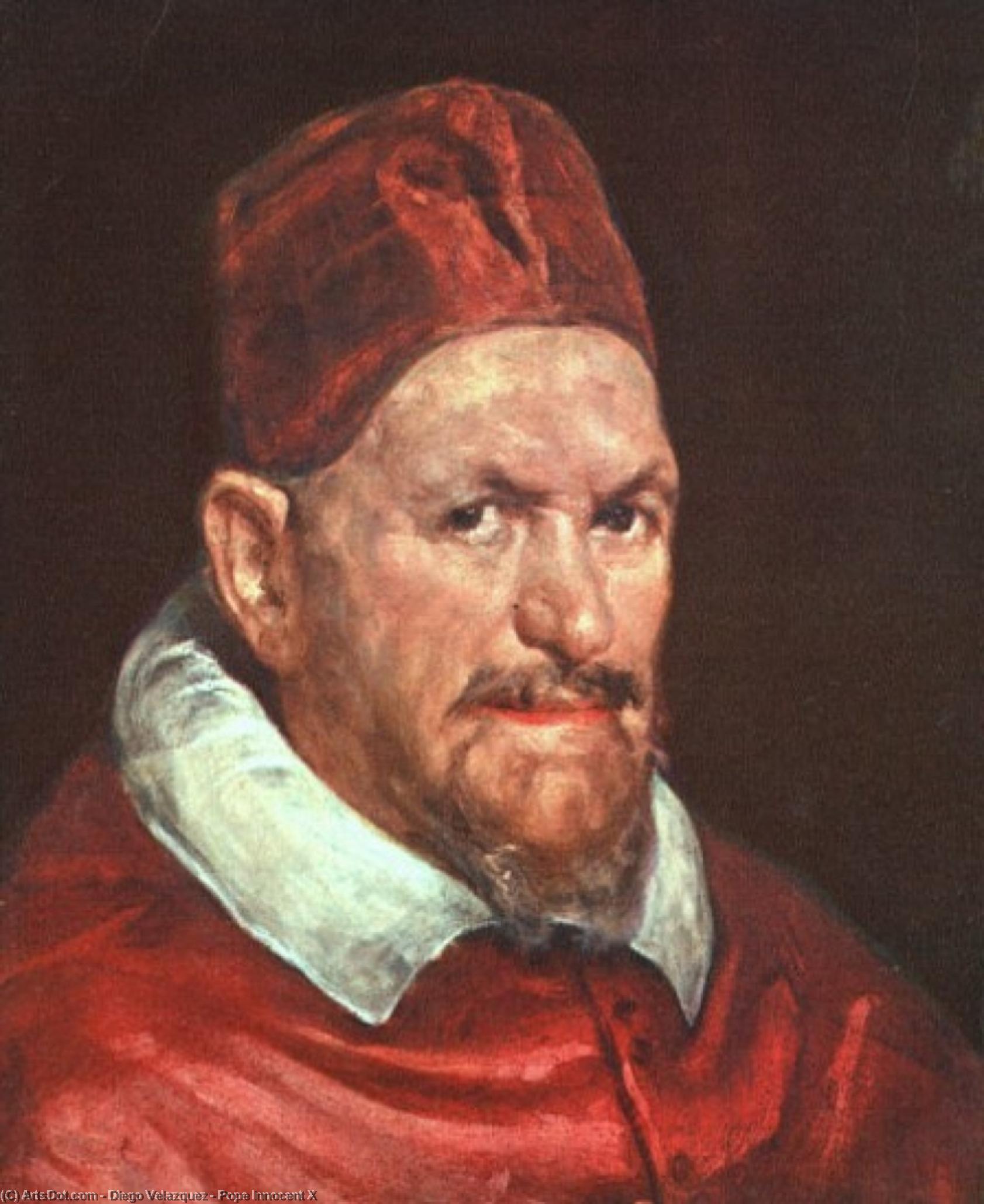
A Masterclass in Realism & Psychological Insight
Diego Velázquez’s *Pope Innocent X* (c. 1650) is arguably one of the most compelling and influential portraits in Western art history. This striking depiction transcends mere physical likeness, offering a profound psychological study of power, intellect, and perhaps even vulnerability. Painted during his second visit to Rome, the work immediately established Velázquez as a master capable of rivalling the Italian masters on their own turf.
Historical Context & The Artist’s Journey
The story behind this portrait is almost as captivating as the painting itself. Velázquez, already celebrated in Spain as court painter to Philip IV, sought to establish his reputation within the competitive Roman art scene. Initially hesitant to grant him a sitting, Pope Innocent X was persuaded after witnessing Velázquez’s remarkable ability to capture life-like realism – demonstrated most notably in his portrait of Juan de Pareja, a member of his household. The pope's initial skepticism speaks volumes about the high standards and discerning eye of the Roman art world at the time. The painting reflects a period of intense political maneuvering within the Papal States and Europe as a whole.
Artistic Technique & Baroque Brilliance
Velázquez’s technique is breathtaking in its boldness and economy. He eschews meticulous detail for *alla prima* brushwork – applying paint directly to the canvas with confident, visible strokes. This creates a sense of immediacy and vitality that was revolutionary for its time. The rich, saturated reds of the Pope's vestments and curtains are masterfully rendered, providing a dramatic contrast to the pale tones of his face and hands. The use of light and shadow – characteristic of the Baroque style – sculpts the form and draws the viewer’s eye to the Pope’s penetrating gaze. The size of the painting (49 x 41 cm) contributes to its intimacy, forcing a close encounter with the subject.
Symbolism & Unflinching Representation
The portrait is remarkably devoid of overt religious symbolism. Instead, Velázquez focuses on conveying the *character* of Innocent X. The Pope’s direct stare, slightly furrowed brow, and subtly downturned mouth suggest a man burdened by responsibility, shrewd in judgment, and perhaps harboring a degree of weariness. His linen vestments, unusual for papal portraits, hint at a summer sitting and contribute to the sense of unvarnished realism. Some art historians believe this deliberate lack of embellishment was Velázquez’s way of challenging conventional portraiture, presenting the Pope not as an idealized figure but as a complex human being.
Legacy & Enduring Influence
*Pope Innocent X* has exerted a profound influence on generations of artists. Its realism paved the way for later movements like Impressionism and Expressionism. Notably, Francis Bacon created over 40 variations on this theme in the mid-20th century – his “Screaming Popes” being visceral reinterpretations that explore themes of existential angst and powerlessness. The painting remains housed in the Galleria Doria Pamphilj in Rome, with smaller versions held by prestigious institutions like the Metropolitan Museum of Art in New York and Apsley House in London.
Emotional Impact & Interior Design Considerations
This portrait is not merely a visual masterpiece; it’s an emotional experience. The Pope's gaze seems to follow the viewer, creating a sense of connection – or perhaps scrutiny. Its dramatic composition and rich color palette make it a powerful focal point for any interior space.
- For Traditional Interiors: The painting’s Baroque style complements classic furnishings and architectural details.
- For Modern Spaces: Its bold realism provides a striking contrast to minimalist designs, adding depth and sophistication.
- Color Palette Integration: The dominant reds can be echoed in accent pieces – upholstery, artwork, or decorative objects – to create a cohesive look.
Pope Innocent X* is more than just a painting; it’s a testament to the power of art to capture not only likeness but also the very essence of human character. A truly timeless masterpiece.