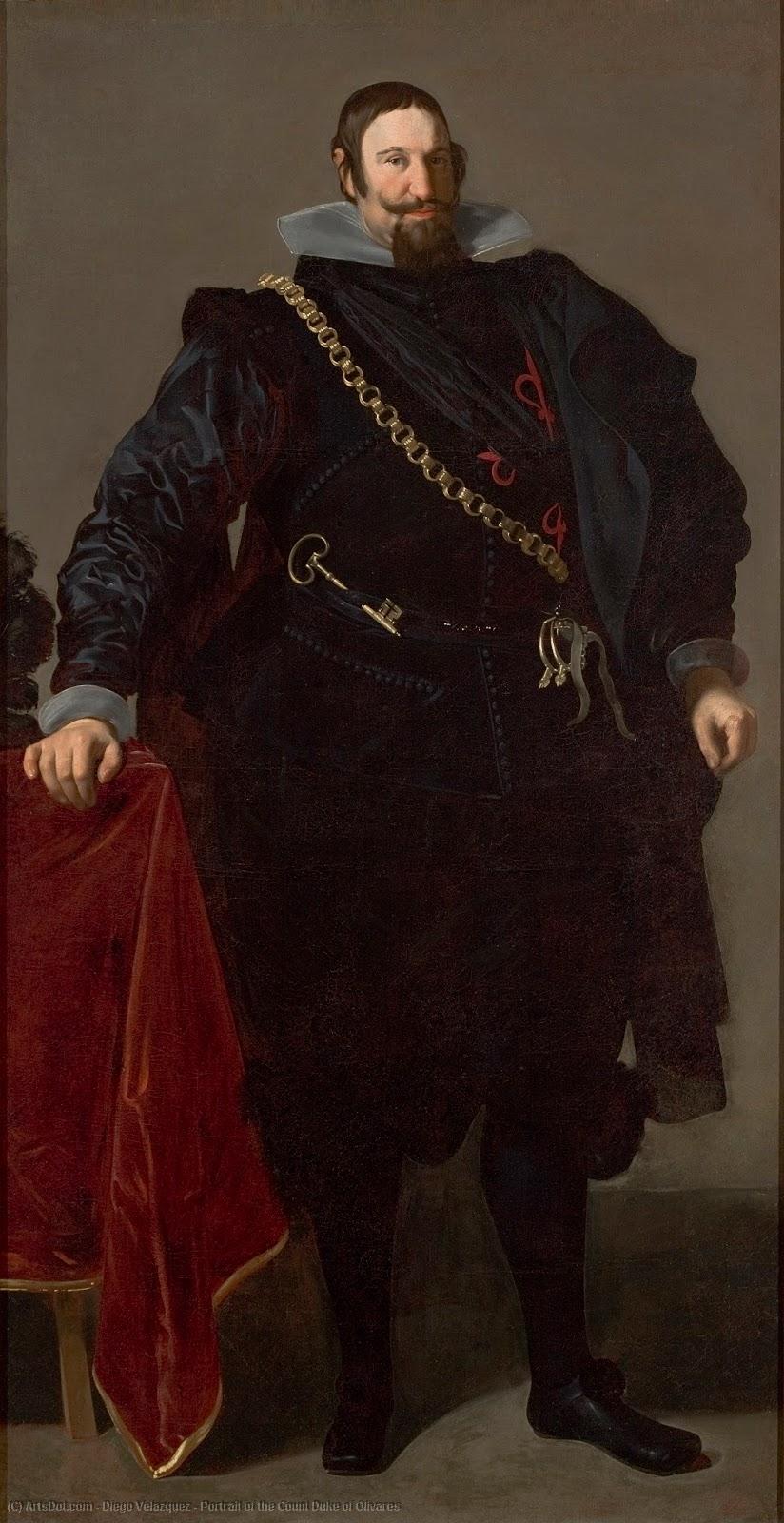
A Portrait of Power and Perception: Velázquez's Count Duke of Olivares
Diego Velázquez’s Portrait of the Count Duke of Olivares, completed in 1624, is more than a simple depiction of a nobleman; it’s a meticulously crafted window into the heart of Spanish courtly life during the early 17th century. This painting, measuring 203 x 106 cm and executed in oil on canvas, reveals the profound skill and astute observation that cemented Velázquez's legacy as “The Master of Light and Shadow.” The subject, Count-Duke Olivares – a pivotal figure in Spanish politics under Philip IV – is presented with an authority born not just from his rank but from Velázquez’s masterful rendering of human character. The composition itself is deceptively simple: the Duke stands confidently before a chair draped with a vibrant red cape, immediately drawing the eye and establishing a sense of regal presence. Yet, it's in the subtle details – the texture of his beard, the carefully considered drape of the fabric, the very expression on his face – that Velázquez’s genius truly shines.
- Technique: Velázquez employs his signature *sfumato* technique with breathtaking precision. The soft, almost hazy edges create a sense of depth and volume, particularly evident in the folds of the cape and the contours of the Duke's face. This masterful manipulation of light and shadow – *chiaroscuro* – isn’t merely decorative; it serves to emphasize Olivares’s power and self-assurance while simultaneously hinting at the complexities beneath his composed exterior.
- Color Palette: The restrained yet impactful color palette—dominated by earthy tones punctuated by the bold red of the cape—reflects the prevailing aesthetic sensibilities of the Baroque period. The gray wall serves as a neutral backdrop, allowing the subject’s attire and complexion to take center stage.
- Composition: The placement of Olivares within the frame is deliberate. His stance, slightly turned towards the viewer, invites engagement and fosters a sense of intimacy despite the formality of the portrait.
A Window into the Habsburg Court
Painted during a period of immense political and economic challenges for Spain – the Thirty Years' War draining resources and threatening stability – the portrait offers a poignant glimpse into the world of the Spanish court. Olivares himself was a key figure in navigating these turbulent times, serving as Minister of Finance and effectively managing the country’s affairs. The painting thus becomes a symbol of that era’s ambition, resilience, and ultimately, its complexities. The inclusion of the chair – a common feature in aristocratic portraits – subtly reinforces the Duke's position as a figure of authority and governance. It speaks to his role not just as a nobleman but as a man entrusted with immense responsibility.
The Artist’s Hand: Velázquez’s Legacy
Velázquez’s meticulous attention to detail is evident in every brushstroke, reflecting the artist's deep understanding of anatomy and perspective. He wasn’t simply painting a likeness; he was capturing a *personality*, imbuing the Count Duke with an air of quiet confidence and shrewd intelligence. This portrait exemplifies Velázquez’s revolutionary approach to portraiture – moving beyond mere representation to explore the psychological depth of his subjects. His influence extended far beyond the Spanish court, inspiring generations of artists who followed.
A Timeless Masterpiece
The Portrait of the Count Duke of Olivares remains a powerful testament to Velázquez’s artistic genius and a significant work within the Baroque period. Its enduring appeal lies not only in its technical brilliance but also in its ability to evoke a sense of history, power, and human complexity. A reproduction of this iconic artwork offers an unparalleled opportunity to experience firsthand the artistry of one of history's greatest painters.