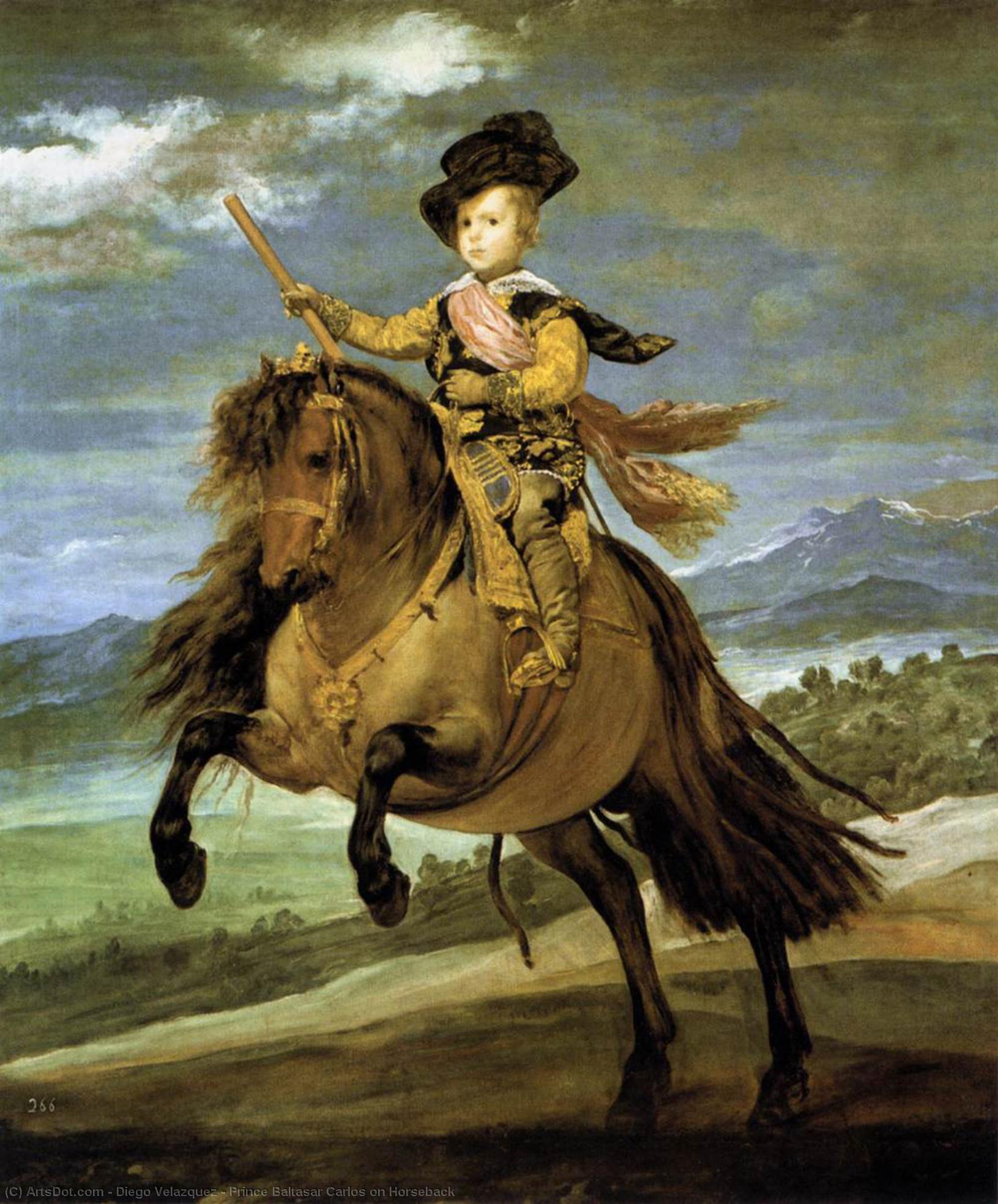
A Regal Portrait: Unveiling Velázquez’s *Prince Baltasar Carlos on Horseback*
Diego Velázquez's *Prince Baltasar Carlos on Horseback*, painted in 1635, is more than just an equestrian portrait; it’s a masterful display of Baroque artistry and a compelling glimpse into the Spanish Golden Age. Measuring 209 x 173 cm and residing within the esteemed Museo del Prado in Madrid, this oil-on-canvas work encapsulates power, youthful vigor, and the promise of future leadership.
Subject & Historical Context
The painting depicts Prince Baltasar Carlos, the son of King Philip IV, poised confidently atop a rearing horse. This was not merely a likeness; it formed part of a series commissioned for the Hall of Realms at the Buen Retiro Palace – a deliberate statement of dynastic strength and succession. Alongside portraits of Philip IV himself and the Count-Duke of Olivares, Baltasar Carlos’s image served to project an aura of authority and continuity within the Spanish court. The Prince, though young, was being presented as a future king, groomed for power and responsibility.
Artistic Style & Technique
Velázquez's Baroque style is brilliantly showcased here. He moves beyond rigid formality, imbuing the scene with dynamic energy.
The dramatic sky filled with dark clouds isn’t simply a backdrop; it creates tension and highlights the Prince’s composure – a subtle indication of his inherent strength. Velázquez's signature *alla prima* technique—painting directly onto the canvas without extensive underdrawing—is evident in the visible brushwork, lending a sense of immediacy and life to the scene. His masterful use of
chiaroscuro (the interplay of light and shadow) sculpts forms, adding depth and dimensionality. Notice how the light catches the Prince’s face and the horse's musculature, drawing the viewer’s eye.
Symbolism & Iconography
Every element within the composition carries symbolic weight. The elaborate attire – sword and baton – are not merely decorative; they represent Baltasar Carlos’s authority and his destined role as a military leader.
The rearing horse, though powerful, is controlled by the young Prince, symbolizing his command and self-discipline. Equestrian portraits themselves were historically associated with power and nobility, harking back to Roman imperial imagery. The positioning of the figure against the expansive sky suggests ambition and limitless potential.
Emotional Impact & Legacy
*Prince Baltasar Carlos on Horseback* evokes a sense of youthful confidence tempered by regal restraint. It’s not an overtly celebratory portrait, but rather one that subtly conveys the weight of expectation placed upon the young Prince. The painting's enduring appeal lies in its ability to capture both the individual personality of Baltasar Carlos and the grandeur of the Spanish monarchy.
For Collectors & Designers
- This artwork’s rich color palette – browns, ochres, and muted greens – lends itself beautifully to traditional interiors, adding a touch of historical sophistication.
- Its dynamic composition makes it a striking focal point in larger spaces, such as living rooms or dining areas.
- A high-quality reproduction captures the nuances of Velázquez’s brushwork and *chiaroscuro*, bringing the artistry of the original into your home.
- As a cornerstone of Baroque art, this piece offers an investment in cultural heritage and timeless aesthetic appeal.
This masterpiece remains a testament to Velázquez's genius – his ability to capture not just likenesses, but also the essence of power, youth, and destiny.