The Spiritual Landscape of Diego Velázquez’s ‘Saint John at Patmos’
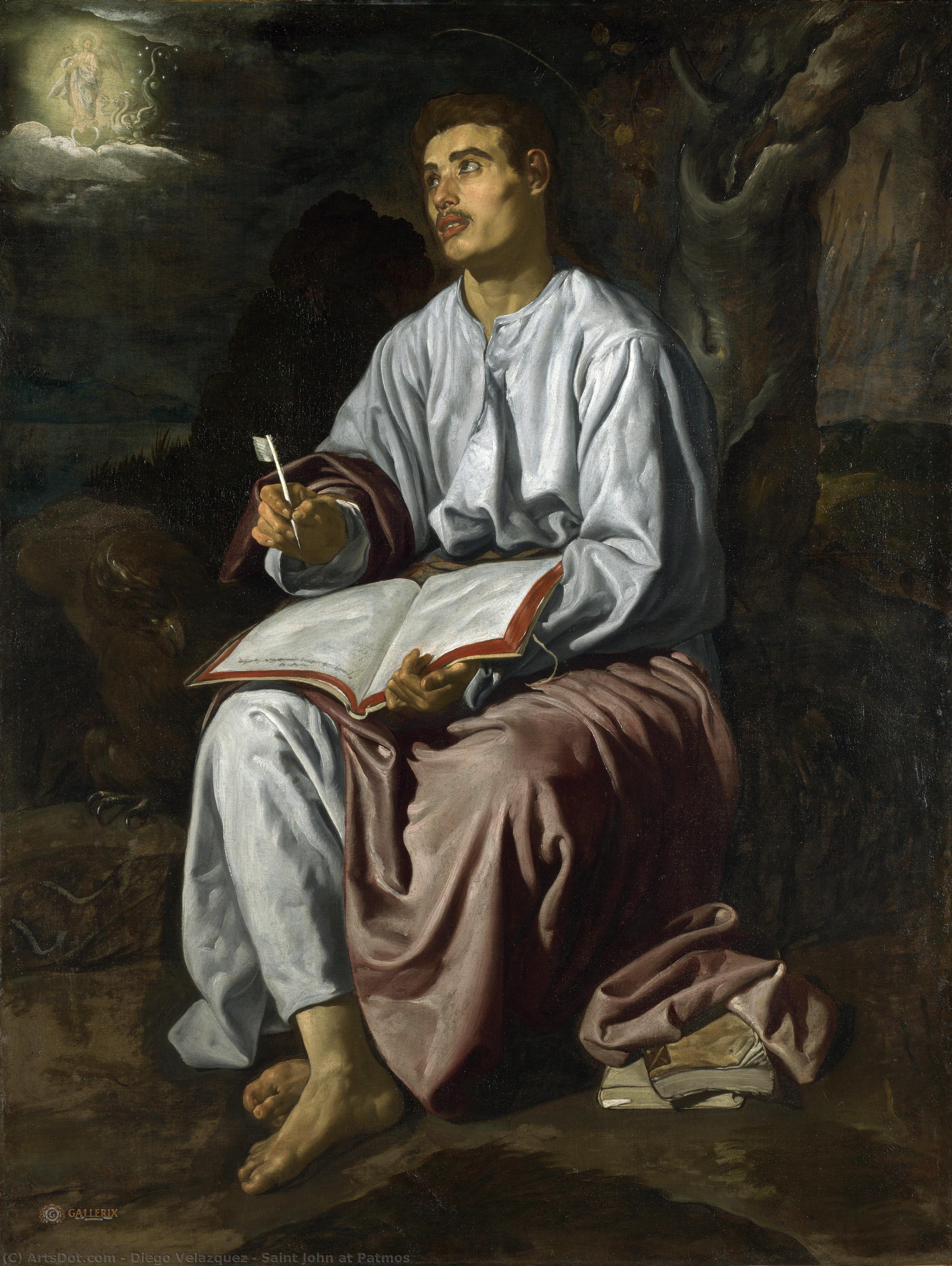
Diego Rodríguez de Silva y Velázquez's “Saint John at Patmos” isn’t merely a portrait; it’s an immersion into the heart of faith and artistic genius. Completed in 1619, this oil-on-canvas masterpiece transcends the conventions of its time, offering a profoundly intimate glimpse into the soul of the Evangelist as he wrestles with his divine revelation. The painting immediately draws the viewer in with a masterful use of light – a technique Velázquez termed “tenebrism” – that sculpts form and directs attention to John’s face, etched with contemplation and a hint of torment. The scene unfolds outdoors, bathed in a diffused glow that suggests both earthly reality and the ethereal realm of divine inspiration. The muted palette, dominated by browns, ochres, and subtle blues, creates an atmosphere of solemnity and quiet intensity, perfectly complementing the subject’s profound solitude.

A Master’s Apprenticeship and the Seeds of Realism
Velázquez's journey to this moment of profound artistic maturity was paved with rigorous training, beginning under the tutelage of Francisco de Herrera el Viejo and, crucially, Francisco Pacheco. Pacheco instilled in Velázquez not just technical skill – a command of proportion, perspective, and color – but also a deep appreciation for classical learning and a nascent understanding of human psychology. This foundation is evident in “Saint John at Patmos,” where the Evangelist’s posture, his furrowed brow, and the subtle tension in his hands speak volumes about his internal struggle. Interestingly, Velázquez's early works, like "Old Woman Frying Eggs," demonstrated a willingness to depict everyday life with startling realism – a departure from the idealized representations prevalent at the time. This commitment to capturing the nuances of human experience would become a hallmark of his later career.
Further research reveals that Velázquez’s portrait of Juan de Pareja, also a remarkable work exploring themes of identity and representation, showcases his evolving approach to depicting individuals with psychological depth. The way Velázquez captures Pareja's gaze and the subtle details of his clothing demonstrate a growing confidence in portraying not just outward appearances but also inner character.
The Symbolism of Quill and Eagle – A Divine Revelation
The details within the painting are laden with symbolic weight. John’s hand, poised over what appears to be a writing surface (though some scholars suggest it might be a book), immediately connects him to his role as recorder of divine revelation. The quill, a traditional tool for scribes and theologians, reinforces this association. Perhaps most striking is the presence of an eagle – a creature often associated with God’s power and vigilance in Christian iconography. It perches above John's shoulder, seemingly observing his work, suggesting that he is entrusted with a sacred task. The setting itself, Patmos, holds immense significance as the island where John received the Book of Revelation, making it a potent symbol of divine inspiration and spiritual transformation.
A Legacy Forged in Light and Shadow
“Saint John at Patmos” stands as a testament to Velázquez’s genius – a painting that seamlessly blends technical mastery with profound emotional resonance. It's a work that invites contemplation, prompting viewers to consider the nature of faith, the burden of revelation, and the artist’s ability to capture the essence of human experience. The painting’s enduring appeal lies not only in its exquisite detail but also in its capacity to evoke a sense of quiet reverence and spiritual intensity. Today, housed at The National Gallery in London, this Baroque masterpiece continues to captivate audiences with its timeless beauty and profound symbolism. ArtsDot offers meticulously crafted hand-painted reproductions that allow you to experience the full splendor of Velázquez’s vision within your own space.