Diego Velázquez’s *Saint Thomas*: A Meditation on Faith and Light
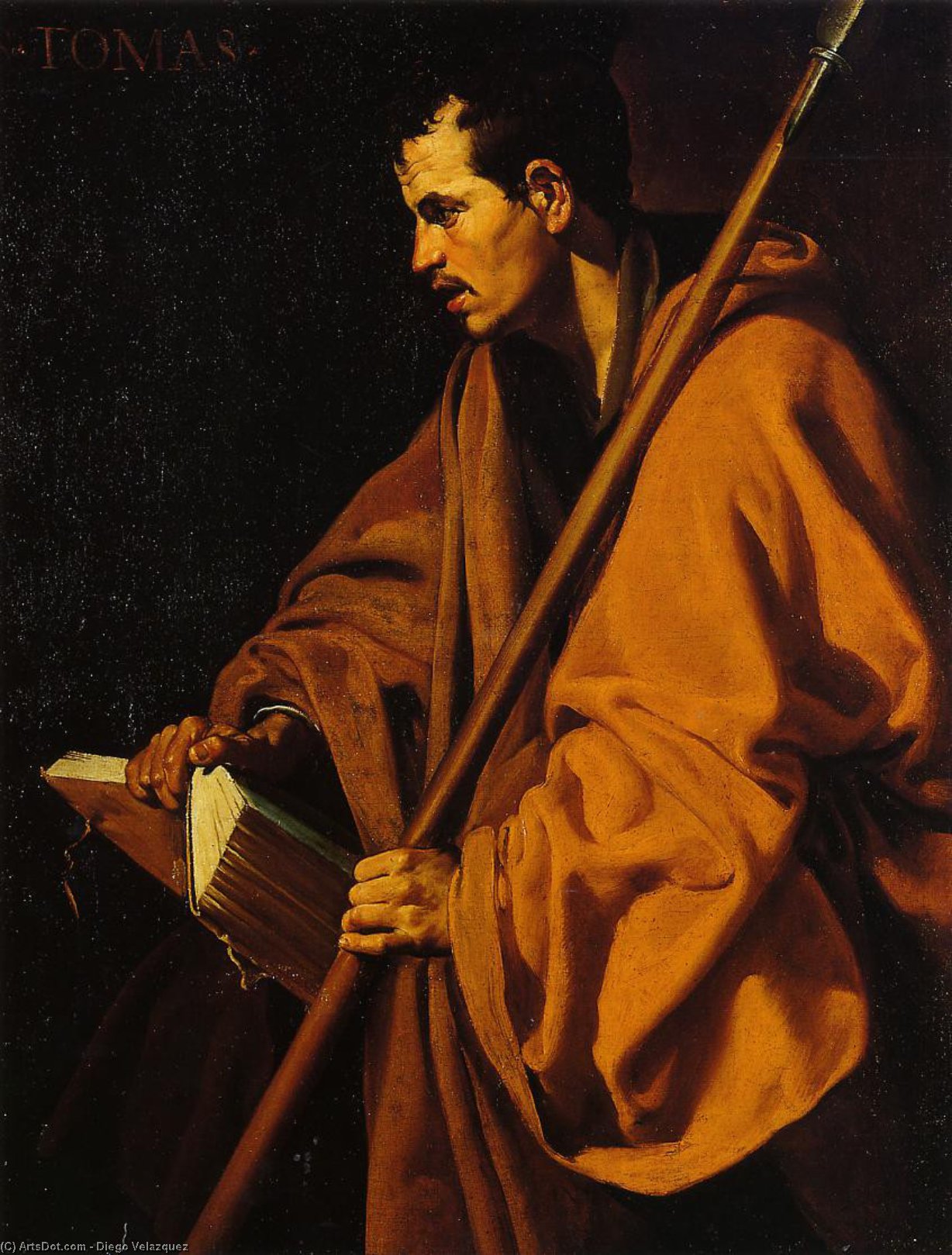
Diego Rodríguez de Silva y Velázquez's Saint Thomas, painted in 1620, is more than just a portrait; it’s a profound meditation on faith, contemplation, and the masterful manipulation of light – hallmarks of the Baroque era. Housed within The Museum City Art Gallery in New Zealand, this oil-on-canvas work offers a rare glimpse into the soul of one of Jesus' twelve apostles, captured with an intimacy rarely achieved in religious art of the period. The painting’s stark black and white presentation immediately evokes a sense of timelessness, stripping away the distractions of color to focus solely on the subject’s internal state and Velázquez’s extraordinary technical skill.
Subject and Symbolism: An Apostle's Reflection
The central figure is Saint Thomas, known for his skepticism and his demand to physically touch Jesus after hearing of his resurrection. Here, he is depicted not in a moment of fervent belief, but in a posture of quiet contemplation, holding a book – a symbol of knowledge and scripture – in his hand. Beside him stands a staff, representing authority and perhaps the burdens of leadership within the Christian community. The deliberate positioning suggests a man wrestling with profound questions, seeking answers through study and reflection. Velázquez doesn't portray Thomas as triumphant or ecstatic; instead, he presents a vulnerable, deeply thoughtful individual, inviting the viewer to share in his internal struggle.
Velázquez’s Baroque Technique: Chiaroscuro and Psychological Depth
Velázquez’s genius lies in his unparalleled command of *chiaroscuro*, the dramatic use of light and shadow. The stark contrast between illuminated areas – primarily focused on Thomas' face and posture – and the enveloping darkness creates a powerful sense of depth and draws the viewer’s eye directly to the subject. This technique isn’t merely decorative; it serves to heighten the emotional impact, emphasizing the apostle’s introspective mood. The artist’s meticulous attention to detail, from the folds of the robe to the texture of the staff, demonstrates a profound understanding of human anatomy and form – skills honed through years of observation and practice. The signature in the lower left corner confirms this dedication to his craft.
Historical Context and Artistic Legacy
Painted during Spain’s Golden Age, Saint Thomas reflects the grandeur and religious fervor of the Habsburg court. Velázquez was a key figure within this court, documenting its members and events with remarkable realism. His work stands as a testament to his innovative approach to portraiture, moving beyond mere likenesses to capture psychological character and emotional nuance. Considered alongside other works like *Madre Maria Jeronima de la Fuente*, *St. Paul*, *The Lunch*, and *Christ in the House of Mary and Martha*, Saint Thomas exemplifies Velázquez’s enduring legacy as a master of light, shadow, and human psychology – a position he rightfully holds within the pantheon of Western art history.