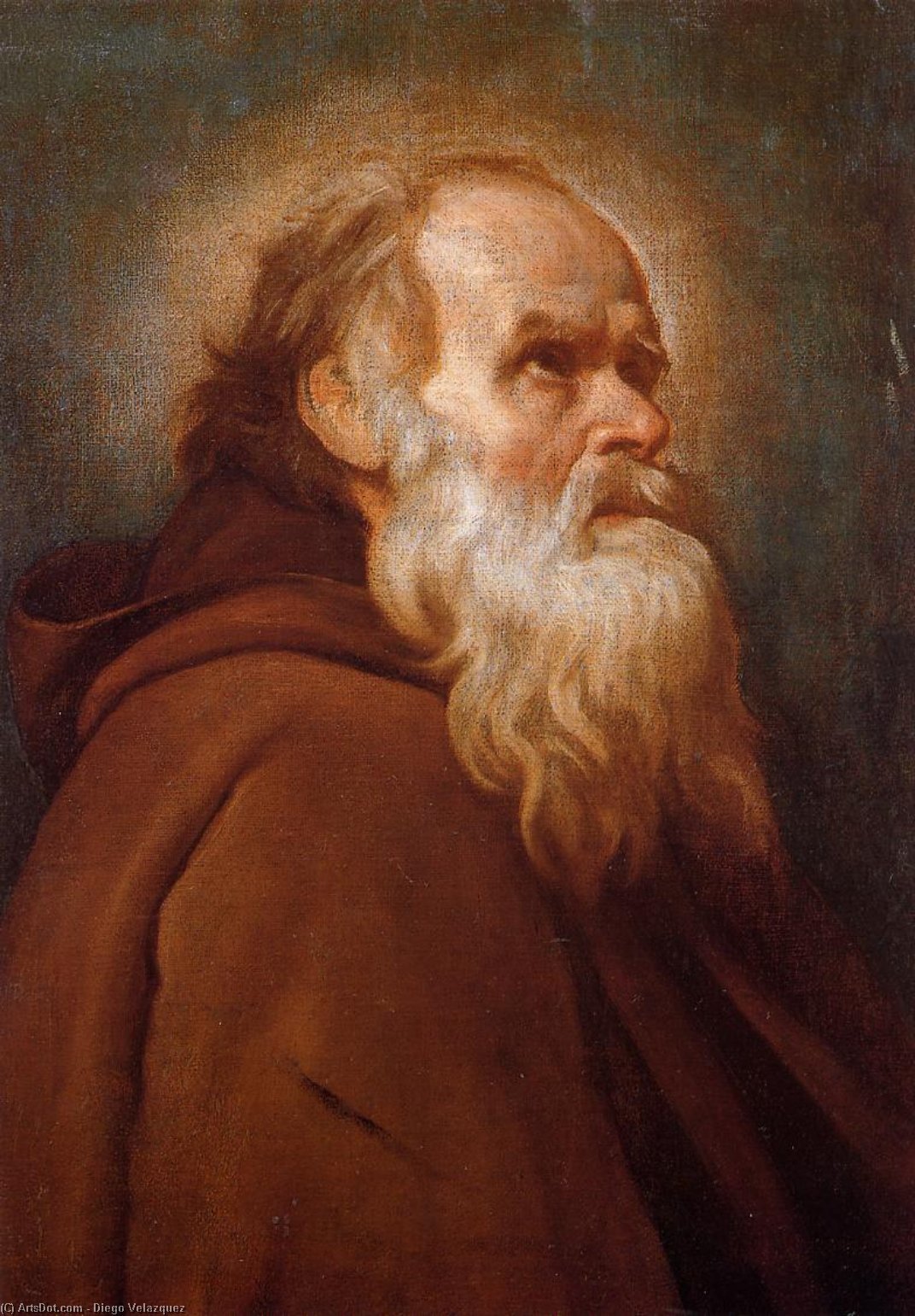
A Contemplative Vision: Diego Velázquez’s *St. Anthony Abbot* (1638)
This captivating portrait by Diego Velázquez offers a profound glimpse into the spiritual world of 17th-century Spain. Painted in 1638, *St. Anthony Abbot* is not merely a depiction of an aged monk; it’s a masterful exploration of faith, contemplation, and the weight of years rendered with breathtaking realism and emotional depth.
Subject & Historical Context
The subject, St. Anthony Abbot, is considered the father of monasticism. Living in Egypt during the 3rd century, he retreated to the desert for a life of solitude and prayer, becoming a pivotal figure in early Christian asceticism. Velázquez’s portrayal aligns with the Counter-Reformation emphasis on piety and religious devotion prevalent in Spain at the time. The painting likely formed part of a larger devotional series, potentially alongside its companion piece *St. Paul the Hermit*. Velázquez, serving as court painter to Philip IV, was deeply embedded within the cultural and religious landscape of his era, and this work reflects those influences.
Baroque Style & Velázquez’s Technique
*St. Anthony Abbot* is a quintessential example of the Spanish Baroque style. Velázquez employs
dramatic chiaroscuro – a striking contrast between light and shadow – to sculpt the figure, drawing our eye immediately to the monk's face and hands. This technique isn’t simply about visual effect; it imbues the scene with a sense of mystery and spiritual intensity. Velázquez’s brushwork is remarkably loose and expressive for its time. He doesn’t strive for meticulous detail but rather builds form through layers of impasto, creating a rich texture that feels almost tangible. This technique anticipates later developments in painting, influencing artists for centuries to come.
Symbolism & Iconography
While seemingly straightforward, the portrait is imbued with subtle symbolism. The monk’s weathered face and simple attire speak to a life of renunciation and dedication to faith. His intense gaze suggests deep inner contemplation and a connection to the divine. The limited background focuses all attention on the figure, emphasizing his spiritual isolation and unwavering devotion.
The very act of portraying such a solitary figure speaks to the power of individual faith in a turbulent era.
Emotional Impact & Artistic Legacy
*St. Anthony Abbot* evokes a powerful sense of quietude and reverence. The painting invites viewers to reflect on themes of aging, spirituality, and the search for meaning. Velázquez’s ability to capture not just physical likeness but also the inner life of his subject is truly remarkable. His influence extends far beyond his own time; artists like Édouard Manet and Pablo Picasso have acknowledged their debt to Velázquez's innovative techniques and profound psychological insight.
Considerations for Collectors & Designers
- A Timeless Aesthetic: The painting’s muted color palette and classical composition make it a versatile addition to various interior styles, from traditional to contemporary.
- Focal Point Potential: Its dramatic lighting and compelling subject matter ensure it will serve as a captivating focal point in any room.
- Historical Significance: Owning a high-quality reproduction of *St. Anthony Abbot* is not just acquiring a beautiful artwork; it’s possessing a piece of art history.
- Pairing Possibilities: Consider pairing this work with other Baroque or religious-themed artworks to create a cohesive and impactful display.