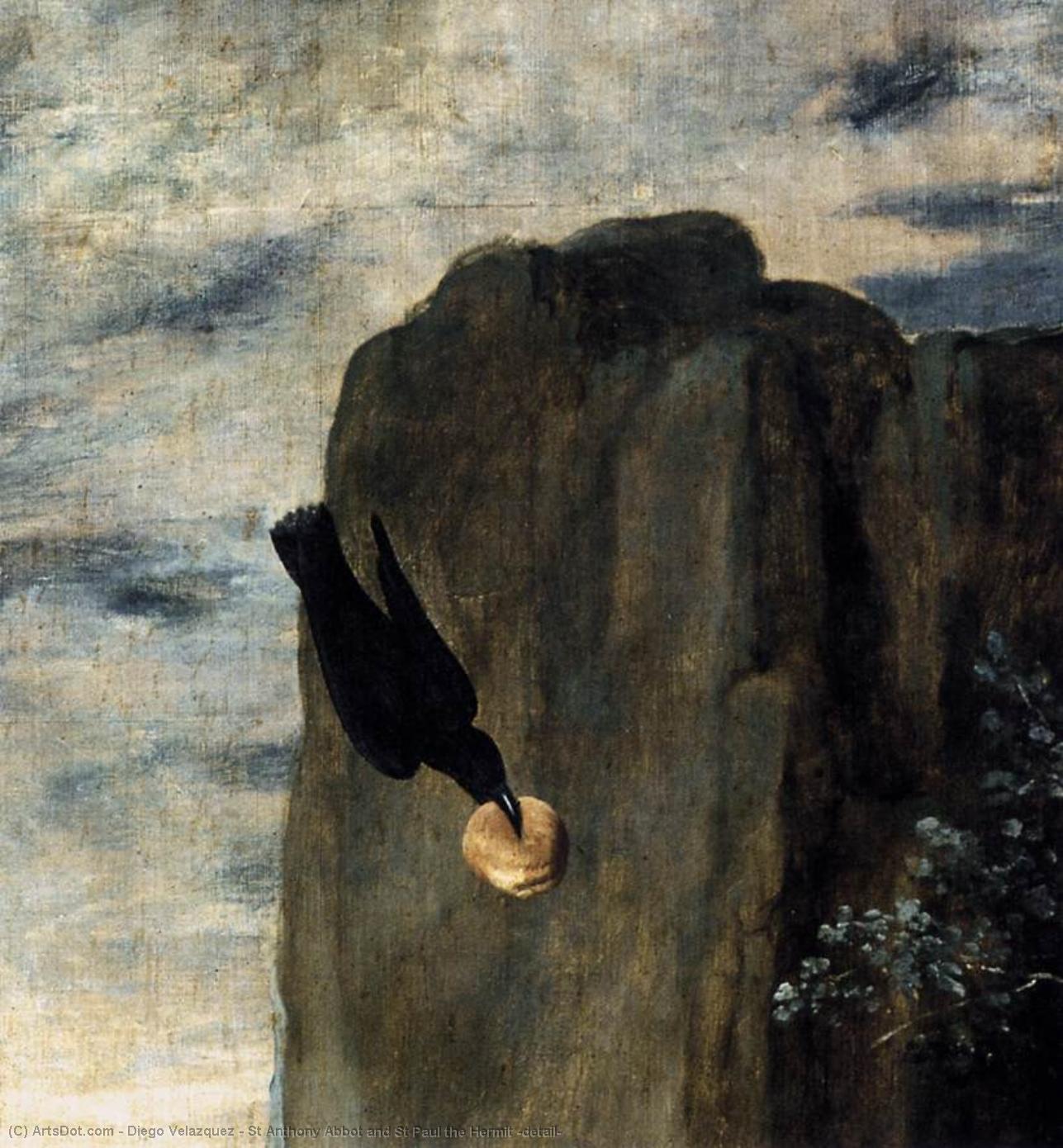
The Soul’s Retreat: Unveiling Velázquez's 'St Anthony Abbot and St Paul the Hermit'
Diego Rodríguez de Silva y Velázquez, a name synonymous with the Spanish Golden Age, possessed an extraordinary ability to capture not just appearances but the very essence of human experience. Among his vast oeuvre, ‘St Anthony Abbot and St Paul the Hermit (detail)’ stands as a particularly poignant and profoundly moving work—a testament to his mastery of light, shadow, and the subtle language of emotion. Painted in 1635 during his tenure at the Museo del Prado in Madrid, this oil on canvas piece is more than simply a depiction of two religious figures; it’s an invitation into a realm of contemplation, solitude, and spiritual yearning.
The painting immediately draws the eye with its masterful use of chiaroscuro – a technique Velázquez perfected to create dramatic contrasts between light and dark. This isn't merely about visual effect; it’s integral to the work’s narrative. The deep, enveloping shadows that cling to Anthony’s monastic habit and Paul’s weathered face suggest a life lived in quiet detachment from worldly concerns. Conversely, shafts of golden light illuminate their faces, hinting at divine grace and the inner peace they have found through asceticism. The landscape itself is rendered with an almost palpable sense of depth – rugged cliffs, sparse vegetation, and a vast, cloud-strewn sky—all contributing to the feeling of isolation and the grandeur of the natural world.
- Subject Matter: The painting depicts Saint Anthony the Abbot and Saint Paul the Hermit engaged in conversation. This scene is drawn from the legend of St. Anthony, who sought refuge in the desert after renouncing his worldly possessions to dedicate himself to God.
- Symbolism: The raven delivering bread symbolizes divine providence—a reminder that even in solitude, sustenance and guidance are provided. The hermit’s staff represents his commitment to a life of prayer and contemplation. The desolate landscape embodies the spiritual journey away from temptation and towards enlightenment.
Velázquez's Baroque Vision: Realism Infused with Drama
Velázquez was a pivotal figure in the transition between Mannerism and Baroque art, and ‘St Anthony Abbot and St Paul the Hermit’ exemplifies this shift. While retaining elements of his earlier, more restrained style, he embraced bolder brushstrokes, heightened contrasts, and a greater emphasis on capturing fleeting moments of emotion. Unlike many artists who idealized their subjects, Velázquez presented these figures with an unflinching realism—their faces etched with the marks of time and hardship, their clothing worn and weathered. This honesty imbues the painting with a remarkable sense of immediacy and authenticity.
The artist’s meticulous attention to detail is evident in every aspect of the composition, from the texture of Anthony's robe to the ruggedness of the cliffs. He employed a technique known as ‘wet-on-wet,’ applying fresh paint directly onto a still-damp surface, allowing for soft edges and blended colors—a hallmark of his style. This approach creates an atmospheric effect that is both luminous and deeply evocative.
A Legacy Beyond the Canvas: Influence on Modern Art
Velázquez’s influence extends far beyond the Baroque period. His innovative use of light, shadow, and perspective paved the way for many subsequent artists, including Impressionists like Monet and Renoir, who sought to capture the fleeting effects of light and atmosphere. Artists as diverse as Picasso and Bacon have acknowledged Velázquez's profound impact on their work, recognizing his ability to convey complex emotions through seemingly simple compositions. The very notion of the ‘artist’s studio,’ famously depicted in Velázquez’s self-portrait, became a foundational image for modern art—a testament to his pioneering spirit.
‘St Anthony Abbot and St Paul the Hermit (detail)’ remains a powerful reminder of the enduring appeal of religious art. It is a painting that invites contemplation, prompting viewers to reflect on their own spiritual journeys and the search for meaning in a complex world. ArtsDot offers exquisite, hand-painted reproductions of this masterpiece, allowing you to bring its timeless beauty into your home or office.
Explore The Museum Prado (Madrid, Spain) for more information about this incredible institution and its collection of Velázquez’s works.