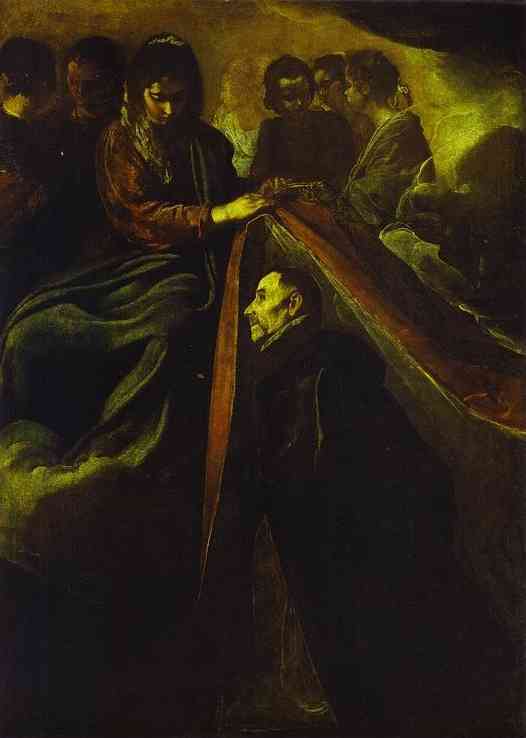
A Divine Gift: Unveiling Velázquez’s ‘St. Ildefonso Receiving the Chasuble from the Virgin’
Diego Velázquez's 'St. Ildefonso Receiving the Chasuble from the Virgin' is a masterpiece of the Spanish Golden Age, radiating both spiritual devotion and artistic brilliance. Painted between 1630-1632 for the Oratory of St. Ildefonso in Toledo Cathedral, this large-scale canvas exemplifies Velázquez’s unique ability to blend religious narrative with strikingly realistic portrayal.
Historical & Religious Significance
The painting depicts a pivotal moment in the life of Saint Ildefonso, a 7th-century Archbishop of Toledo and a key figure in Spanish Catholicism. According to legend, the Virgin Mary herself appeared to Ildefonso, presenting him with a chasuble – a richly ornamented liturgical vestment – as a symbol of his purity and dedication to the faith. This event solidified St. Ildefonso’s importance within the Catholic Church and became a powerful emblem of divine favor. The commission itself reflects the Counter-Reformation's emphasis on reinforcing religious imagery and bolstering faith through visual storytelling.
Baroque Style & Velázquez’s Innovation
While firmly rooted in the Baroque period, characterized by dramatic compositions and intense emotionality, Velázquez transcends typical stylistic conventions. He eschews overt theatricality for a more restrained and psychologically nuanced approach. The scene isn't one of bombastic spectacle but rather an intimate encounter imbued with reverence.
Velázquez’s mastery lies in his ability to convey profound spirituality through subtle gestures and expressions. His work foreshadowed the development of Impressionism, particularly in his handling of light and color.
Technique & Artistic Mastery
Executed in oil on canvas (measuring 258 x 174 cm), the painting showcases Velázquez’s exceptional technical skill. He employs a loose, fluid brushstroke – remarkably modern for its time – to create a sense of atmospheric depth and realism.
The use of *impasto* is subtle but effective, adding texture and luminosity to the figures' garments and faces. His masterful manipulation of light and shadow (tenebrism) draws the viewer’s eye towards the central figures—the Virgin Mary and St. Ildefonso—while enveloping the surrounding angels in a soft, ethereal glow. The composition is carefully balanced, with the ascending forms creating a dynamic yet harmonious arrangement.
Symbolism & Interpretation
The painting is rich in symbolic meaning. The chasuble itself represents not only ecclesiastical authority but also divine grace and protection. The presence of angels reinforces the heavenly nature of the event. St. Ildefonso’s humble posture and expression convey his awe and unworthiness in receiving such a sacred gift.
- The red hue of the chasuble symbolizes passion, sacrifice, and the blood of Christ.
- The Virgin Mary's serene countenance embodies purity, compassion, and her role as an intercessor between God and humanity.
- The positioning of figures creates a visual hierarchy emphasizing the divine origin of the gift.
Emotional Impact & Lasting Legacy
‘St. Ildefonso Receiving the Chasuble from the Virgin’ evokes a sense of profound spiritual contemplation. The painting invites viewers to reflect on themes of faith, devotion, and the power of divine grace.
It is not merely a depiction of a religious event but an exploration of the human experience of encountering the sacred. Velázquez's innovative approach to composition, technique, and psychological realism cemented his place as one of the most important artists in Western art history, influencing generations of painters to come. This work remains a powerful testament to his artistic genius and enduring legacy.