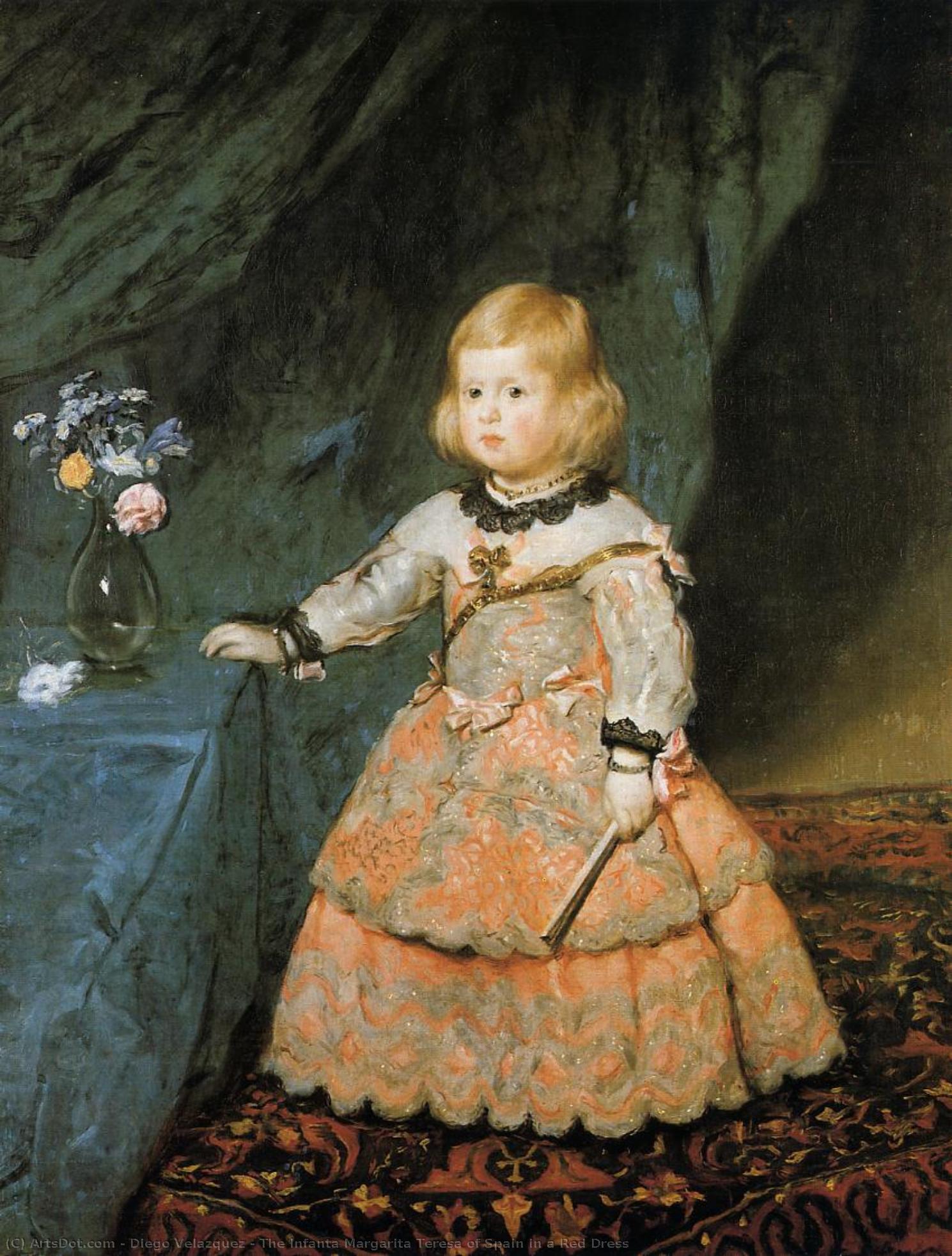
A Regal Portrait: The Infanta Margarita Teresa in Red
Painted in 1653 by the masterful Diego Velázquez, this portrait captures the five-year-old Infanta Margarita Teresa of Spain – a princess whose life was steeped in dynastic expectation and courtly ritual. More than just a likeness, it’s a window into the opulent world of the Spanish Habsburgs at the height of their power, and a testament to Velázquez's unparalleled skill.
Style & Technique: Baroque Realism
- Baroque Grandeur: The painting exemplifies the Spanish Baroque style – characterized by dramatic lighting, rich color palettes, and a sense of movement. However, Velázquez transcends mere stylistic adherence, imbuing his work with an extraordinary realism.
- Masterful Brushwork: Executed in oil on canvas (100 x 129 cm), the painting showcases Velázquez’s signature loose brushstrokes. This technique, revolutionary for its time, creates a sense of immediacy and life, particularly evident in the textures of the fabrics and the delicate rendering of the Infanta's features.
- Chiaroscuro & Depth: The dramatic interplay of light and shadow (chiaroscuro) emphasizes the Infanta’s presence while creating a mysterious depth within the composition. A low horizon line further enhances her stature and importance.
Historical Context: A Princess in Power
The mid-17th century was a period of decline for Spain, despite its continued imperial ambitions. The Infanta Margarita Teresa held immense symbolic weight as the heir presumptive to the throne – a beacon of hope for the continuation of the Habsburg dynasty. Velázquez, as court painter, was tasked with crafting images that projected power and legitimacy.
Symbolism & Meaning
- Royal Attire: The Infanta’s vibrant red dress is not merely a fashion statement; it signifies her royal status and the wealth of the Spanish court. Red was traditionally associated with power, nobility, and passion.
- A Glimpse into Court Life: While seemingly straightforward, the portrait subtly reveals aspects of courtly life. The inclusion of luxurious fabrics, a refined pose, and the overall sense of formality underscore the rigid protocols governing the lives of royalty.
- The Sword as Symbolism: Though young, the Infanta’s presence with a small sword hints at future leadership and authority, subtly preparing her for the responsibilities that lay ahead.
Emotional Impact & Legacy
Velázquez doesn't simply present a regal figure; he captures a moment of quiet dignity and youthful innocence. The Infanta’s gaze is direct yet contemplative, inviting the viewer to connect with her on a human level. This ability to imbue his subjects with psychological depth sets Velázquez apart.
This portrait, like many of Velázquez's works – including his masterpiece Las Meninas – has profoundly influenced generations of artists. It remains a compelling example of Baroque portraiture and a testament to the enduring power of art to capture not just likenesses, but also the essence of an era.