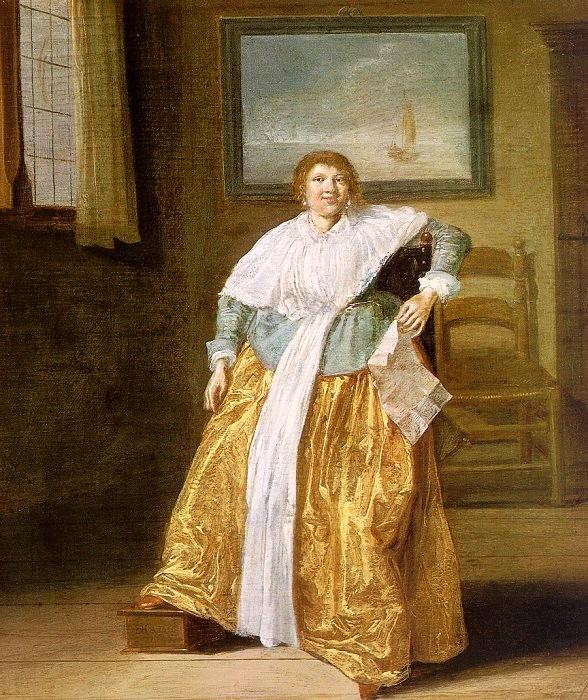
Dirck Hals’s “Seated Woman with a Letter”: A Window Into Dutch Golden Age Sentiment
The painting "Seated Woman with a Letter" by Dirck Hals, completed in 1633 and currently residing at the Philadelphia Museum of Art, stands as a quintessential example of Dutch Golden Age portraiture—a genre characterized by its remarkable realism and profound psychological depth. Hals’s artistic vision transcends mere representation; he captures not just an individual's likeness but also the very essence of human emotion and social connection, offering viewers a glimpse into the nuanced atmosphere of seventeenth-century Holland.
Composition and Technique: Mastering Light and Texture
Hals’s masterful technique is immediately apparent upon observation. He employs oil paint on panel with meticulous attention to detail, utilizing layering and blending techniques that create an astonishingly luminous surface. The soft, diffused light emanating from the window illuminates the woman's face and dress, casting delicate shadows that sculpt her features and contribute significantly to the painting’s dramatic effect. Hals skillfully renders textures—the folds of the fabric, the sheen of the skin—creating a palpable sense of materiality that distinguishes his work from earlier styles. This meticulous approach reflects the prevailing artistic ideals of the era, prioritizing accuracy and expressive nuance above all else.
Historical Context: The Rise of Domestic Portraiture
“Seated Woman with a Letter” emerged during a period of unprecedented prosperity and cultural flourishing in Holland—the Dutch Golden Age (roughly 1600-1700). This era witnessed an explosion of artistic creativity fueled by burgeoning trade, scientific inquiry, and intellectual debate. Portraiture gained considerable prestige as a genre, reflecting the growing importance of social status and familial bonds. The subject matter itself – a woman engaged in private contemplation—was particularly popular, symbolizing domestic tranquility and marital happiness. Hals’s depiction aligns perfectly with these cultural trends, capturing a moment of intimacy that speaks to the values of his time.
Symbolism: Beyond Appearance - Emotion and Connection
The seemingly simple scene holds considerable symbolic significance. The woman's radiant smile conveys joy and contentment—a testament to the positive news conveyed by the letter she clutches. This gesture underscores the importance of communication and connection within the domestic sphere, highlighting the role of correspondence in fostering relationships during a time when travel was arduous and infrequent. Furthermore, Hals’s careful portrayal of the woman’s attire – a yellow dress adorned with a white collar—suggests wealth and refinement, reinforcing social hierarchies prevalent throughout Dutch society.
A Legacy of Emotional Resonance
Dirck Hals's "Seated Woman with a Letter" continues to captivate audiences today due to its ability to evoke profound emotional responses. Unlike many portraits of the period that prioritize formal dignity, Hals’s painting radiates warmth and sincerity—a rare achievement in art history. It serves as an enduring reminder of the power of visual art to convey complex emotions and capture fleeting moments of human experience. Its inclusion in the Philadelphia Museum of Art ensures that this masterpiece will inspire generations of viewers to contemplate the beauty of everyday life and the significance of human connection.
- Artist: Dirck Hals
- Year Created: 1633
- Location: Philadelphia Museum of Art