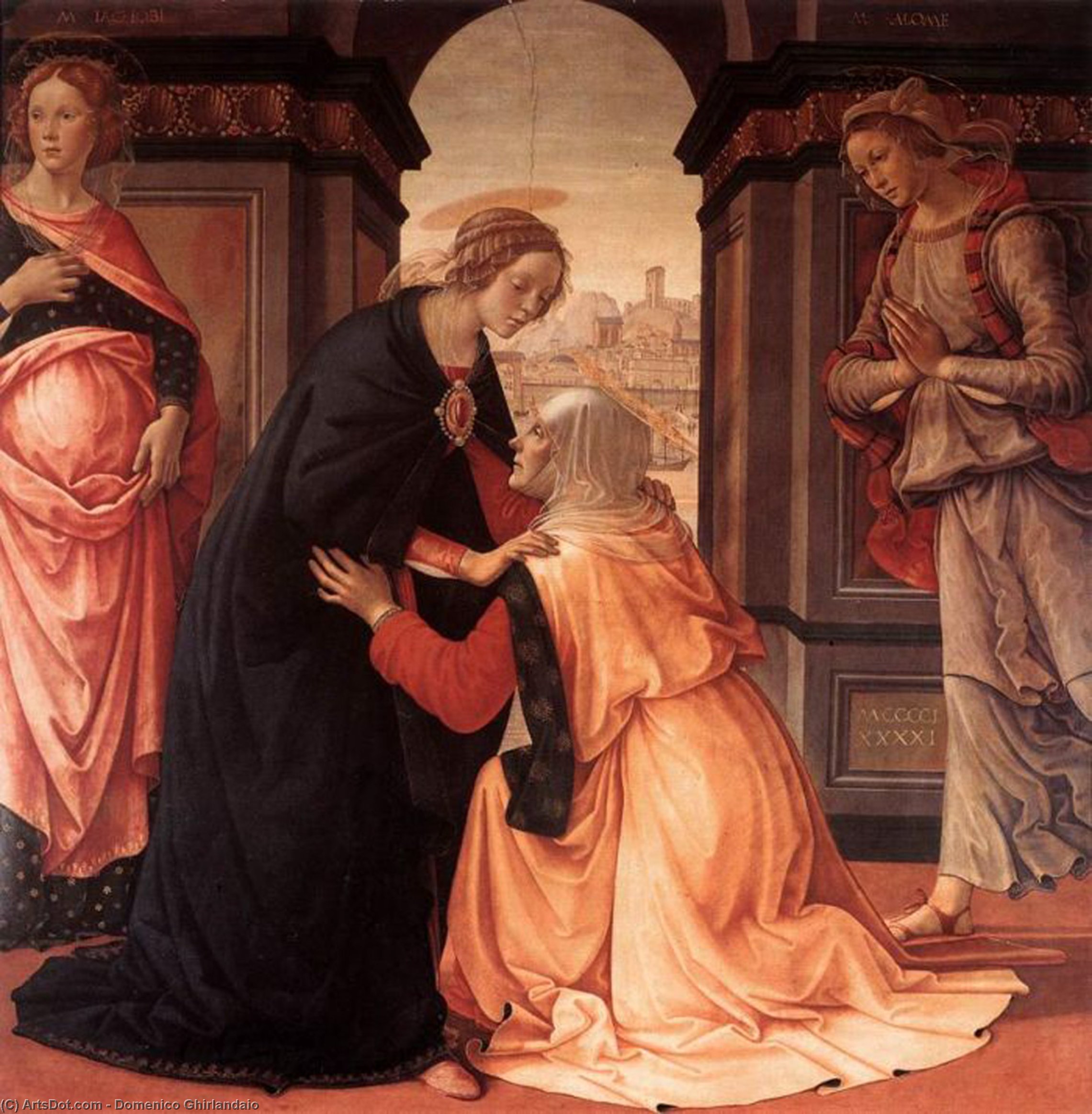
A Moment of Grace: Domenico Ghirlandaio’s Visitation
The painting “Visitation” by Domenico Ghirlandaio, completed in 1491, transcends mere depiction; it embodies the profound spiritual significance inherent in Renaissance Florence. Executed in fresco—a technique favored for its durability and luminous quality—this artwork captures a pivotal biblical narrative: Mary's pilgrimage to Elizabeth, her cousin who was miraculously pregnant with John the Baptist. More than just a visual record of scripture, Ghirlandaio’s masterpiece speaks volumes about humanist ideals and artistic innovation of the period.
- Subject Matter & Narrative Depth: At its core lies the Gospel account recounted in Luke 1:39-45 – Mary visiting Elizabeth and sharing joyous news of John's impending birth. This scene isn’t simply about two women meeting; it symbolizes divine grace, foreshadowing the incarnation and highlighting the interconnectedness of God’s plan for humanity.
- Style & Technique: Ghirlandaio’s style aligns seamlessly with the Florentine Mannerist tradition—characterized by refined elegance, subtle distortions of perspective, and a masterful manipulation of color. He employs meticulous detail, evident in the expressive faces of Mary and Elizabeth, demonstrating an unwavering commitment to realism while simultaneously elevating the scene beyond mere representation.
The composition itself is carefully orchestrated. The arched doorway framing the figures serves as a visual conduit, drawing the viewer’s eye into the intimate embrace between Mary and Elizabeth—a gesture signifying mutual support and spiritual communion. Ghirlandaio skillfully utilizes pyramidal structure to create stability and harmony, reinforcing the solemnity of the occasion. Notice the delicate drapery folds that drape around the women, mirroring the flowing robes of angels depicted in the upper register – a deliberate stylistic choice reflecting Renaissance artistic conventions.
Symbolism & Emotional Resonance:
Elizabeth’s radiant pregnancy symbolizes divine blessing and foreshadows the arrival of Jesus Christ, representing hope and redemption. The angel Gabriel, positioned above Mary and Elizabeth, embodies divine intervention and proclaims God's promise to fulfill prophecies. Ghirlandaio’s masterful use of color—particularly warm hues like ochre and crimson—evokes feelings of compassion, joy, and reverence. These colors contribute significantly to the painting’s emotional impact, transporting viewers back to Renaissance Florence and immersing them in the atmosphere of faith and artistic brilliance.
- Historical Context: Created during a period marked by intellectual ferment and artistic experimentation, “Visitation” reflects the humanist revival that championed classical ideals alongside Christian piety. Ghirlandaio’s work stands as testament to Florence's position at the forefront of European art—a beacon of creativity and spiritual contemplation.
- Interior Designer Inspiration: Consider incorporating elements reminiscent of Ghirlandaio’s palette and compositional techniques into contemporary interior design projects. The serene beauty of “Visitation” can inspire spaces characterized by understated elegance, harmonious color schemes, and a focus on conveying profound emotion—a timeless pursuit that resonates powerfully with audiences today.
Ultimately, Domenico Ghirlandaio's "Visitation" remains an enduring emblem of Renaissance artistic achievement. Its meticulous execution, symbolic richness, and emotional depth continue to captivate viewers centuries later, cementing its place as a cornerstone of Western art history.