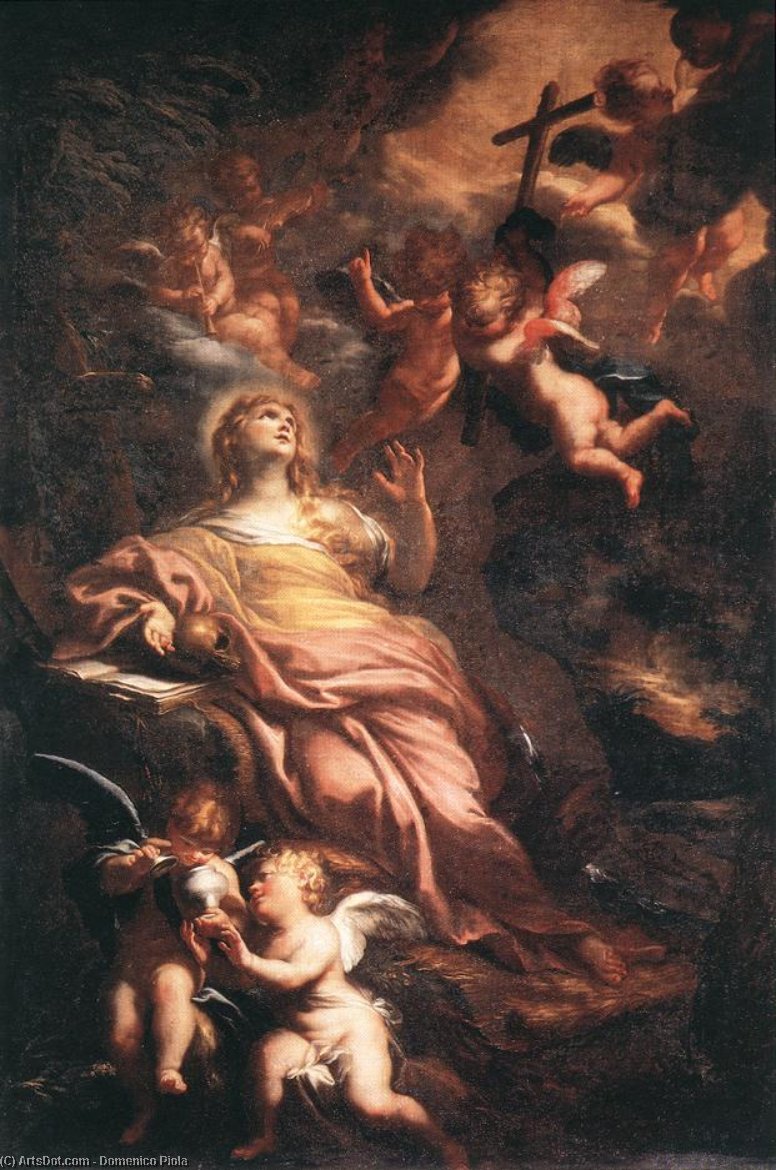
The painting
Magdalene in the Desert by
Domenico Piola is a stunning example of Baroque art, characterized by its dramatic lighting and intense emotions. Created in 1674, this oil on canvas masterpiece measures 300 x 198 cm and is housed in the
Oratorio di Santa Maria Maddalena in Laigueglia, Italy.
The Artist and His Style
Domenico Piola was a prominent Italian painter of the Baroque period, known for his vivid and expressive works. His style is marked by the use of
chiaroscuro, a technique that emphasizes contrasts between light and dark to create a sense of depth and volume. In
Magdalene in the Desert, Piola's use of chiaroscuro adds a dramatic effect to the scene, drawing the viewer's attention to the central figure of Mary Magdalene.
The Painting's Symbolism
The painting depicts Mary Magdalene in a desert landscape, surrounded by cherubs and holding a skull, which symbolizes
mortality and the fleeting nature of life. The dark sky filled with clouds adds a sense of drama and tension to the scene, underscoring the spiritual journey that Mary Magdalene is undertaking. The use of
symbolism in the painting invites the viewer to reflect on the themes of redemption and spiritual growth.
- The painting's composition and use of color create a sense of harmony and balance, drawing the viewer's eye to the central figure of Mary Magdalene.
- The cherubs surrounding Mary Magdalene add a sense of innocence and purity to the scene, highlighting her spiritual transformation.
- The skull held by Mary Magdalene serves as a reminder of the transience of life and the importance of spiritual reflection.
ArtsDot.com offers a range of handmade oil painting reproductions of
Magdalene in the Desert, allowing art lovers to own a piece of history. Visit
ArtsDot.com to explore our collection of museum-quality reproductions. For more information on the artist and his works, visit
Wikipedia.
The painting
Magdalene in the Desert by
Domenico Piola is a masterpiece of Baroque art, offering a glimpse into the spiritual and emotional world of the 17th century. Its use of symbolism, chiaroscuro, and composition creates a powerful and thought-provoking work that continues to inspire art lovers today.