A Moment Frozen in Faith: Duccio’s Funeral
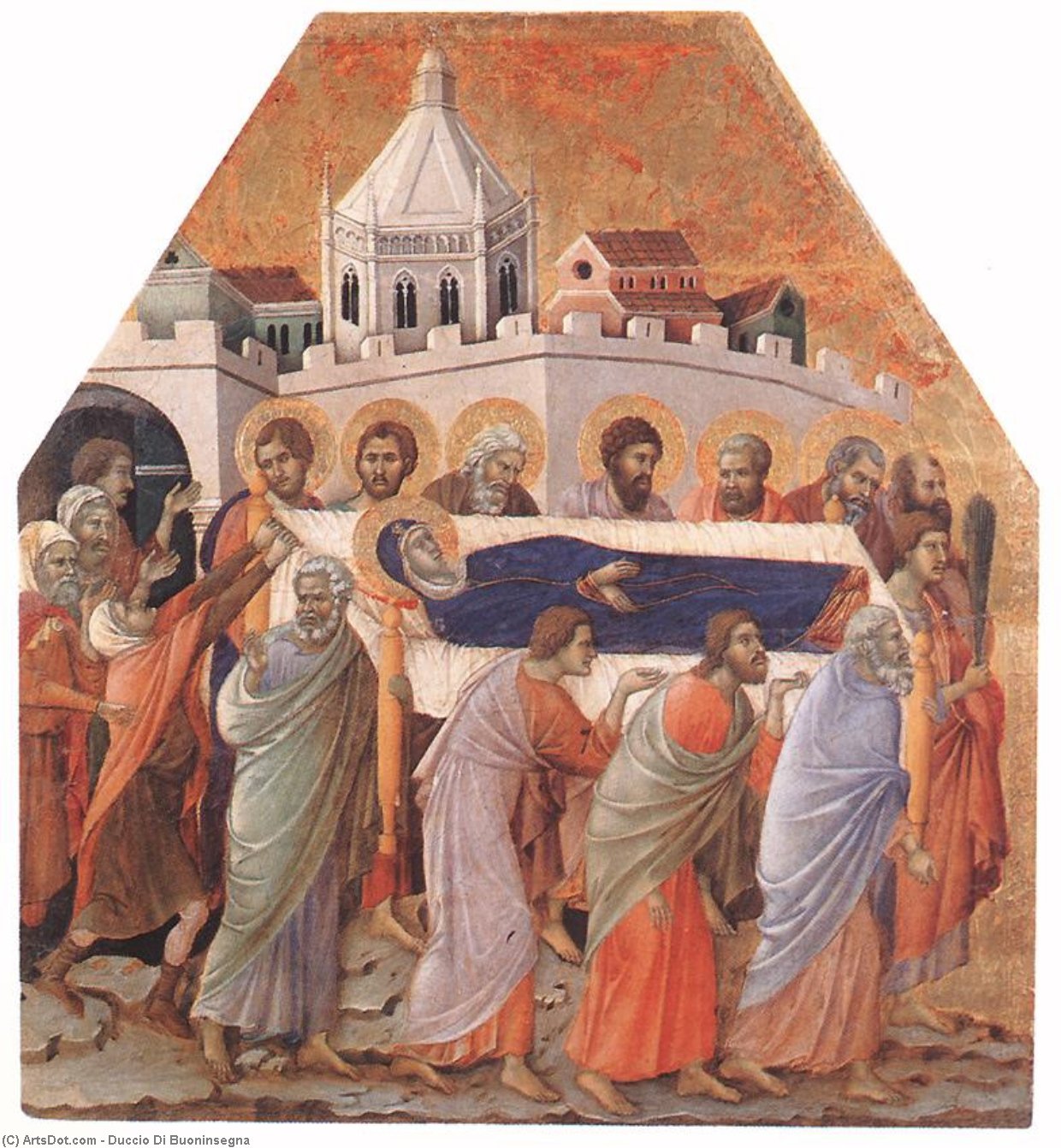
The painting “Funeral,” attributed to Duccio di Buoninsegna (c. 1255-1319), stands as a testament to the transformative spirit of Siena during the early XIII century—a period where Byzantine artistic traditions wrestled with emerging humanist ideals, resulting in an unparalleled fusion of spiritual solemnity and nascent naturalism. Created around 1308, this masterpiece transcends mere depiction; it embodies a profound meditation on mortality and divine compassion, capturing a pivotal scene from Christian iconography with remarkable sensitivity.
- Subject Matter: The artwork portrays Jesus Christ being carried aloft by his disciples—a solemn procession commemorating his crucifixion and ascension. This imagery draws heavily upon Byzantine precedents, where depictions of Christ’s suffering were common, yet Duccio elevates it beyond stylistic convention.
- Style: Duccio's style is undeniably Gothic, albeit imbued with Byzantine influences. He skillfully blends the stylized drapery and hierarchical composition characteristic of Byzantium with a subtle shift towards greater realism in facial expressions and anatomical detail—a deliberate move toward conveying human emotion within the sacred narrative.
Technique: Fresco Innovation
Duccio’s mastery lies primarily in his innovative application of fresco technique. Unlike earlier artists who relied on tempera paint, Duccio pioneered the use of pigment mixed with lime and plaster—a method that ensured exceptional durability and luminosity. This painstaking process allowed for unparalleled tonal gradations and textural nuances, particularly evident in the depiction of Jesus’s flesh tones and the folds of his robes. The resulting surface possesses a captivating sheen, reflecting light and enhancing the overall impression of grandeur and reverence.
- Color Palette: The color scheme is dominated by muted blues and golds—colors traditionally associated with piety and royalty—reflecting the spiritual significance of the scene. However, Duccio’s palette isn't merely decorative; it serves to heighten emotional impact, conveying a sense of solemn contemplation.
- Composition: The pyramidal arrangement of figures—Jesus at the apex, supported by his disciples—is a hallmark of Byzantine art and reinforces the hierarchical order inherent in Christian theology. Duccio’s careful positioning contributes to the artwork's stability and communicates a feeling of unwavering faith.
Symbolism: Grief and Divine Mercy
Beyond its formal elements, “Funeral” is rich in symbolic meaning. The bier itself represents earthly mortality, while the procession symbolizes the journey toward salvation—a visual metaphor for Christ’s ascension into heaven. The faces of the disciples express profound sorrow and compassion—reflecting humanity's response to suffering and divine grace. Duccio subtly underscores the universality of human experience within the context of faith.
- The Bier: Represents death and earthly fragility, emphasizing the vulnerability of humankind before God’s judgment.
- Facial Expressions: Convey empathy and sorrow, mirroring the disciples' grief over Jesus’s sacrifice—a poignant reminder of human compassion in the face of divine suffering.
Emotional Impact: Reverence and Spiritual Reflection
Ultimately, “Funeral” succeeds in eliciting a powerful emotional response from the viewer. Its serene beauty combined with its solemn subject matter invites contemplation on themes of faith, compassion, and mortality—inspiring viewers to consider their own spiritual journey. A high-quality reproduction captures not only the visual splendor of Duccio’s masterpiece but also its enduring capacity to evoke feelings of reverence and profound reflection.