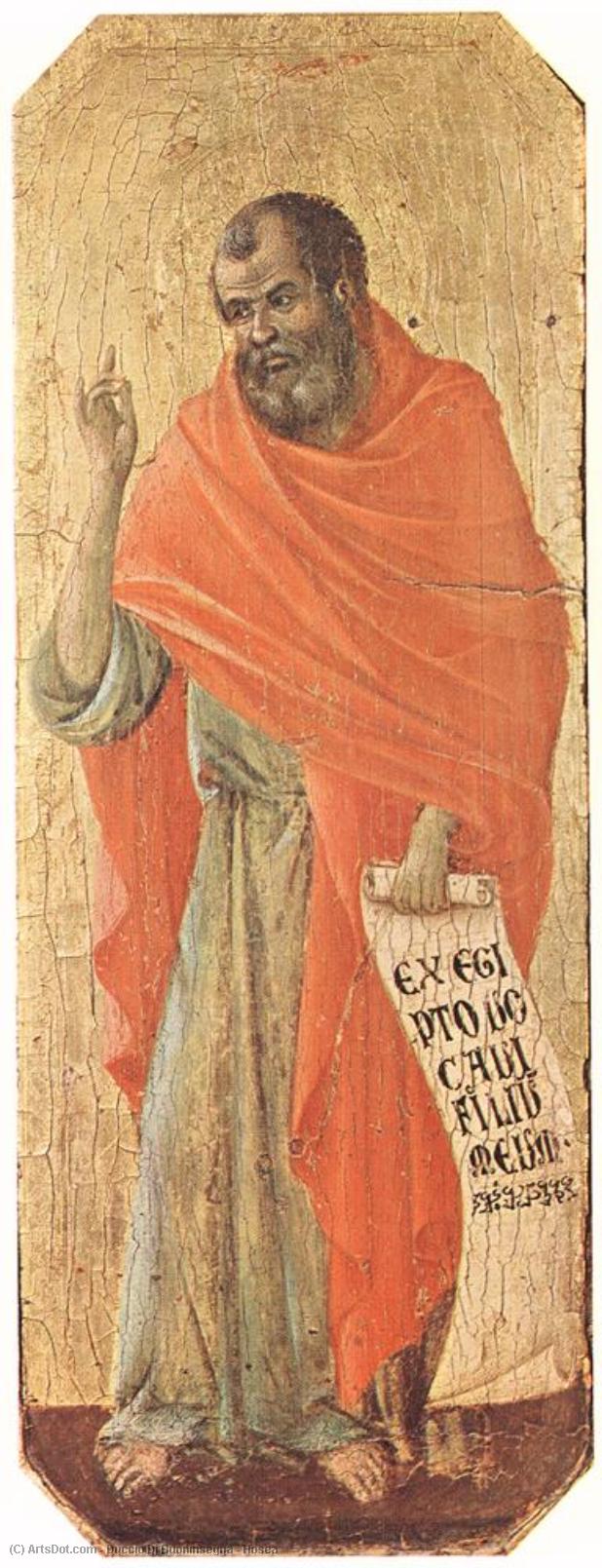
A Window into Siena’s Gothic Soul: Duccio di Buoninsegna's Hosea
Duccio di Buoninsegna, born around 1255 in Siena, represents a pivotal moment in Italian artistic history – the dawn of a new vision that skillfully blended Byzantine grandeur with burgeoning humanist sensibilities. While biographical details remain elusive, obscured by the sheer brilliance of his oeuvre, his legacy as a trailblazer who imbued sacred narratives with palpable emotion is undeniable. He wasn’t merely replicating established iconography; he was actively reshaping it, subtly prioritizing human connection over rigid formalism and elevating the emotional resonance of religious imagery. His formative years were steeped in Byzantine tradition, influenced by artists like Andrei Chrysiopoulos, yet he possessed an innate curiosity that propelled him toward experimentation and innovation—a characteristic that would define his entire artistic career.
- Subject Matter: The painting depicts Hosea, the prophet of Israel, a figure revered for his unwavering faith and prophetic pronouncements. This choice reflects the prevailing spiritual fervor of Siena during Duccio’s time, where piety and devotion permeated daily life.
- Style: Duccio's style is undeniably Gothic, yet it transcends mere stylistic adherence. He achieves a remarkable balance between Byzantine influence—particularly evident in the drapery folds and compositional structure—and emerging naturalism. This fusion creates an atmosphere of solemn beauty that distinguishes him from his contemporaries.
- Technique: Executed in oil on canvas, Duccio’s technique demonstrates mastery over color and texture. The meticulous layering of paint builds up depth and luminosity, capturing the subtle nuances of light and shadow—a hallmark of Gothic painting but elevated to new heights of sophistication.
Historical Context: Siena Amidst Byzantine Echoes
Siena in the mid-thirteenth century was a vibrant center of religious devotion, governed by papal indulgences and fueled by fervent piety. The city’s artistic landscape mirrored this spiritual climate, with artists striving to express profound faith through monumental frescoes and sculptures. Duccio's work stands as testament to this era, reflecting the broader cultural currents shaping Italy at the time—a movement away from the austere formalism of preceding generations toward a more emotionally expressive aesthetic. His patronage by wealthy families like the Aldobrandeschi underscores the importance of artistic commissions in fostering civic pride and reinforcing religious identity.
Symbolism: Faith Illuminated
The painting’s symbolism is rich with references to biblical tradition. Hosea's outstretched hand signifies divine guidance and compassion, while his gaze directs attention toward an unseen horizon—representing God’s promise of salvation. The robe he wears symbolizes righteousness and holiness, reinforcing the central theme of spiritual aspiration. Duccio skillfully employs color – predominantly reds – to convey passion and fervor, mirroring the intensity of religious belief.
Emotional Impact: A Moment Frozen in Time
Duccio’s masterpiece transcends mere visual representation; it evokes a profound emotional response in the viewer. The artist's ability to capture human emotion—particularly solemn contemplation—is remarkable for his time, demonstrating an understanding of psychological depth that foreshadowed developments in Renaissance art. Viewing Hosea is akin to stepping into a sacred space, enveloped by a sense of serenity and reverence – a testament to Duccio’s enduring artistic vision.