A Window into Medieval Faith: Duccio’s “Isaiah” – A Study in Humanizing Divinity
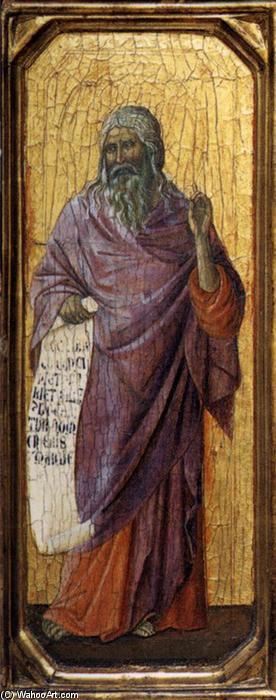
Duccio di Buoninsegna's "Isaiah," painted in 1308, is more than just a portrait; it’s a pivotal moment in the evolution of Italian art. Emerging from the shadow of Byzantine iconography, Duccio dared to introduce a nascent sense of naturalism and emotional depth into religious representation – a shift that would profoundly influence generations of artists to come. This intimate depiction of Isaiah, a central figure in the Hebrew Bible known for his prophetic visions, offers a rare glimpse into the Sienese School’s burgeoning artistic identity during a period of significant social and spiritual change. The painting's power lies not just in its technical mastery but also in its quiet contemplation of faith and humanity.
The subject himself is rendered with remarkable sensitivity. Isaiah, depicted against a subtly textured background – likely an early attempt at atmospheric perspective – possesses a dignified bearing. His long hair and beard, hallmarks of the Old Testament prophets, convey both wisdom and sorrow. The purple robe, a color often associated with royalty and divinity in medieval art, underscores his elevated status as a messenger of God. Notably, Duccio avoids the stiff formality that characterized much Byzantine portraiture; instead, he imbues Isaiah with a palpable humanity – a vulnerability and introspection rarely seen in depictions of biblical figures at this time. The book held in his hand isn’t merely an attribute but a symbol of divine revelation, suggesting a moment of profound contemplation or perhaps even struggle as he receives God's word.
The Composition: Layers of Narrative and Context
Beyond the central figure, Duccio masterfully employs secondary figures to enrich the narrative. To Isaiah’s left stands an attendant, possibly a scribe or assistant, engaged in a task – perhaps preparing parchment or meticulously copying scripture. This detail subtly highlights the importance of written tradition within religious practice. On the right, another individual is present, though their activity remains somewhat ambiguous, adding a layer of mystery to the scene. These supporting figures aren’t mere decorative elements; they contribute to the overall sense of a living, breathing world centered around the prophet's role.
The painting’s genesis must be understood within the context of 14th-century Siena. The city was experiencing a period of economic prosperity and artistic innovation, fueled by its wool trade. Duccio himself benefited from this flourishing environment, becoming one of the most celebrated artists of his time. His work reflects the Sienese desire to establish their own distinct artistic identity, moving away from the rigid conventions of Byzantium while retaining a deep respect for religious tradition. The influence of Byzantine art is undeniable – particularly in the use of gold leaf and the hierarchical scale (where Isaiah is depicted larger than the other figures) – but Duccio skillfully integrates these elements with his own innovative approach.
Technique and Materials: A Masterclass in Fresco
“Isaiah” was executed as a fresco, a technique that involved painting directly onto wet plaster. This method demanded both speed and precision from the artist, requiring careful planning and execution. Duccio’s mastery of *buon fresco* is evident in the luminous quality of the colors and the subtle transitions between tones. The use of tempera pigments layered over the fresco ensures a vibrant and enduring finish. The delicate modeling of Isaiah's face – capturing the nuances of light and shadow – demonstrates his exceptional skill as a portraitist. Furthermore, Duccio’s innovative approach to depicting drapery creates a sense of volume and movement, adding dynamism to the composition.
Emotional Resonance: A Portrait of Spiritual Struggle
Despite its formal beauty, “Isaiah” possesses a profound emotional resonance. The prophet's expression – a mixture of solemnity and perhaps even weariness – suggests a deep awareness of his burden as a messenger of God. The painting doesn’t offer a triumphant vision but rather a portrayal of the challenges inherent in receiving divine revelation. This subtle shift from purely celebratory depictions to one that acknowledges the weight of faith is what makes “Isaiah” such a compelling and enduring work of art. It invites viewers to contemplate not just the story of Isaiah, but also their own relationship with belief and spirituality. A reproduction of this remarkable piece offers a tangible connection to a pivotal moment in the history of Italian painting and a powerful reminder of the enduring appeal of humanizing the divine.