A Window into Siena’s Spiritual Heart: Duccio’s Jeremiah
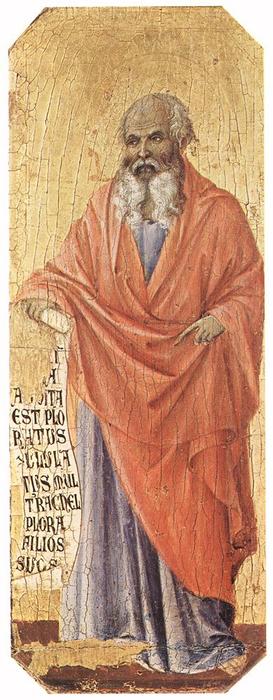
The painting, titled “Jeremiah,” attributed to the Sienese master Duccio di Buoninsegna (c. 1255-1319), stands as a testament to the artistic fervor of its time—a pivotal moment in the evolution of Italian art where Byzantine influences gradually yielded to burgeoning humanist ideals. Executed around 1308, this monumental panel depicts Jeremiah, prophet of Israel, rendered with remarkable sensitivity and detail against a backdrop that speaks volumes about the prevailing religious landscape of Siena during the Trecento period.
- Subject Matter & Narrative Depth: Duccio’s depiction transcends mere representation; it embodies the core tenets of medieval Christian piety. Jeremiah is portrayed in a posture of profound contemplation, his hands clasped together—a gesture universally recognized as emblematic of prayer and supplication—before what appears to be a monumental architectural structure. This deliberate framing underscores the painting's central theme: divine revelation and humanity’s yearning for communion with God.
- Style & Technique – Byzantine Echoes Dissolving: While undeniably rooted in Byzantine artistic traditions—particularly evident in the stylized drapery folds and luminous coloration—Duccio skillfully incorporates elements of naturalism that foreshadow the stylistic advancements to come. The artist’s meticulous attention to anatomical accuracy, albeit subtly restrained compared to later Renaissance masters, distinguishes “Jeremiah” from its predecessors and establishes it as a cornerstone of the Sienese School.
- Color Palette & Material Considerations: Duccio employed a rich palette dominated by earthy reds—a color associated with penitence and divine grace—contrasted against paler hues that illuminate Jeremiah’s face and robe. The painting is executed in tempera on wood panel, a technique favored for its durability and ability to achieve brilliant colors and subtle gradations of tone. This careful selection of materials reflects the artistic values of the era – prioritizing luminosity and textural richness.
- Symbolism & Spiritual Significance: Jeremiah’s pose—facing upwards—symbolizes his unwavering faith and acceptance of God's will, even in the face of adversity. The architectural backdrop is interpreted as representing Jerusalem, the holy city and seat of divine authority, reinforcing the painting’s spiritual message. Duccio’s masterful portrayal captures not just a biblical figure but also embodies the broader humanist aspiration to express profound emotion and moral contemplation.
- Emotional Impact & Artistic Legacy: “Jeremiah” continues to resonate with viewers today due to its ability to evoke feelings of solemn reverence and spiritual introspection. Duccio’s achievement lies in transforming a biblical narrative into an emotionally compelling experience—a feat that cemented his reputation as one of the most influential artists of his generation and profoundly impacted subsequent generations of painters.