A Window into Sienese Spirituality: Exploring Duccio’s ‘La Maestà 15’
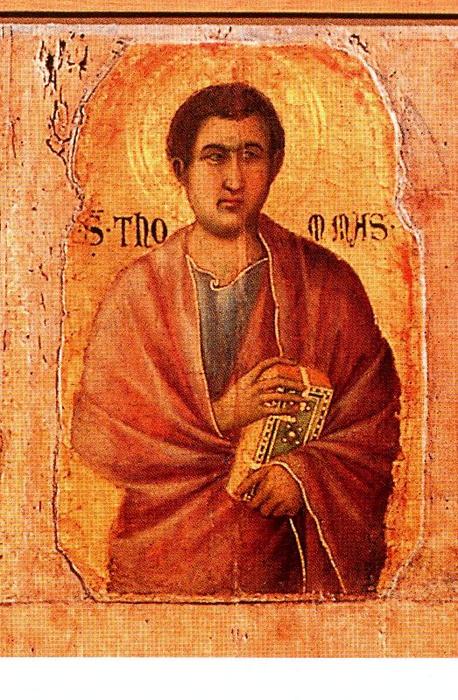
La Maestà 15, a captivating work by the celebrated Italian painter Duccio di Buoninsegna, offers a profound glimpse into the devotional art of the late 13th and early 14th centuries. This iconographic depiction of Saint Thomas is not merely a portrait; it’s a carefully constructed theological statement rendered with the refined artistry characteristic of the Sienese School.
Subject & Symbolism: The Apostle of Doubt
The artwork centers on Saint Thomas, instantly recognizable through inscriptions reading ‘THO’ and ‘PHAS’ above his head. He is presented as a figure of solemn authority, holding an open book – symbolizing the Gospels and his role as an evangelist – with what appears to be a scroll or document resting upon it, perhaps representing his writings or theological insights. Saint Thomas is famously known for doubting Christ's resurrection until he physically touched His wounds; this image, however, transcends that moment of doubt, presenting him as a steadfast pillar of faith and wisdom *after* receiving divine proof. The very act of holding the book signifies his acceptance of revealed truth.
Style & Technique: Byzantine Roots & Emerging Renaissance
Duccio’s style is a masterful blend of Byzantine tradition and burgeoning Italian innovations. The painting exemplifies Orthodox iconography with its strong outlines, flattened perspective, and use of rich, symbolic color. The figure isn't rendered with realistic depth but rather exists in a spiritual realm emphasized by the gold halo-like background.
Tempera or fresco on wood was likely employed, evidenced by the subtly textured surface – a hallmark of these techniques. The bold lines and deliberate shading create form and volume without relying on naturalistic perspective, prioritizing symbolic clarity over illusionism.
Color & Composition: A Harmonious Devotion
The color palette is dominated by warm reds, golds, and browns, colors traditionally associated with royalty, divinity, and earthly power. The red cloak draped across Saint Thomas’s shoulder isn't merely decorative; it signifies his martyrdom and unwavering commitment to Christ.
Compositionally, the centered figure commands attention, drawing the viewer into a direct encounter with the saint. This centralized arrangement reinforces the importance of the subject within the spiritual context.
Historical Context: Siena & The ‘Maestà’ Altarpiece
Duccio di Buoninsegna was a leading artist in Siena during a period of significant artistic and cultural flourishing. He revolutionized Sienese painting, moving away from strict Byzantine conventions towards greater naturalism and emotional expression. ‘La Maestà 15’ is part of the larger *Maestà* altarpiece commissioned for the Siena Cathedral – a monumental work that cemented Duccio's reputation as one of Italy’s greatest artists. The *Maestà* was groundbreaking in its scale, complexity, and narrative richness, influencing generations of painters including Simone Martini and Ugolino di Nerio.
Emotional Impact & Interior Design
‘La Maestà 15’ evokes a sense of reverence, solemnity, and spiritual contemplation. Its dignified portrayal of Saint Thomas inspires feelings of faith, wisdom, and intellectual curiosity.
For interior design, this artwork lends itself beautifully to spaces seeking a touch of historical elegance and contemplative atmosphere. Its rich colors and iconic imagery can serve as a focal point in libraries, studies, or meditation rooms, adding depth and meaning to any environment. A high-quality reproduction captures the essence of Duccio’s artistry, bringing a piece of Renaissance history into the modern home.
- Style: Orthodox Iconography / Sienese School
- Period: Late 13th – Early 14th Century (Trecento)
- Artist: Duccio di Buoninsegna (1255-1319)
- Medium: Tempera or Fresco on Wood