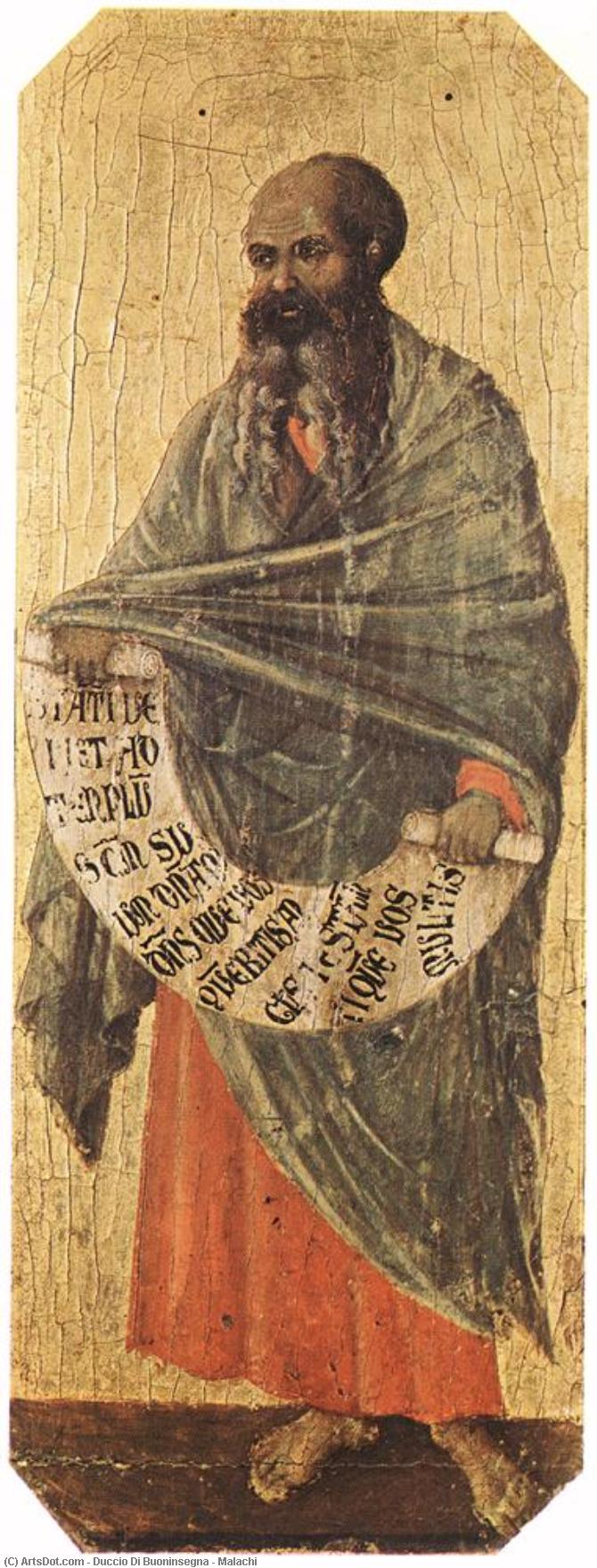
Admire Duccio di Buoninsegna's 'Malachi,' a poignant 1308 fresco depicting the prophet with remarkable detail and emotional depth. A masterpiece of Sienese art, perfect for your home.
Duccio’s ‘Malachi’: A Dawn of Human Emotion in Siena
ArtsDot.com presents a meticulously hand-painted reproduction of Duccio di Buoninsegna's “Malachi,” a pivotal work from 1308 that represents far more than just a portrait; it embodies a revolutionary shift in Italian art. This painting, measuring 42 x 16 cm, offers a rare glimpse into the artistic sensibilities of Siena during the early 14th century – a period where the rigid formality of Byzantine iconography was yielding to a burgeoning desire for naturalism and profound emotional resonance. The image depicts a man, identified as Malachi, holding a scroll or book, his face etched with contemplation and perhaps even a touch of sorrow. The blurred background skillfully directs the viewer’s attention entirely to this figure, creating an intimate and almost unsettlingly personal connection.
A Bridge Between Worlds: Duccio's Innovation
Duccio di Buoninsegna stands as a crucial link between the established artistic traditions of Byzantium and the nascent Italian Renaissance. Born in Siena around 1255, he wasn’t simply replicating existing styles; he was actively shaping them. As evidenced by his ‘Maestà,’ Duccio dared to infuse religious narratives with human emotion – a subtle yet powerful departure from the often-stilted representations of saints and angels prevalent at the time. This painting reflects this innovation perfectly, suggesting a figure wrestling with profound questions, rather than simply presenting a static devotional image. The detail in his clothing and facial features speaks to Duccio’s commitment to realism, a hallmark of his groundbreaking work.
Symbolism and Context within Siena's Artistic Landscape
Created during the construction of the Siena Cathedral, “Malachi” is inextricably linked to the city’s artistic ambitions. The ‘Maestà,’ commissioned simultaneously, set a new standard for altarpieces – one with both front and back panels, offering a complete narrative experience. This particular panel likely represents a prophet delivering a warning or exhortation, reflecting themes central to Malachi's book: the corruption of the priesthood, the need for faithfulness, and the anticipation of divine judgment. The slightly melancholic expression on Malachi’s face hints at these weighty concerns, adding layers of meaning beyond a simple depiction of a biblical figure. The painting’s creation coincided with a period of intense religious fervor and civic pride within Siena, reflected in the scale and ambition of projects like the ‘Maestà.’
Technique and Legacy
Duccio's masterful technique is evident in the rich colors, delicate brushwork, and remarkably detailed rendering. The use of oil paint (though debated – some scholars suggest tempera), allowed for subtle gradations of tone and a luminous quality that was revolutionary for its time. “Malachi” demonstrates Duccio’s skill in creating depth through atmospheric perspective and his ability to convey emotion through gesture and expression. This painting is not merely a beautiful image; it's a testament to the artistic genius of Duccio di Buoninsegna, a figure who profoundly influenced the development of Italian art and paved the way for the Renaissance masters that followed. A ArtsDot.com reproduction captures this legacy with unparalleled fidelity, allowing you to experience the power and beauty of this seminal work firsthand.