Discover Duccio di Buoninsegna (c. 1255-1319), a pivotal Italian painter of the Trecento & Sienese School. Explore his innovative Gothic style, emotional depth in masterpieces like the Rucellai Madonna & Maestà.
Duomo
(Siena, Italy)
Discover the Duomo di Siena, home to Duccio's breathtaking *Maestà* altarpiece and a stunning blend of Romanesque & Gothic art—an immersive journey into medieval Tuscany’s faith and artistry that remains unmissable; explore its legacy today.
Window by Duccio di Buoninsegna: A Masterpiece of Gothic Stained Glass
- Artist: duccio di buoninsegna
- Birth Year: 1255
- Death Year: 1319
- Birth City: Siena
- Birth Country: Italy
Subject and Composition
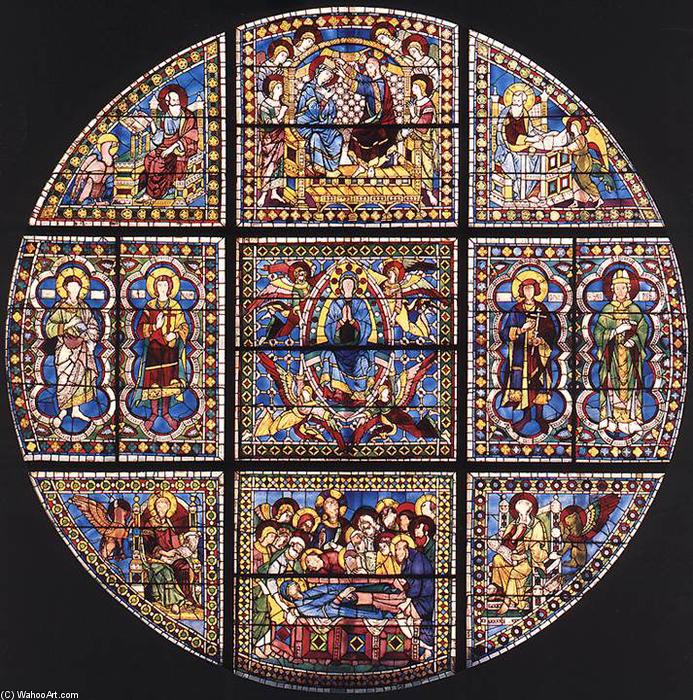
Duccio di Buoninsegna's "Window," created in 1288, is a stunning example of Gothic stained glass art. This circular window, originally adorning the Duomo in Siena, Italy, depicts scenes primarily related to the Virgin Mary’s life and ascension. The composition is divided into multiple panels within a larger circular design, creating a visually captivating narrative. A central figure, believed to be an angel or saint, holds a book or manuscript, surrounded by other figures with halos, signifying their divine status. These figures are dressed in traditional medieval attire, adding to the historical context of the artwork.
Technique and Artistic Vision
The technique employed by Duccio is remarkable for its time. The predominant use of blue hues accented with red creates a striking visual effect that draws the viewer's eye. Each panel demonstrates meticulous craftsmanship, showcasing the artist’s mastery over stained glasswork. Duccio moved away from strict Byzantine conventions, introducing naturalism and emotional expression into his work. He skillfully blended traditional techniques with emerging innovations, creating a unique style that set him apart.
Historical Context and Significance
Located within the Duomo of Siena, "Window" is an integral part of the cathedral's artistic heritage. The Duomo itself stands as a significant architectural and cultural landmark in Italy. The window’s creation occurred during a period of transition in art, moving away from Byzantine styles towards the more expressive Gothic aesthetic. Records indicate that Duccio was commissioned to create preparatory drawings for the window, further solidifying his role as a leading artist of his time. The presence of Saint Bartholomew, Siena's patron saint at the time, provides evidence of its early dating.
Symbolism and Emotional Impact
The "Window" is rich in symbolism. The circular design itself can be interpreted as representing eternity or divine perfection. The use of blue, often associated with heaven and spirituality, reinforces the religious theme. The halos surrounding the figures symbolize their holiness and connection to the divine. Beyond its symbolic meaning, the window evokes a sense of awe and reverence through the interplay of light and color. The stained glass allows for a dynamic visual effect as sunlight filters through, creating an ethereal atmosphere that enhances the spiritual impact of the artwork.