Discover Edmund Charles Tarbell (1862-1938), a leading American Impressionist & 'Ten American Painters' member. Explore luminous portraits & domestic scenes!
Discover Newfields in Indianapolis! Explore 54,000+ artworks from African, Asian & European collections, stunning gardens, historic homes & nature parks. Enjoy exhibitions, tours & events for all ages.
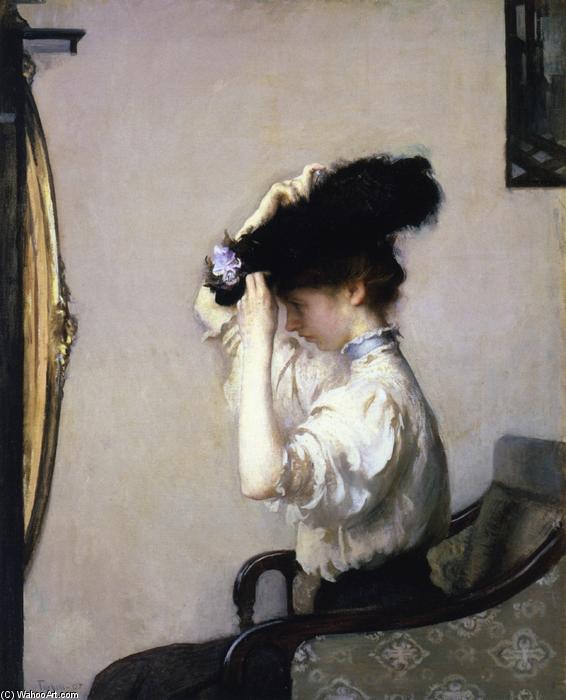
Preparing for the Matinee - A Portrait of Domestic Tranquility
Edmund Charles Tarbell’s “Preparing for the Matinee,” completed in 1907, stands as a quintessential example of American Impressionism—a movement that sought to capture fleeting moments of light and atmosphere with loose brushwork and vibrant color palettes. More than just a depiction of a woman adjusting her hat before an event, it embodies a deeper exploration of domestic life and the quiet contemplation inherent in everyday rituals.
- Subject Matter: The painting portrays Charlotte Barton of Boston, seated elegantly in a chair adorned with a patterned fabric. A corner of Vermeer’s “The Music Lesson” subtly anchors the composition, reflecting the influence of Dutch masters on American Impressionists who championed technical skill alongside aesthetic beauty.
- Composition & Framing: Tarbell employs a tightly cropped frame, directing the viewer's gaze squarely onto Barton and her reflection in the gilded mirror. The mirror’s placement isn’t merely decorative; it symbolizes vanity and introspection—a preoccupation with self-presentation that underscores the painting’s thematic core.
- Color Palette & Texture: Dominated by muted creams, pale yellows, and delicate greens, the color scheme exudes understated sophistication. Tarbell skillfully utilizes brushstrokes to convey texture – the softness of Barton's clothing contrasts with the solidity of the chair, creating a harmonious visual experience.
Tarbell’s technique is characterized by layering thin washes of pigment to achieve luminous effects—a hallmark of Impressionism. The artist meticulously captures the diffused daylight filtering through an unseen window, highlighting Barton's face and clothing with subtle gradations of light. This masterful rendering exemplifies Tarbell’s commitment to portraying reality as perceived by the senses.
- Line & Shape: Soft, blurred lines permeate the painting—a deliberate stylistic choice that contributes to a dreamy quality reminiscent of Vermeer's work. Geometric shapes appear in the clock and frame of the mirror, providing structural counterpoints to the organic curves of Barton’s figure and attire.
- Symbolism & Emotional Impact: The title itself – “Preparing for the Matinee” – speaks volumes about the painting’s emotional resonance. It suggests a moment of quiet anticipation, hinting at both outward performance and inward reflection—themes central to Tarbell's exploration of female identity within the Boston Brahmin social milieu.
“Preparing for the Matinee” resides in the permanent collection of the Indianapolis Museum of Art, having been gifted by Mrs. John G. Rauch Sr., demonstrating its enduring appeal and significance as a masterpiece of American Impressionism. Its meticulous detail and evocative atmosphere continue to inspire admiration among art connoisseurs and collectors alike.