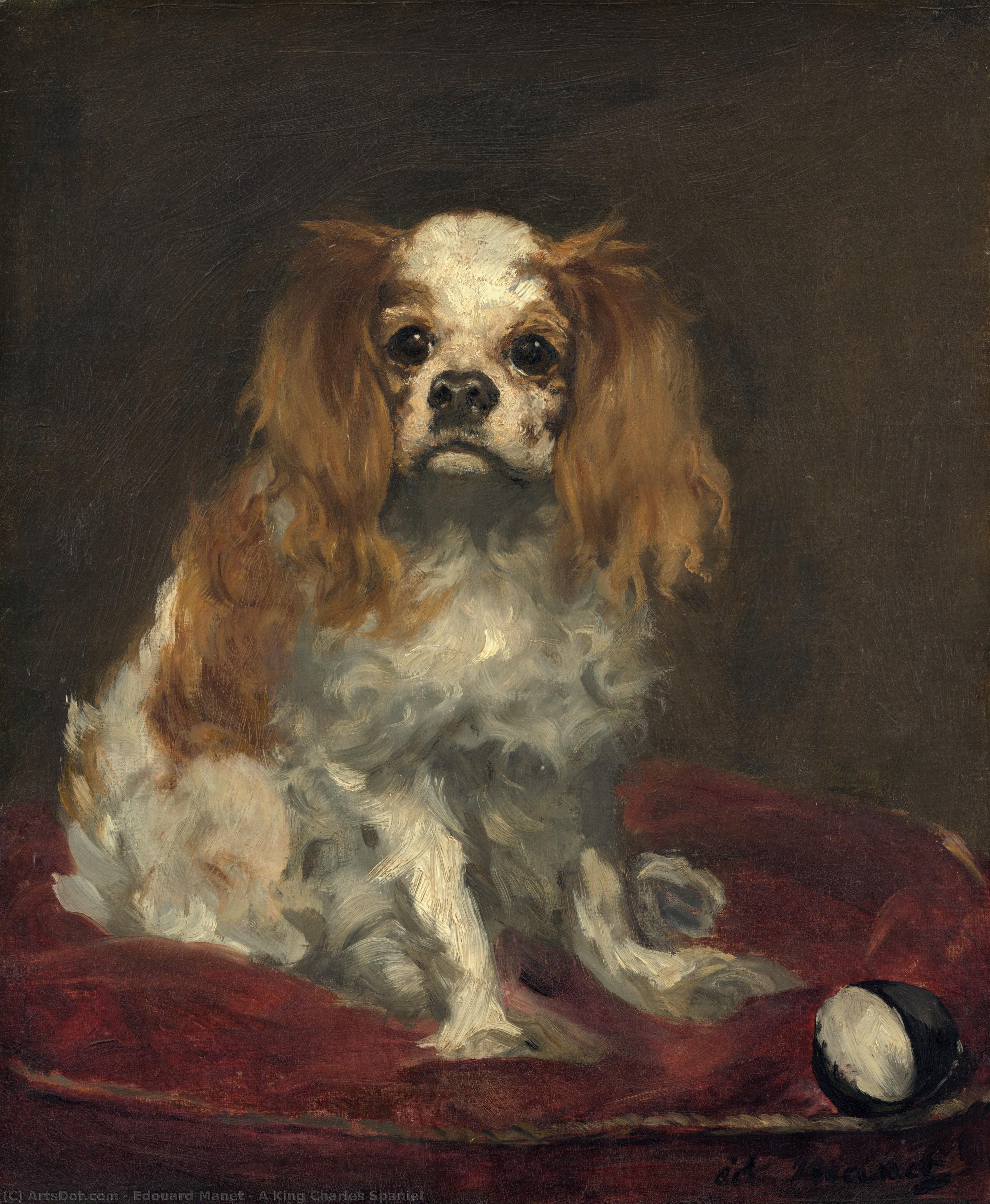
Maurice Leclanché [1847-1921], Paris, by 1902 until 1910.[1] (Bernheim-Jeune, Paris), by 1910. Dr. Julius Elias [1861-1927], Berlin; by inheritance to his wife, Mrs. Julius [Julie] Elias, Berlin and Oslo[1866-1943]; [2] Eilif M
Explore Édouard Manet (1832-1883), a pivotal figure bridging Realism & Impressionism. Discover iconic works like 'Le Déjeuner sur l'herbe' and 'Olympia,' and his lasting impact on modern art.
A Moment Frozen in Parisian Light: Examining Édouard Manet’s “A King Charles Spaniel”
Édouard Manet's "A King Charles Spaniel," painted in 1866, isn’t merely a depiction of a dog; it’s a carefully constructed snapshot of Impressionist ambition—a bold assertion against the academic conventions that dominated French art at the time. This unassuming canvas holds within it layers of artistic innovation and subtle psychological observation, reflecting Manet's fascination with capturing fleeting moments of everyday life alongside monumental references to artistic masters. The painting resides in the National Gallery of Art’s collection, having passed through several notable owners throughout its history, including Maurice Leclanché and Dr. Julius Elias.
The Style and Technique: Impressionistic Echoes
Manet consciously rejected the meticulous realism favored by his predecessors, opting instead for a technique that prioritized capturing light and color as perceived by the eye—a hallmark of Impressionism. Unlike traditional oil paintings where artists painstakingly blended pigments to achieve smooth tonal gradations, Manet employed loose brushstrokes and juxtaposed complementary colors to create an effect of shimmering vibrancy. Notice how the artist utilizes short, broken strokes to render the dog’s fur, avoiding any attempt at photographic accuracy. This deliberate disregard for detail isn't carelessness; it’s a calculated decision to convey atmosphere and emotion rather than precise representation. He studied Caravaggio and Velázquez intensely, absorbing their masterful use of chiaroscuro—the dramatic interplay between light and dark—to imbue his work with depth and intensity.
A Window into Parisian Life
“A King Charles Spaniel” captures a seemingly simple scene: a dog resting on a bed alongside two figures in the background. However, this domestic tableau serves as a deliberate provocation. Manet wasn’t interested in portraying idealized beauty or grand narratives; he wanted to depict the realities of modern urban existence—a preoccupation that resonated deeply with his contemporaries and cemented his position as a pioneer of Impressionism. The inclusion of the two people adds another layer of complexity, hinting at an unspoken relationship between dog and owner – perhaps companionship, affection, or even quiet contemplation. This subtle suggestion is powerfully reinforced by Manet’s masterful use of light; it illuminates the figures in the background, creating a visual contrast that draws attention away from the central subject.
Symbolism Beyond Appearance
While superficially appearing as a straightforward portrait, “A King Charles Spaniel” carries symbolic weight. The dog itself—a breed favored by Victorian aristocracy—represents loyalty and domestic tranquility, qualities Manet subtly juxtaposes with the dynamism of Parisian life. Furthermore, the tennis ball symbolizes playfulness and vitality, mirroring Manet’s desire to portray life as it truly is – unfiltered and brimming with energy. The artist's careful positioning of the figures contributes to this symbolic narrative, suggesting a harmonious balance between comfort and observation.
Emotional Resonance: Capturing Transient Beauty
Ultimately, “A King Charles Spaniel” succeeds in conveying a profound emotional resonance. It’s not an overtly sentimental piece; rather, it invites viewers to contemplate the beauty found in ordinary moments—the quiet intimacy of companionship and the fleeting splendor of natural light. Manet's masterful brushwork captures the essence of this experience, transporting us back to 1866 Paris and reminding us that art can illuminate the human condition with remarkable sensitivity. Its enduring appeal lies in its ability to evoke a feeling of warmth, serenity, and understated elegance—qualities that continue to inspire interior designers and collectors alike.