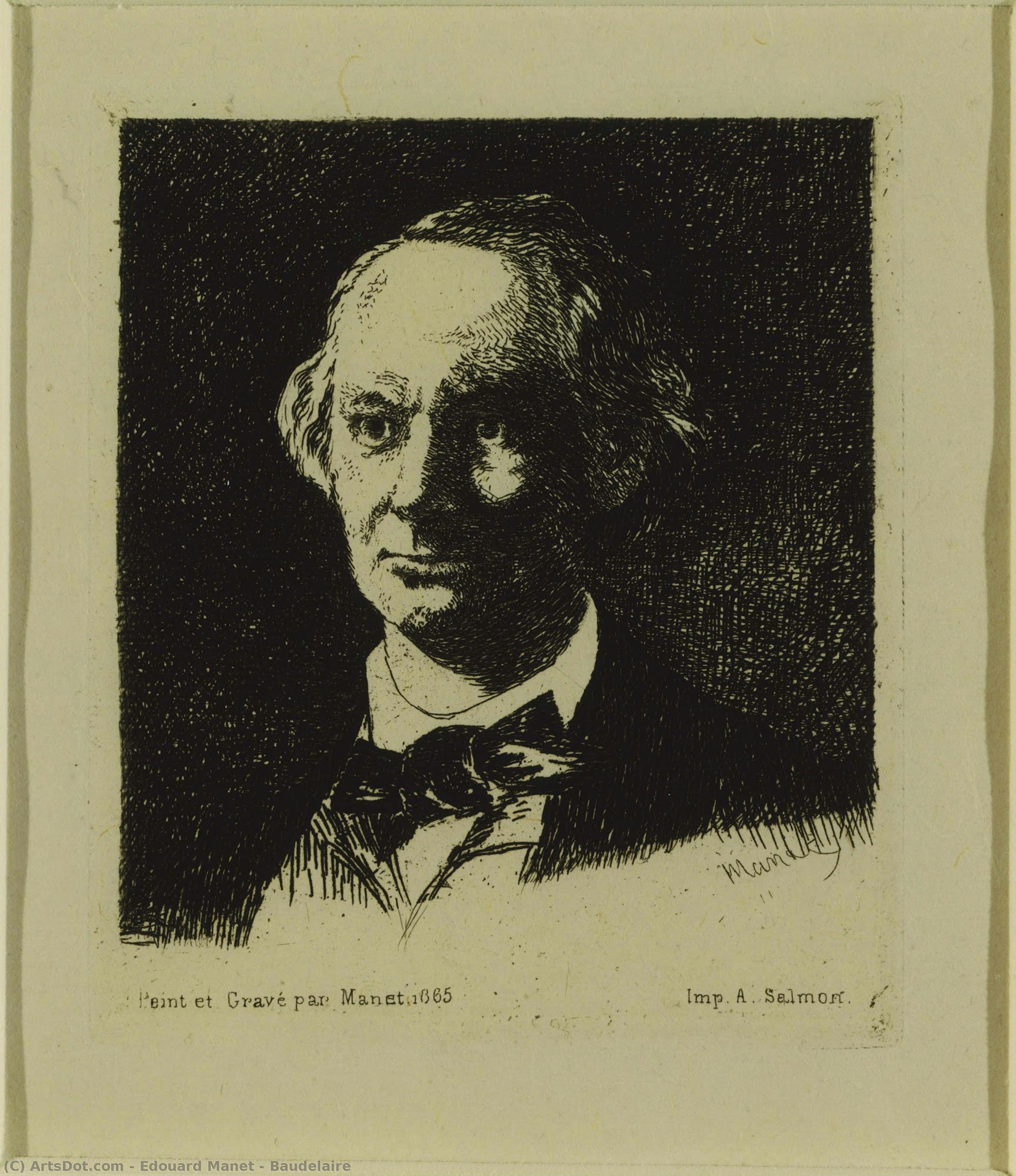
This lithograph portrays Charles Baudelaire with meticulous detail, utilizing dense hatching to convey texture and capturing the poet's solemn gaze against a stark gray backdrop. Reflecting Manet’s Realist style, it exemplifies printmaking techniques like etching—a testament to his innovative approach to artistic representation.
Explore Édouard Manet (1832-1883), a pivotal figure bridging Realism & Impressionism. Discover iconic works like 'Le Déjeuner sur l'herbe' and 'Olympia,' and his lasting impact on modern art.
A Portrait of Intellectual Disquiet: Édouard Manet’s Baudelaire
Édouard Manet's etching, “Portrait of Charles Baudelaire,” transcends mere representation; it embodies the spirit of a pivotal moment in French art and literature. Executed in 1862, this monochrome print captures not just Baudelaire’s likeness but also the profound psychological complexities inherent within his subject – a reflection of Manet's own artistic ambition to break free from academic constraints and delve into the emotional core of human experience. The image itself is deceptively simple—a tightly framed portrait focusing on Baudelaire’s face and upper torso—yet it pulsates with subtle nuances that reveal layers of artistic intention.
Composition and Technique: Embracing Realism's Shadow
Manet skillfully employs hatching and cross-hatching techniques to achieve a remarkable textural effect, mirroring the contours of Baudelaire’s skin and hair with meticulous detail. The artist eschews idealized beauty, aligning firmly with the tenets of Realist art—a movement that championed honest depiction over romantic embellishment. Unlike his predecessors who sought to elevate subjects to heroic stature, Manet presents Baudelaire as an individual grappling with internal struggles, illuminated by directional lighting that casts dramatic shadows across his face, emphasizing both dignity and vulnerability. The careful arrangement contributes to a palpable sense of intimacy, inviting the viewer into Baudelaire’s gaze—a gaze imbued with contemplative seriousness.
Historical Context: Challenging Artistic Conventions
The etching emerged during a period of significant artistic upheaval in Paris. Manet's refusal to adhere to academic standards directly confronted the prevailing dogma that prioritized idealized beauty and mythological narratives. He drew inspiration from Caravaggio and Velázquez, artists who mastered chiaroscuro—the dramatic interplay between light and shadow—to convey emotion and psychological depth. This stylistic choice was a deliberate act of rebellion against the established order, signaling Manet’s commitment to portraying the world as he saw it – flawed, complex, and undeniably human. The print's monochrome palette reinforces this mood of solemn contemplation, mirroring Baudelaire’s poetic explorations of melancholy and existential angst.
Symbolic Resonance: Beyond Appearance
The formal attire—a bow tie and suit jacket—suggests Baudelaire’s social standing and intellectual pursuits. However, it also serves as a visual shorthand for the constraints imposed upon artists by societal expectations. The artist's deliberate focus on Baudelaire’s face underscores the importance of inner life over outward presentation – a theme central to Baudelaire’s literary oeuvre. Furthermore, the starkness of the print amplifies the emotional impact of the portrait, conveying a sense of profound introspection and confronting viewers with uncomfortable truths about human consciousness.
A Legacy of Quiet Intensity
“Portrait of Charles Baudelaire” remains an enduring testament to Manet's artistic vision—a masterful blend of technical skill and psychological insight. It exemplifies Realism’s commitment to portraying the human condition with unflinching honesty, while simultaneously demonstrating Manet’s profound understanding of how art can communicate emotion and provoke contemplation. Reproductions of this evocative print offer a glimpse into the artistic spirit of its time and continue to inspire those who appreciate the power of understated beauty and intellectual depth.