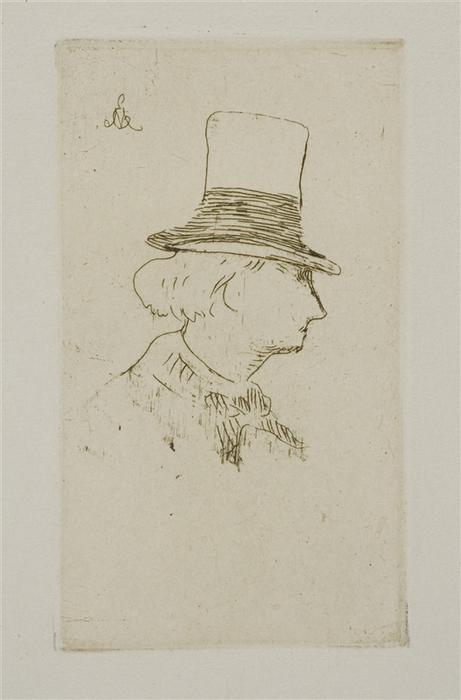
Baudelaire de profil en chapeau: A Snapshot of Modern Melancholy
Édouard Manet’s “Baudelaire de profil en chapeau,” completed in 1862, is more than just a portrait; it's a distilled essence of Impressionism and a poignant reflection on the anxieties of Parisian life during its formative years. Executed with rapid pencil strokes and subtle shading—a technique characteristic of Manet’s approach—the artwork captures a moment of quiet contemplation within a broader context of artistic rebellion against academic conventions.
- Subject Matter: The portrait depicts Charles Baudelaire, the celebrated poet known for his exploration of darkness and disillusionment. His gaze downward conveys an introspective mood, hinting at the melancholic themes prevalent in Baudelaire’s oeuvre.
- Style & Technique: Manet's style aligns seamlessly with Impressionism, prioritizing fleeting impressions over meticulous realism. The loose brushwork—though absent here—is mirrored in the sketchy lines of the drawing, conveying immediacy and spontaneity. Hatching and crosshatching are employed sparingly to suggest volume and form, emphasizing the artist’s focus on capturing light and texture.
- Historical Context: Created during a period of significant social and intellectual upheaval, “Baudelaire de profil en chapeau” reflects the burgeoning interest in psychological realism—a departure from traditional portraiture—that was gaining traction within the Parisian art scene. It stands as testament to Manet’s desire to portray subjects not merely as they appear but as they *feel*.
- Symbolism & Emotional Impact: The pose itself – a three-quarter profile view facing left – is laden with symbolic significance. The downward gaze suggests introspection and vulnerability, mirroring Baudelaire's preoccupation with existential questions. The subtle shading contributes to an atmosphere of quiet sadness, encapsulating the poet’s profound engagement with themes of loss and beauty.
- Materials & Medium: Primarily crafted using pencil or charcoal on paper, “Baudelaire de profil en chapeau” exemplifies Manet's preference for dry media—a deliberate choice that lends to the artwork’s textural quality and reinforces its immediacy. The aged tone of the paper background further enhances the impression of timelessness and contemplation.
The drawing’s simplicity is deceptive; it encapsulates a complex psychological portrait within a deceptively restrained visual language. Like many Impressionist works, “Baudelaire de profil en chapeau” invites viewers to consider not just what they see but how it feels—a testament to Manet's enduring legacy as an artist who dared to challenge artistic norms and capture the spirit of his time. Its reproduction offers a captivating glimpse into the inner life of Baudelaire and the stylistic innovations that defined the Impressionist movement.