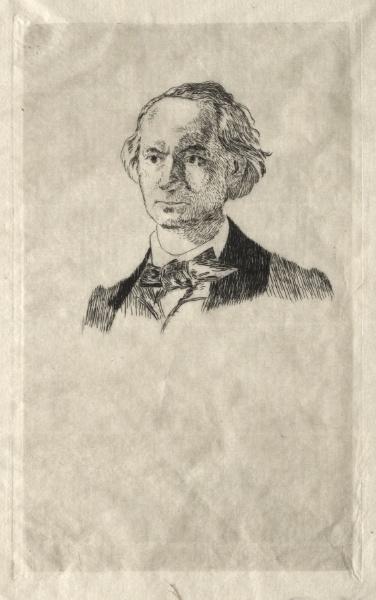
Charles Baudelaire

Captured in striking black and white by Édouard Manet during the Impressionist era, this contemplative portrait embodies Parisian sophistication—a dignified man with a thoughtful gaze reflects on his surroundings.


Édouard Manet (1832 - 1883)

Explore Édouard Manet (1832-1883), a pivotal figure bridging Realism & Impressionism. Discover iconic works like 'Le Déjeuner sur l'herbe' and 'Olympia,' and his lasting impact on modern art.

A Portrait of Quiet Reflection: Édouard Manet’s “Charles Baudelaire”

  • Subject Matter: The drawing depicts Charles Baudelaire, the celebrated French poet and novelist known for his groundbreaking exploration of urban alienation and decadent beauty. Baudelaire's gaze downward conveys a profound sense of contemplation—a preoccupation with inner thoughts and emotions that transcends mere visual representation.
  • Style & Technique: Manet’s approach distinguishes itself from the prevailing academic style of his time. Rather than striving for idealized realism, he employs a looser brushstroke technique, prioritizing tonal variation and capturing subtle nuances of light and shadow. This deliberate departure from convention reflects Manet's desire to portray contemporary life with honesty and immediacy.
  • Historical Context: Created in 1867, “Charles Baudelaire” emerged during a period of significant artistic ferment in Paris—the Impressionist movement was gaining momentum, challenging the established norms of Salon exhibitions. Manet’s decision to depict Baudelaire not as a heroic figure but as an ordinary man engaged in quiet introspection speaks volumes about the broader intellectual currents shaping the era.
  • Symbolism & Emotion: The suit and tie worn by Baudelaire symbolize professionalism and social status, yet his downward gaze hints at vulnerability and melancholy. The drawing’s monochrome palette contributes to its emotional impact—creating a sense of stillness and introspection that invites viewers to contemplate themes of solitude, contemplation, and the complexities of human experience.
  • Interior Design Inspiration: This evocative portrait offers inspiration for creating serene and sophisticated interior spaces. Its muted tones and contemplative mood align perfectly with minimalist aesthetics or Scandinavian design principles, fostering a connection to artistic heritage while prioritizing tranquility and understated elegance.