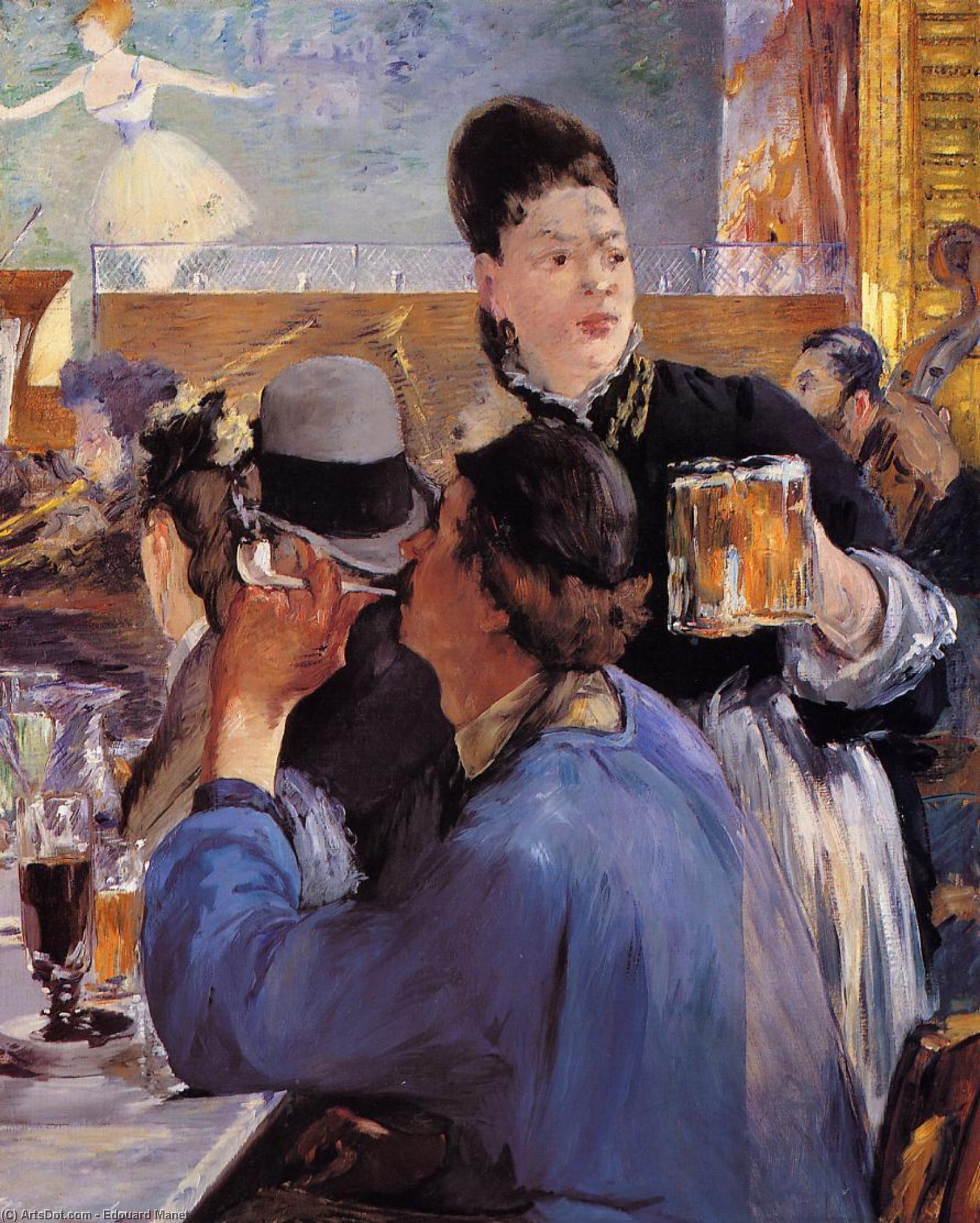
Édouard Manet’s ‘Corner of a Café-Concert,’ painted in 1878, is a cornerstone of Impressionism. Depicting a bustling café scene, it showcases Manet's innovative style and captures the fleeting moments of everyday life with remarkable detail. Located at the National Gallery in London, this painting exemplifies his rejection of academic conventions and cemented his legacy as a pioneer of modern art.
Corner in a Cafe-Concert
Edouard Manet’s
Corner in a Cafe-Concert, painted in 1878, is a vibrant and captivating oil on canvas work that showcases the artist’s unique style and ability to capture modern life. This painting is currently housed at the
National Gallery in London, United Kingdom.
The Scene Unfolds
The painting depicts a lively scene of people gathered in a cafe-concert setting. The atmosphere is filled with social interaction as individuals enjoy their time together. A woman stands near the center of the room, holding a tray with two glasses on it, while other patrons are seated at tables or standing around the room. The presence of wine glasses, cups, and bowls adds to the lively ambiance of the scene. Manet’s masterful brushstrokes capture this bustling energy with remarkable precision—notice how he renders the textures of fabric, wood, and glass with subtle variations in color and tone. This isn't simply a depiction of a place; it’s an embodiment of Parisian life at the time.
Artistic Significance
Manet’s work is significant in the transition from Realism to Impressionism. His early masterpieces, such as
The Luncheon on the Grass (Le déjeuner sur l’herbe) and Olympia, caused controversy but were later praised by progressive artists for their innovative style. This painting, like his other works, showcases Manet's ability to capture modern life in a simple yet direct manner—a deliberate rejection of academic conventions that favored idealized representations. He prioritized observation over illusion, striving to convey the fleeting impressions of light and color as experienced by the eye.
Manet’s Style and Influence
Edouard Manet was a French modernist painter who rejected the traditional naval career envisioned for him to pursue his passion for art. His style, characterized by simplicity and directness, influenced many future painters. The last 20 years of his life saw him form bonds with other great artists of the time, further solidifying his position as a pivotal figure in the development of modern art. Consider how Manet’s use of broken brushstrokes—particularly evident in the rendering of the woman's dress and collar—anticipates the techniques pioneered by Impressionists like Monet and Renoir. This stylistic choice signaled a fundamental shift away from traditional artistic methods, paving the way for a new aesthetic sensibility that prioritized spontaneity and sensory experience.
Relevance at ArtsDot
At
ArtsDot, we offer high-quality, handmade oil painting reproductions of famous artworks. Our collection includes works by Edouard Manet, such as
The Rue Mosnier with Flags and
George Moore (1852–1933) at the Café. These paintings are available for purchase and can be a great addition to any art enthusiast's collection. For more information on Edouard Manet and his paintings, visit
ArtsDot or explore the artist’s biography at
Édouard Manet.