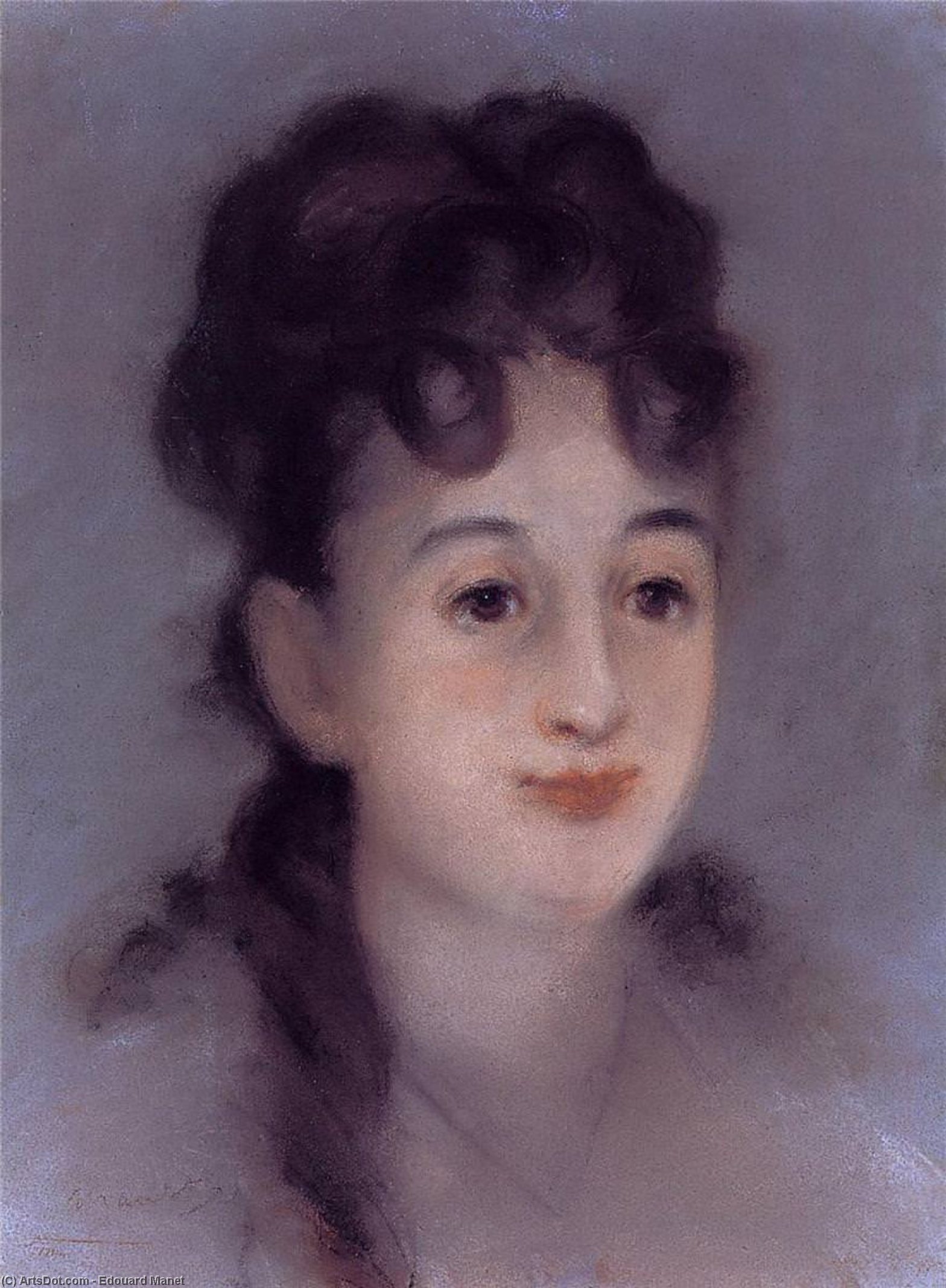
Eva Gonzales, painted in 1878 by Édouard Manet, exemplifies Impressionist art with its soft pastel hues and subtle portrayal of Parisian womanhood. Influenced by Berthe Morisot’s friendship and Manet's meticulous technique—revealed through x-rays—the painting showcases his dedication to capturing genuine emotion and detail. Discover more about Manet’s legacy at ArtsDot.com.
Eva Gonzales: A Portrait of Quiet Confidence Amidst Impressionist Innovation
Édouard Manet’s “Eva Gonzalès,” completed in 1878, stands as a cornerstone of Impressionism—a movement that irrevocably altered the course of Western art history. More than just a depiction of a woman at work, it's a carefully constructed meditation on femininity, artistic ambition, and the subtle tensions inherent within Parisian society during its Belle Époque era.
- Subject Matter: The painting portrays Eva Gonzalès, a young artist who captivated Manet’s attention with her beauty and talent. Unlike many portraits of women at the time—often idealized or overtly sensual—Gonzalès is presented in an unassuming pose, absorbed in her artistic endeavors. She sits before a canvas depicting flowers, symbolizing creativity and blossoming potential.
- Style & Technique: Manet’s masterful use of pastel on paper exemplifies Impressionist principles. Loose brushstrokes create a shimmering surface texture that captures the diffused light of the studio—a deliberate departure from the polished surfaces favored by academic painters. The artist meticulously rendered Gonzalès's facial features, emphasizing her gaze and conveying an aura of serene contemplation.
- Historical Context: Painted during the Second Impressionist Salon in Paris, “Eva Gonzalès” arrived at a time when artistic conventions were fiercely debated. Manet’s decision to portray Gonzalès dressed modestly—working on her own painting—challenged prevailing societal expectations regarding women's roles and artistic pursuits. It served as a subtle rebuke to the rigid standards of the Academy and championed the freedom of expression that characterized Impressionism.
- Symbolism: The inclusion of the easel itself is laden with symbolic significance. Traditionally, easels were reserved for male artists—a deliberate gesture by Manet to assert Gonzalès’s independence and artistic legitimacy. Furthermore, the flowers in her composition represent beauty, freshness, and the transformative power of art.
- Emotional Impact: “Eva Gonzalès” transcends mere visual representation; it evokes a profound sense of intimacy and quiet confidence. The painting invites viewers to contemplate the complexities of female identity within the artistic milieu—a testament to Manet’s ability to capture not only appearance but also inner emotion.
The Staatliche Museen zu Berlin houses an impressive collection of European paintings, including works by Impressionist masters like Monet and Renoir. Examining “Eva Gonzalès” alongside these luminaries illuminates the broader artistic landscape of its era—a period marked by experimentation, innovation, and a fervent desire to depict the world as perceived by ordinary people.
To delve deeper into Manet’s stylistic evolution, explore his other celebrated paintings such as “Woman in Tub,” “Portrait of Faure as Hamlet,” and “Woman Fastening Her Garter.” These works demonstrate Manet's unwavering commitment to capturing the essence of his subjects—often drawing inspiration from everyday life—and solidify his position as a pioneer of modern art.
Consider commissioning a high-quality reproduction of “Eva Gonzalès” to infuse your interior space with the spirit of Impressionism and honor the legacy of one of history’s most influential artists.