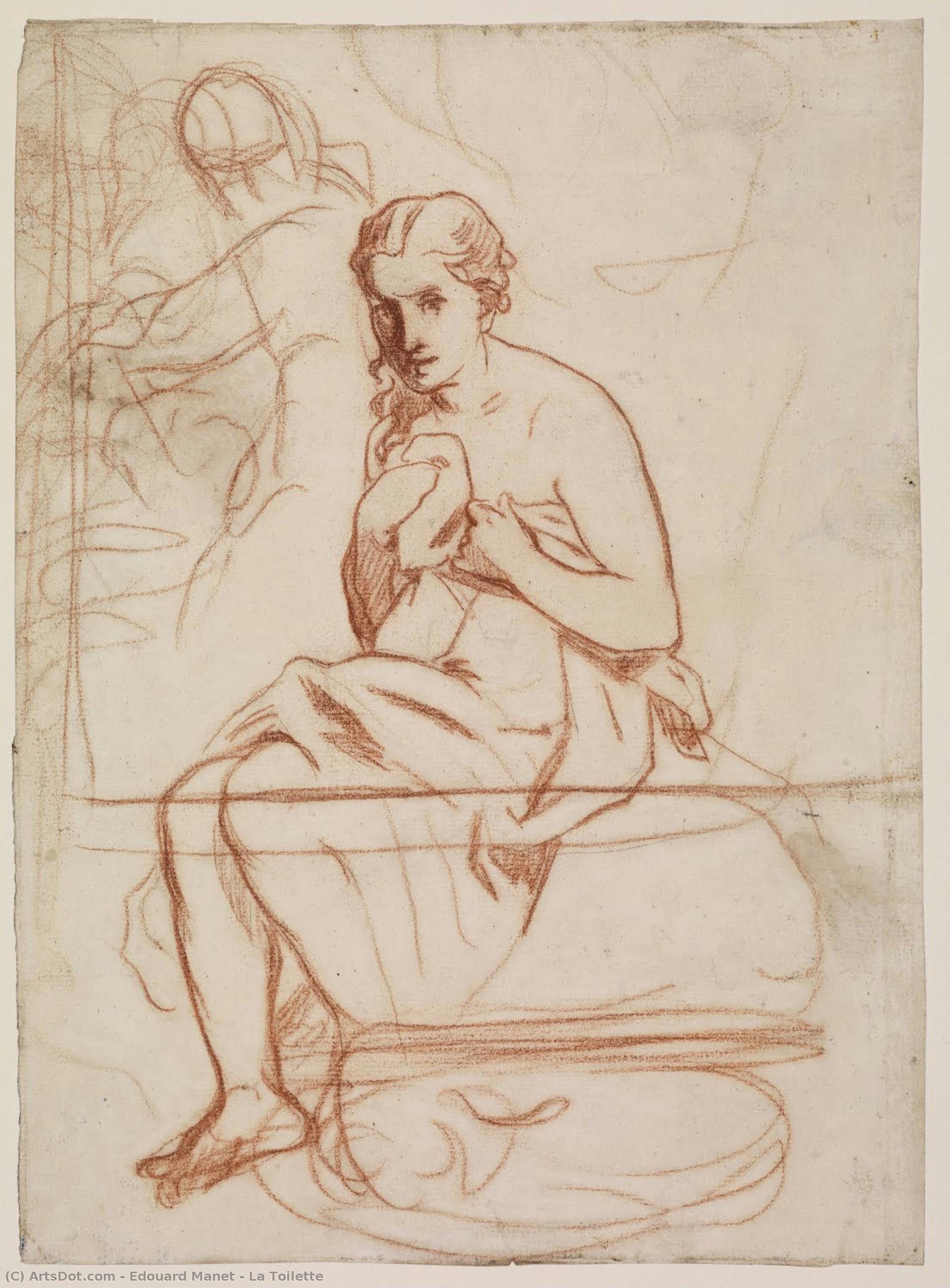
Explore Manet’s ‘La Toilette,’ a pivotal 1860 drawing showcasing a nude figure & innovative techniques. Discover realism, symbolism, and its influence on Impressionism.
Explore Édouard Manet (1832-1883), a pivotal figure bridging Realism & Impressionism. Discover iconic works like 'Le Déjeuner sur l'herbe' and 'Olympia,' and his lasting impact on modern art.
Discover Impressionist & Post-Impressionist masterpieces at The Courtauld Gallery! Explore works by Van Gogh, Manet & more in a stunning London setting. A cultural sanctuary awaits.
A Glimpse into Intimacy: Exploring Manet’s *La Toilette* (1860)
This exquisite drawing, *La Toilette*, offers a captivating prelude to Édouard Manet's later etching of the same name. Created in 1860, it provides a fascinating insight into his artistic process and burgeoning modernist vision. More than just a preparatory sketch, this work stands as a compelling piece in its own right, revealing Manet’s mastery of line and his daring approach to depicting the female nude.
Subject & Composition
The drawing depicts a woman – likely Suzanne Leenhoff, Manet's frequent model and future wife – seated on a pouf, caught in a moment of private ritual. A basin suggests she is bathing or drying herself, yet she isn’t entirely nude nor fully clothed. This *in-between* state is crucial; it’s the precise moment Manet captures, disrupting traditional artistic conventions. Her gesture—clutching fabric to her chest and offering a wary glance—suggests an awareness of being observed, creating a palpable tension between subject and viewer. A loosely sketched servant figure in the background adds context, gathering up discarded garments. The composition is intimate, focusing on the central figure while hinting at a domestic setting.
Technique & Materials
Manet employed red chalk—a drawing medium experiencing a revival after falling out of favor—on paper measuring 29 x 20 cm. His technique is remarkable for its boldness and directness. The outlines were *incised* into the paper, allowing for transfer to the etching plate, but in places, his pressure was so forceful it split the paper itself – a testament to the energy of his hand. This physicality adds texture and depth to the image. The use of red chalk lends warmth and sensuality to the figure, contrasting with the starkness of the white paper.
Historical Context & Artistic Innovation
Manet was actively engaging with art history when he created *La Toilette*. The subject of a bathing nude was well-established in Western art—think of depictions of Bathsheba, Susanna, or Diana. However, Manet subverts the tradition. Unlike those mythological figures who typically avert their gaze, his model meets the viewer’s eye directly. This directness is revolutionary; it acknowledges the viewer's presence and implicates them in a moment of voyeurism. He was pushing boundaries, challenging academic norms, and paving the way for Impressionism by focusing on contemporary life rather than historical or mythological narratives.
Symbolism & Emotional Impact
The drawing’s power lies in its ambiguity and psychological depth. The woman's expression is not one of shame or modesty, but of alertness and a subtle challenge. This challenges the traditional male gaze often present in depictions of nude women. Manet isn’t simply presenting a beautiful figure; he’s exploring themes of intimacy, observation, and the complexities of modern life. *La Toilette* evokes a sense of vulnerability, yet also agency – she is aware, reactive, and not merely an object of passive display.
Influence & Legacy
This drawing served as a crucial step in Manet’s artistic development. It demonstrates his willingness to experiment with technique and subject matter, ultimately influencing the Impressionist movement. The work's exploration of modern life and its frank depiction of the female form continue to resonate with audiences today. A reproduction of *La Toilette* would be a sophisticated addition to any collection, bringing a touch of 19th-century Parisian elegance and intellectual curiosity to an interior space. It’s a piece that invites contemplation and sparks conversation – a true testament to Manet's enduring genius.