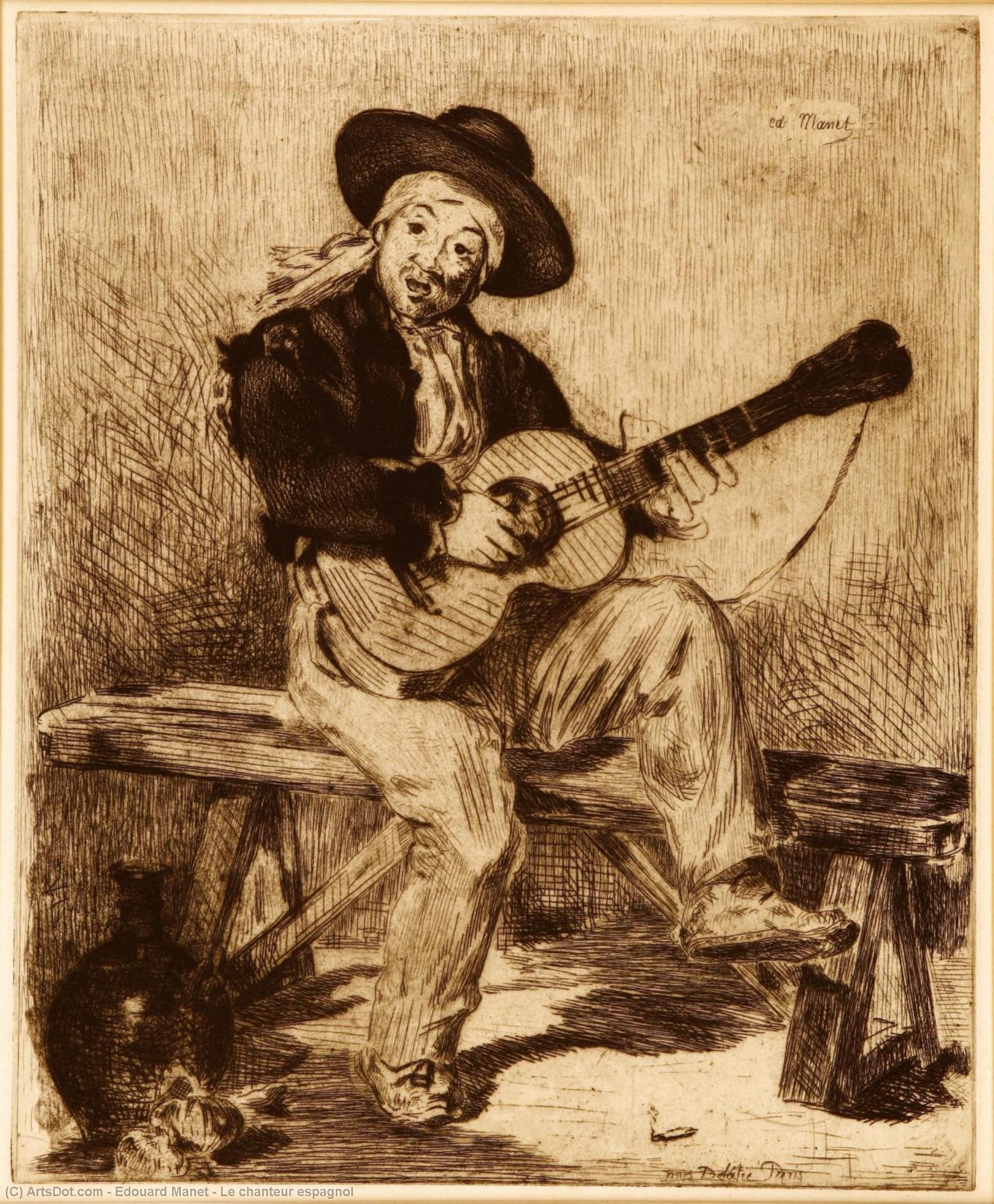
Édouard Manet's 'Le Chanteur Espagnol' captures a Parisian musician with captivating realism and hints at the artist’s revolutionary approach to modern life. Explore this iconic work!
Explore Édouard Manet (1832-1883), a pivotal figure bridging Realism & Impressionism. Discover iconic works like 'Le Déjeuner sur l'herbe' and 'Olympia,' and his lasting impact on modern art.
A Parisian Moment Captured: Édouard Manet’s “Le Chanteur Espagnol”
Édouard Manet's "Le Chanteur Espagnol" (The Spanish Singer), painted in 1860, isn’t merely a portrait; it’s a carefully constructed tableau vivant—a snapshot of Parisian life infused with the burgeoning spirit of modernity. The painting immediately draws the eye to its central figure: a flamenco guitarist, seated on a simple wooden bench, lost in his performance. He's not a grand hero or a noble subject, but an everyday man, a performer offering entertainment within the bustling heart of 19th-century Paris. Manet deliberately eschewed the idealized representations favored by the established art academies, opting instead for a realism that felt both immediate and subtly unsettling. The scene unfolds with a quiet intimacy, yet it’s imbued with a sense of theatricality—a deliberate staging that invites contemplation about the nature of performance and representation itself.
Style and Technique: Bridging Realism and Impressionism
Manet's technique in "Le Chanteur Espagnol" represents a pivotal moment in art history, bridging the gap between Realism and what would later become known as Impressionism. He employs a loose, almost sketch-like brushstroke, prioritizing capturing the *impression* of light and form over meticulous detail. Notice how he renders the guitar—not with photographic precision, but with broad, expressive strokes that convey its shape and texture. The background is deliberately blurred, creating a sense of depth and suggesting an interior space rather than an outdoor setting. This blurring of edges, characteristic of Impressionism, was revolutionary at the time, challenging the traditional academic emphasis on sharp outlines and precise rendering. Manet’s use of color is equally notable; he employs muted tones—browns, grays, and ochres—to create a sense of atmosphere and to subtly highlight the figure in the foreground. The lighting, too, is carefully considered, casting dramatic shadows that add depth and volume to the scene.
Symbolism and Context: A Spanish Vogue
The painting’s subject matter – a Spanish musician – reflects the growing fascination with Spain during the Second Empire in Paris. Spanish art, music, and culture were experiencing a significant vogue, fueled by political tensions between France and Spain, as well as the romanticized image of Spain as a land of passion and exoticism. Manet’s choice to depict a flamenco guitarist is therefore deeply rooted in this cultural context. The guitar itself holds symbolic weight; it represents not just musical performance but also storytelling and emotional expression. Furthermore, observe the details: the left-handed player holding his guitar with an awkward grip, suggesting he's unfamiliar with the instrument – a deliberate choice by Manet to subvert conventional expectations and highlight the subject’s ordinariness. The bottle and bowl are not mere props; they contribute to the overall composition, grounding the scene in a domestic setting and hinting at the musician’s livelihood.
Emotional Resonance: A Moment of Quiet Intensity
Despite its seemingly simple subject matter, “Le Chanteur Espagnol” possesses a remarkable emotional resonance. The guitarist's expression is enigmatic—a mixture of concentration, melancholy, and perhaps even a touch of vulnerability. He’s lost in his music, oblivious to the viewer, inviting us into his private world. The painting doesn’t offer easy answers or grand pronouncements; instead, it presents a fleeting moment of quiet intensity, capturing the essence of human experience—the beauty found in everyday life and the power of art to transport us beyond our own realities. It's this subtle yet profound emotional depth that continues to captivate viewers today, solidifying Manet’s place as one of the most important figures in modern art. A hand-painted reproduction allows you to bring this evocative Parisian scene into your home, a testament to Manet’s genius and a window into a bygone era.