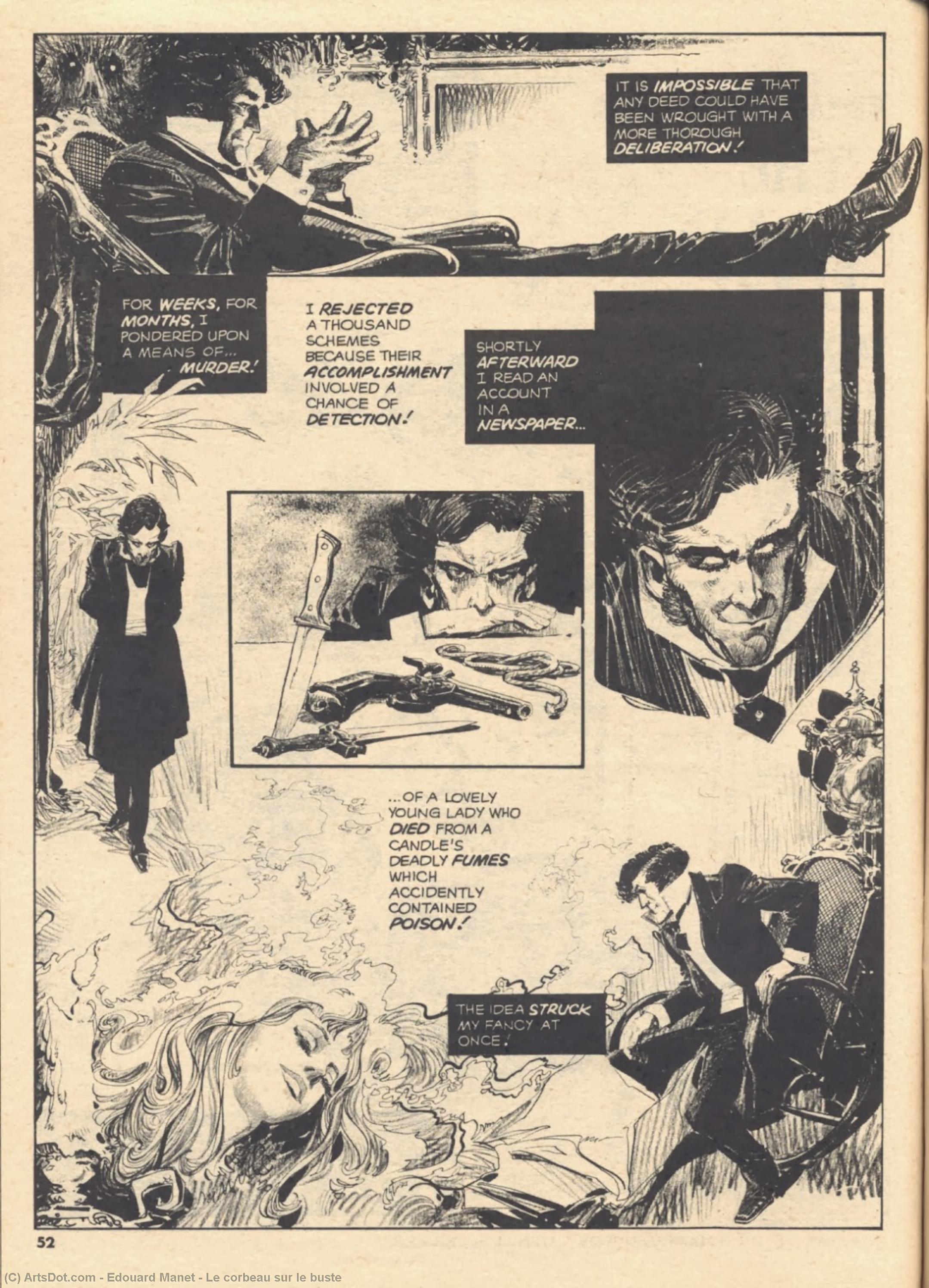
A dramatic black & white illustration by Manet! Explore 'Le Corbeau sur le buste,' a pulp-noir scene of murder & suspense, showcasing intricate line work & chiaroscuro.
Explore Édouard Manet (1832-1883), a pivotal figure bridging Realism & Impressionism. Discover iconic works like 'Le Déjeuner sur l'herbe' and 'Olympia,' and his lasting impact on modern art.
A Shadowy Narrative: Unveiling ‘Le Corbeau sur le Buste’
Édouard Manet's* ‘Le Corbeau sur le Buste’ (The Raven on the Bust) is a striking illustration, far removed from his celebrated Impressionist paintings yet revealing of his broader artistic interests and mastery of visual storytelling. This work, reminiscent of pulp fiction or early comic strips, presents a dramatic scene steeped in mystery and suspense.
Subject & Composition
The artwork depicts a tightly framed narrative centered around a murder plot and its aftermath. Multiple figures are interwoven within speech bubbles and surrounding textual elements, creating a dynamic and claustrophobic composition. A central focus is given to the body of a victim and potential weapons – notably a knife – while expressions of guilt, suspicion, and distress play across the faces of those involved. The presence of a raven perched upon a bust adds an immediate layer of symbolic weight, evoking themes of death, ill omen, and perhaps even poetic justice.
Style & Technique
Departing from Manet’s typically luminous palette, ‘Le Corbeau sur le Buste’ is executed in stark black and white. The style leans heavily into the aesthetics of vintage comic book panels or newspaper clippings. Line work is paramount, defining forms with precision and creating a strong sense of graphic impact. Hatching and cross-hatching are employed to build depth, texture, and dramatic shadows – a technique reminiscent of chiaroscuro, though adapted for a more illustrative purpose. The flattened perspective contributes to the overall feeling of immediacy and heightened drama.
Historical Context & Influences
While Manet is best known as a pivotal figure in the transition from Realism to Impressionism, his artistic curiosity extended beyond these movements. This illustration demonstrates an engagement with contemporary visual culture – specifically, the burgeoning world of serialized storytelling and graphic imagery that was gaining popularity in the 19th century. It’s plausible he was influenced by illustrated newspapers or early detective fiction which were becoming increasingly prevalent during his lifetime. Manet's willingness to experiment with different styles and subject matter underscores his innovative spirit.
Symbolism & Emotional Impact
The raven itself is a potent symbol, drawing upon literary traditions – most notably Edgar Allan Poe’s famous poem “The Raven” – to represent grief, loss, and the haunting presence of death. The bust it perches upon could symbolize intellect or authority, now overshadowed by tragedy. The overall effect is one of unease and suspense. The dramatic lighting, angular shapes, and dynamic composition all contribute to a palpable sense of tension, drawing the viewer into the unfolding narrative.
For Collectors & Interior Designers
‘Le Corbeau sur le Buste’ offers a unique opportunity to acquire a piece that showcases a lesser-known facet of Manet's artistic range. A high-quality reproduction would be particularly striking in interiors seeking a touch of vintage drama, noir aesthetic, or intellectual intrigue. Its monochrome palette lends itself well to both modern and traditional settings, providing a sophisticated focal point for living rooms, studies, or libraries. The artwork’s narrative quality invites contemplation and sparks conversation, making it an engaging addition to any art collection.