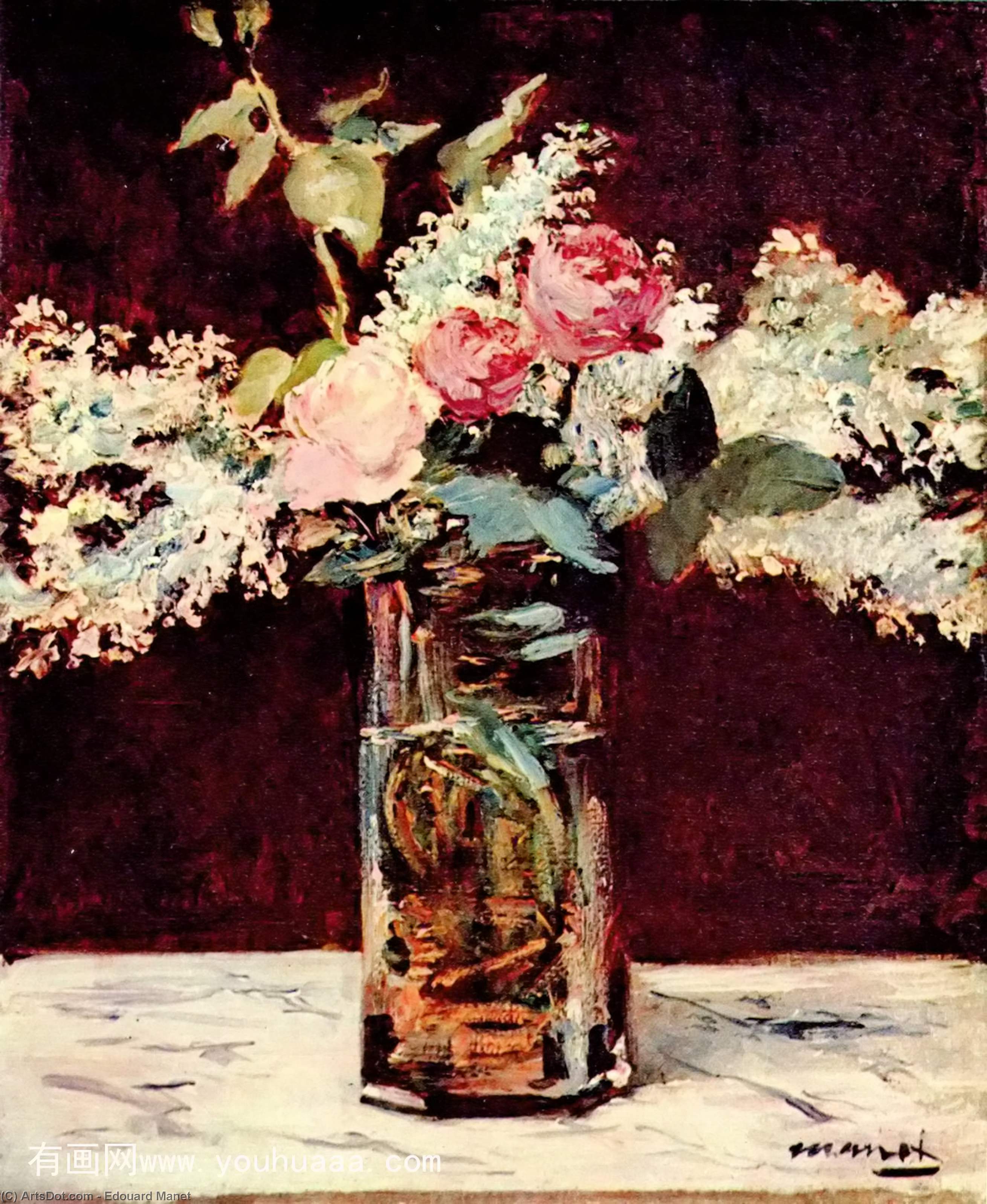
A Moment Frozen in Time: The Allure of Lilac and Roses
Edouard Manet's Lilac and Roses, a captivating still life created in 1883, isn’t merely a depiction of flowers; it’s an invitation to pause, to breathe, and to contemplate the quiet beauty of everyday existence. This painting, rendered with a remarkable sensitivity to light and color, stands as a testament to Manet's pivotal role in bridging the gap between Realism and Impressionism – a transition that fundamentally reshaped the course of modern art. The scene unfolds simply: a humble table serves as the backdrop for a vase brimming with an assortment of blossoms—lilacs and roses—their delicate forms bathed in a soft, diffused light. Yet within this apparent simplicity lies a profound depth, inviting viewers to lose themselves in the tranquil atmosphere Manet so masterfully evokes.
Manet’s genius lay not just in his ability to capture the outward appearance of objects but also in conveying their inherent qualities—their fragrance, texture, and fleeting beauty. The brushstrokes are loose and suggestive, prioritizing the impression of light and color over precise detail. Notice how he uses subtle variations in tone to create a sense of volume and depth within the arrangement, making each flower appear almost tangible. The muted palette – predominantly soft pinks, whites, and grays—contributes significantly to the painting’s serene mood, reminiscent of a hazy summer afternoon.
Impressionism's Embrace: Light, Color, and Atmosphere
Lilac and Roses is firmly rooted in the principles of Impressionism, an artistic movement that sought to capture the fleeting effects of light and atmosphere. Manet, alongside Claude Monet and Pierre-Auguste Renoir, rejected the academic conventions of their time—the meticulous detail, dark palettes, and historical or mythological subjects favored by the established Salon. Instead, they focused on painting *en plein air* (outdoors), directly observing the changing qualities of light and color in nature. This approach is vividly evident here; Manet doesn’t attempt to render the flowers with photographic accuracy but rather captures their essence—their vibrancy and transience—through a masterful manipulation of color and light.
The painting's composition, too, reflects Impressionistic sensibilities. The table acts as an anchor, grounding the arrangement while simultaneously creating a sense of depth. The flowers are arranged in a natural, asymmetrical manner, suggesting spontaneity and immediacy. This deliberate lack of rigid structure mirrors the Impressionists’ desire to capture the unposed moments of everyday life.
A Bridge Between Realism and Modernity
Manet's work occupies a fascinating space between Realism and Impressionism—a position that earned him both admiration and criticism during his lifetime. While he initially trained in the academic style, influenced by artists like Couture and Velázquez, he quickly began to challenge established conventions, depicting modern life with unprecedented honesty and directness. Lilac and Roses exemplifies this transitional phase; it retains a certain degree of realism in its depiction of the flowers but is infused with an Impressionistic sensibility—a focus on light, color, and atmosphere that anticipates the radical innovations of later artists.
His influence extends far beyond his own time. Artists like Vincent van Gogh, who also explored still life painting during his Parisian years, owe a debt to Manet’s pioneering approach. Van Gogh's vibrant colors and expressive brushstrokes—particularly in works such as *Sunflowers* – can be seen as a direct response to Manet’s challenge to traditional artistic conventions. Manet’s legacy lies not only in the paintings he created but also in the way he opened up new possibilities for artists who followed.
A Timeless Masterpiece: Reproduction and Beyond
ArtsDot is proud to offer meticulously crafted hand-painted reproductions of Lilac and Roses, allowing you to bring this iconic artwork into your home or office. Our skilled artisans replicate Manet’s delicate brushwork and nuanced color palette with exceptional precision, ensuring that your reproduction captures the painting's original beauty and emotional impact. Whether you are an art enthusiast, a collector, or simply seeking a stunning piece of décor, our reproductions provide a faithful representation of this timeless masterpiece.
For further exploration of Manet’s artistic journey and his profound influence on modern art, we encourage you to visit Edouard Manet: Lilac and Roses on ArtsDot. Additionally, the Staatliche Museen zu Berlin houses a remarkable collection of European paintings from the 13th to the 18th centuries, offering further insights into the artistic context surrounding Manet’s work.