A Parisian Rebel: The Life and Art of Édouard Manet
Édouard Manet’s journey from privileged upbringing to celebrated artist wasn't one dictated by ambition, but fueled by an innate fascination with the world around him—a fascination that positioned him squarely at odds with the artistic conventions of his time. Born in 1832 into a respectable Parisian family, his father, Auguste Manet, was a judge known for upholding legal standards and prioritizing stability – aspirations antithetical to the rebellious spirit blossoming within young Édouard. Despite familial expectations favoring naval service or law, Manet’s gaze consistently drifted towards art, commencing formal drawing lessons at eleven and briefly apprenticed under Thomas Couture, whose academic style proved profoundly restrictive. This early rejection of established norms foreshadowed a lifelong crusade against artistic dogma, marking him as an artist determined to portray the realities of modern Parisian life rather than merely imitating past glories.
- Early Influences: Manet’s formative years were marked by exposure to Impressionist ideas circulating amongst avant-garde circles. Artists like Claude Monet and Frédéric Bazille championed a new approach—capturing fleeting moments of light and color—a stark contrast to Couture's meticulous realism.
- Breaking Boundaries: Couture’s insistence on idealized forms clashed violently with Manet’s desire to depict everyday subjects with unflinching honesty. He famously declared, “I don’t paint what I see; I paint what I dream,” encapsulating his artistic philosophy and signaling a decisive break from academic tradition.
Lola de Valence: A Study in Sensuality and Scandal
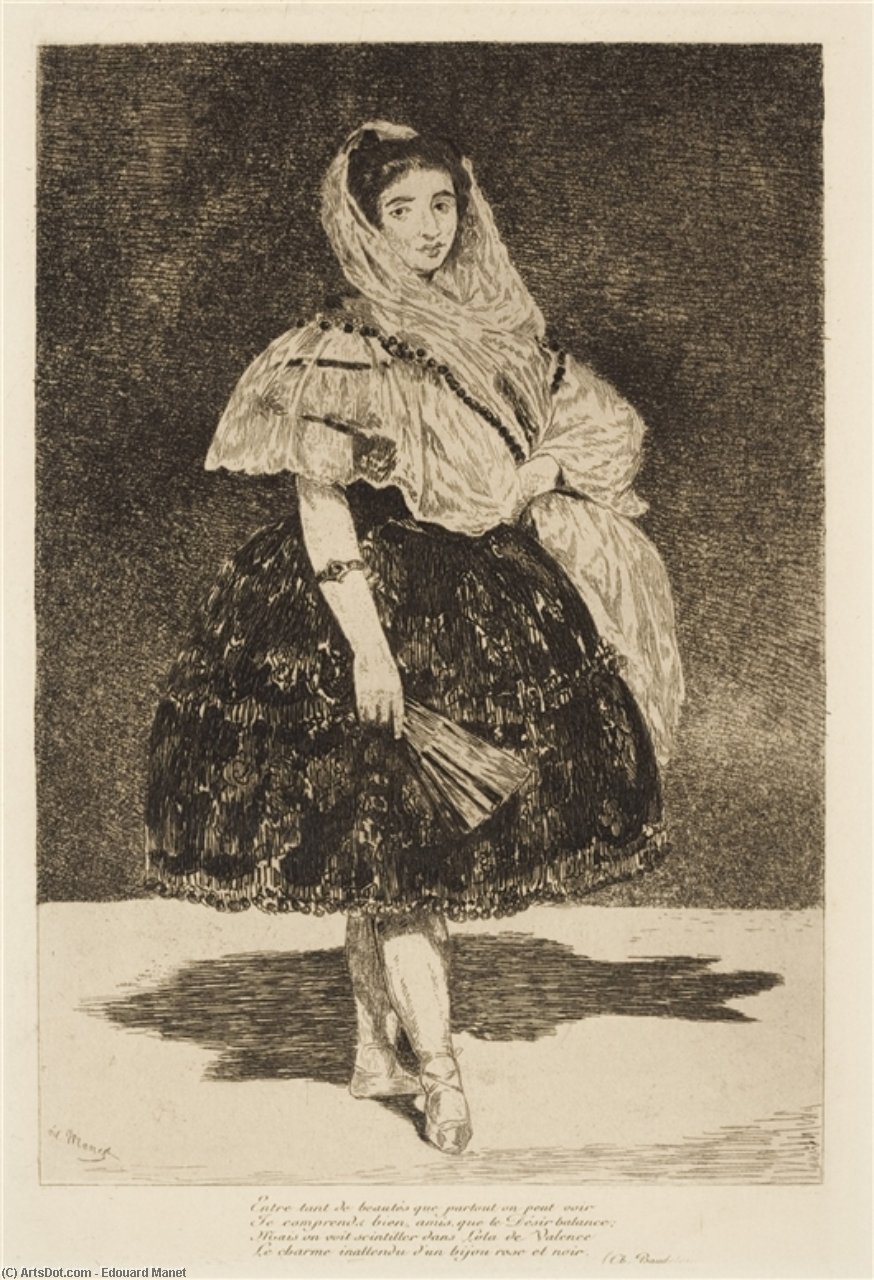
“Lola de Valence” (1863), arguably Manet’s most controversial painting, exemplifies this rebellious spirit. The artwork depicts Lola Montez, a Hungarian opera singer famed for her scandalous affair with Jules Séchard—a relationship that captivated Parisian society and fueled considerable debate regarding morality and artistic license. Manet eschewed traditional portraiture techniques, opting instead for a bold compositional arrangement that prioritized psychological depth over mere visual representation. He utilized a muted palette dominated by browns and ochres, skillfully blending pigments to create an atmosphere of subdued intimacy—yet simultaneously conveying Lola’s alluring gaze and seductive posture.
- Technique: Manet employed a technique reminiscent of Caravaggio—chiaroscuro—to sculpt form and heighten dramatic tension. He meticulously studied Velázquez's mastery of light, applying similar principles to illuminate Lola’s face and torso, emphasizing her sensual presence.
- Symbolism: The painting’s symbolism extends beyond the depiction of Montez herself. The rose and black hues—a deliberate reference to Dante’s Inferno—suggest a duality of desire and torment, reflecting the complexities of Lola's life and hinting at the darker side of human experience.
Reception and Legacy: Challenging Artistic Conventions
Upon its debut at the Salon of 1863, “Lola de Valence” provoked outrage among critics who deemed it vulgar and disrespectful. They denounced Manet’s disregard for academic standards and accused him of exploiting Lola Montez's notoriety for artistic gain. Despite vehement opposition from established figures within the art world, Manet steadfastly defended his vision—arguing that he was striving to elevate painting beyond mere imitation and toward a more truthful representation of human emotion. This courageous stance cemented Manet’s reputation as a pioneer of Impressionism and irrevocably altered the trajectory of modern art.
A Timeless Exploration of Desire and Perception
“Lola de Valence” continues to resonate with audiences today, serving as a testament to Manet's unwavering commitment to artistic innovation. Its masterful use of light and shadow, coupled with its psychologically astute portrayal of Lola Montez—a woman simultaneously alluring and tormented—remains profoundly evocative. More than just a depiction of a scandalous affair, the painting represents an enduring exploration of desire, perception, and the transformative power of art—inspiring artists and collectors alike to embrace boldness and challenge conventional boundaries in their own creative endeavors.