The Enigmatic Allure of "Nana"
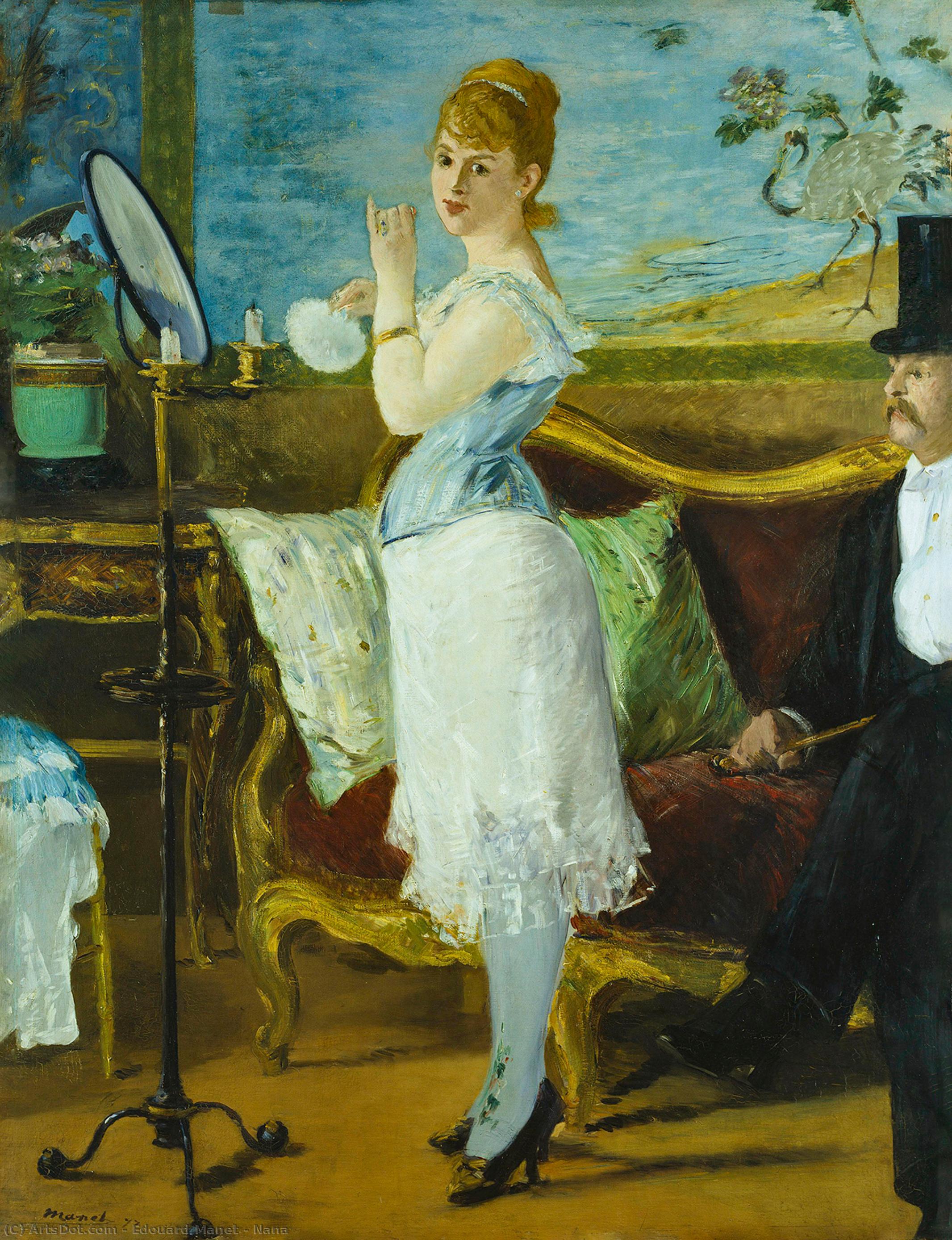
"Nana," painted by Édouard Manet in 1877, is a captivating masterpiece that invites viewers into an intimate and elegantly composed scene. This artwork exemplifies Manet's unique blend of Realism and Impressionism, capturing a moment of quiet contemplation between two figures in what appears to be a private boudoir or dressing room.
A Glimpse into 19th-Century Paris
Manet, a pivotal figure in the transition from Realism to Impressionism, created "Nana" during a period of significant artistic evolution. The painting reflects the vibrant social and cultural landscape of 19th-century Paris, where modern life and traditional values often collided. Manet's choice of subjects from contemporary society, rather than historical or mythological themes, was revolutionary for his time.
Composition and Technique
The composition of "Nana" is both balanced and dynamic. The central figure of the woman, dressed in a light blue bodice and white lace skirt, draws immediate attention. Her elegant updo and delicate jewelry add to her refined appearance. The man seated on the couch, holding a cane and wearing formal attire, provides a counterpoint to her presence. The large mirror in the background reflects part of the room, adding depth and complexity to the scene.
Manet's technique is characterized by its detailed rendering combined with visible brushwork. The use of warm tones such as golds, browns, and reds, contrasted with cooler blues and whites, creates a rich and vibrant color palette. The interplay of light and shadow, particularly from the window on the left, adds dimension and life to the figures and their surroundings.
Symbolism and Narrative
The subject matter of "Nana" suggests a moment of intimacy or contemplation between the two figures. The woman's action of examining a small object could symbolize curiosity or introspection, while the man's formal attire and cane might indicate his status or role in the scene. The mirror's reflection adds a layer of symbolism, possibly representing self-reflection or the duality of appearances.
Emotional Impact
"Nana" evokes a sense of elegance and intrigue, inviting viewers to ponder the relationship between the figures and the narrative implied by their actions. The detailed depiction of fabrics, textures, and the overall atmosphere creates an immersive experience that resonates with art lovers and collectors alike.
Why Choose This Reproduction?
For interior designers and art enthusiasts seeking to add a touch of sophistication and historical depth to their spaces, a high-quality reproduction of "Nana" is an excellent choice. The painting's rich color palette and intricate details make it a striking focal point in any room. Whether placed in a living area, study, or gallery, this artwork will inspire conversation and admiration.
At ArtsDot.com, we offer meticulously crafted reproductions that capture the essence and beauty of Manet's original work. Our hand-painted replicas are created with attention to detail, ensuring that every brushstroke and color nuance is faithfully reproduced. Elevate your space with a timeless piece of art that reflects the elegance and innovation of 19th-century Paris.