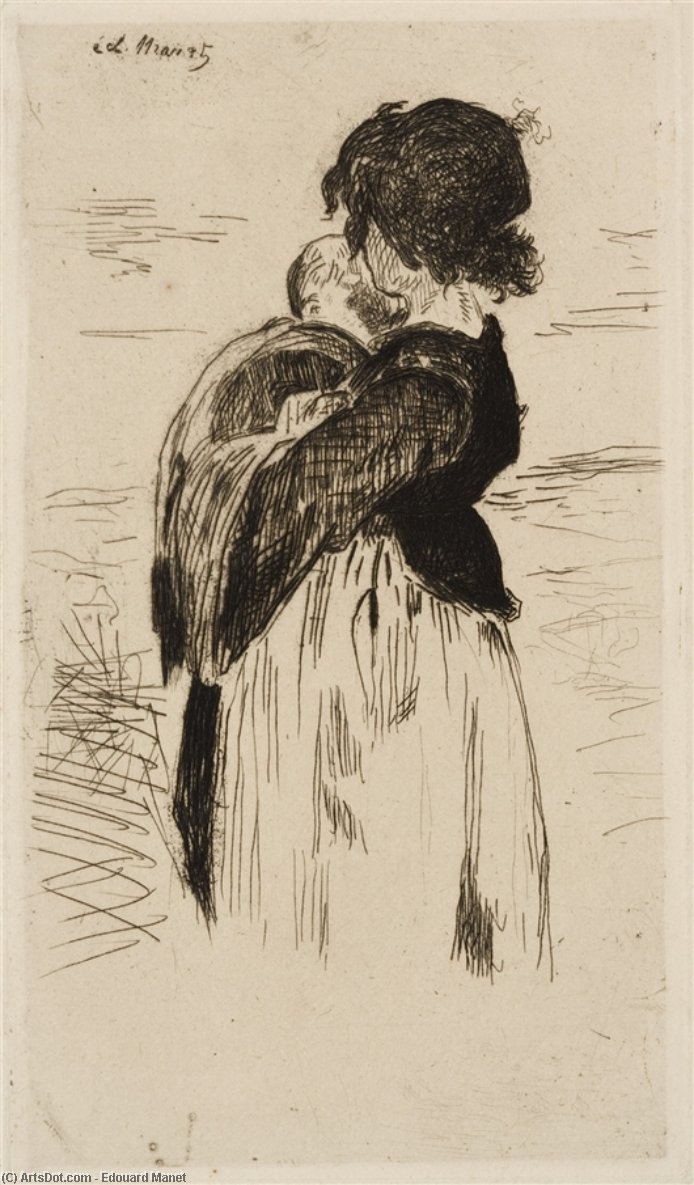
Pasiphae, Chant de Minos: A Fragment of Myth Revisited
Édouard Manet’s “Pasiphae, Chant de Minos,” completed in 1863, stands as a pivotal moment in the burgeoning Impressionist movement and a daring reimagining of Greek mythology. More than just a depiction of legend—the tale of Pasiphae, Queen of Crete who seduced her father, King Minos, and birthed Asterion, the bull-headed son—it’s an exploration of desire, transgression, and the unsettling beauty found in confronting taboo subjects. The painting captures a scene from Sophocles' tragedy, where Pasiphae observes Asterion roaming freely within the palace walls, a stark contrast to the rigid formality expected of royal courts.
- Subject Matter: Manet eschews traditional heroic narratives, opting instead for an intimate portrayal of a queen’s gaze upon her monstrous offspring. This deliberate choice reflects the artist's fascination with capturing everyday life and psychological states—a hallmark of Impressionism’s rejection of academic idealism.
- Style & Technique: Executed in oil on canvas, “Pasiphae” exemplifies Manet’s pioneering approach to painting. Unlike his predecessors who meticulously blended colors to achieve smooth tonal gradations, Manet employed loose brushstrokes and visible pigment marks—a technique championed by Impressionists like Monet and Renoir—to convey immediacy and vibrancy. The muted palette contributes to the melancholic mood of the scene, emphasizing Pasiphae’s contemplative sorrow rather than grand spectacle.
Historical Context & Artistic Influences
The painting emerged during a period of intense artistic debate within Paris. The Salon of 1863 was dominated by academic painters who adhered to strict conventions regarding subject matter and style, favoring idealized depictions of classical mythology. Manet’s audacious presentation—a nude woman observing a bull-headed creature—provoked outrage from the establishment and fueled discussions about the role of art in reflecting contemporary society. However, it also garnered admiration from younger artists who recognized Manet's innovative spirit and his willingness to challenge artistic dogma. His gaze was heavily influenced by Caravaggio’s dramatic chiaroscuro – the stark contrast between light and dark – which he skillfully utilized to sculpt form and heighten emotional impact. Velázquez’s masterful use of perspective and realism served as another crucial inspiration, guiding Manet's commitment to portraying subjects with unflinching honesty.
- Symbolism: The bull’s head represents the monstrous offspring of Pasiphae and Minos—a symbol of primal instinct and aberrant beauty. Its presence disrupts the idealized realm of myth, forcing viewers to confront uncomfortable truths about desire and transgression.
- Emotional Impact: Manet's masterful composition conveys a palpable sense of melancholy and contemplation. The woman’s gaze is fixed on Asterion with an expression of profound sadness—a poignant reflection on the consequences of defying societal norms and embracing forbidden passions.
Legacy & Influence
“Pasiphae, Chant de Minos” irrevocably altered the trajectory of art history. It signaled the definitive break from academic tradition and ushered in the era of Impressionism—a movement that prioritized capturing fleeting moments of sensory experience over meticulous representation. Manet’s bold stylistic choices paved the way for subsequent artists to explore unconventional subjects and experiment with innovative techniques, cementing his place as one of the most influential figures in modern art. Its enduring appeal lies not only in its captivating visual aesthetic but also in its profound psychological depth—a testament to Manet's genius in conveying emotion and challenging viewers to confront uncomfortable realities.
Reproductions & Decorative Applications
A high-quality reproduction of “Pasiphae, Chant de Minos” can transform any interior space into a haven of artistic contemplation. Its muted palette and expressive brushstrokes lend themselves beautifully to minimalist décor schemes—particularly in bedrooms or living rooms seeking a touch of sophistication and emotional resonance. Consider framing it in a neutral tone to maximize its impact, allowing the painting’s melancholic beauty to speak for itself. ArtsDot offers exceptional reproductions that faithfully capture Manet's artistic vision, bringing this iconic masterpiece into your home.