Discover Édouard Manet (1832-1883), a key figure in the shift from Realism to Impressionism. Explore 'Le Déjeuner sur l'herbe,' 'Olympia,' & his modern art legacy.
Polichinelle: A Portrait of Performance and Paradox
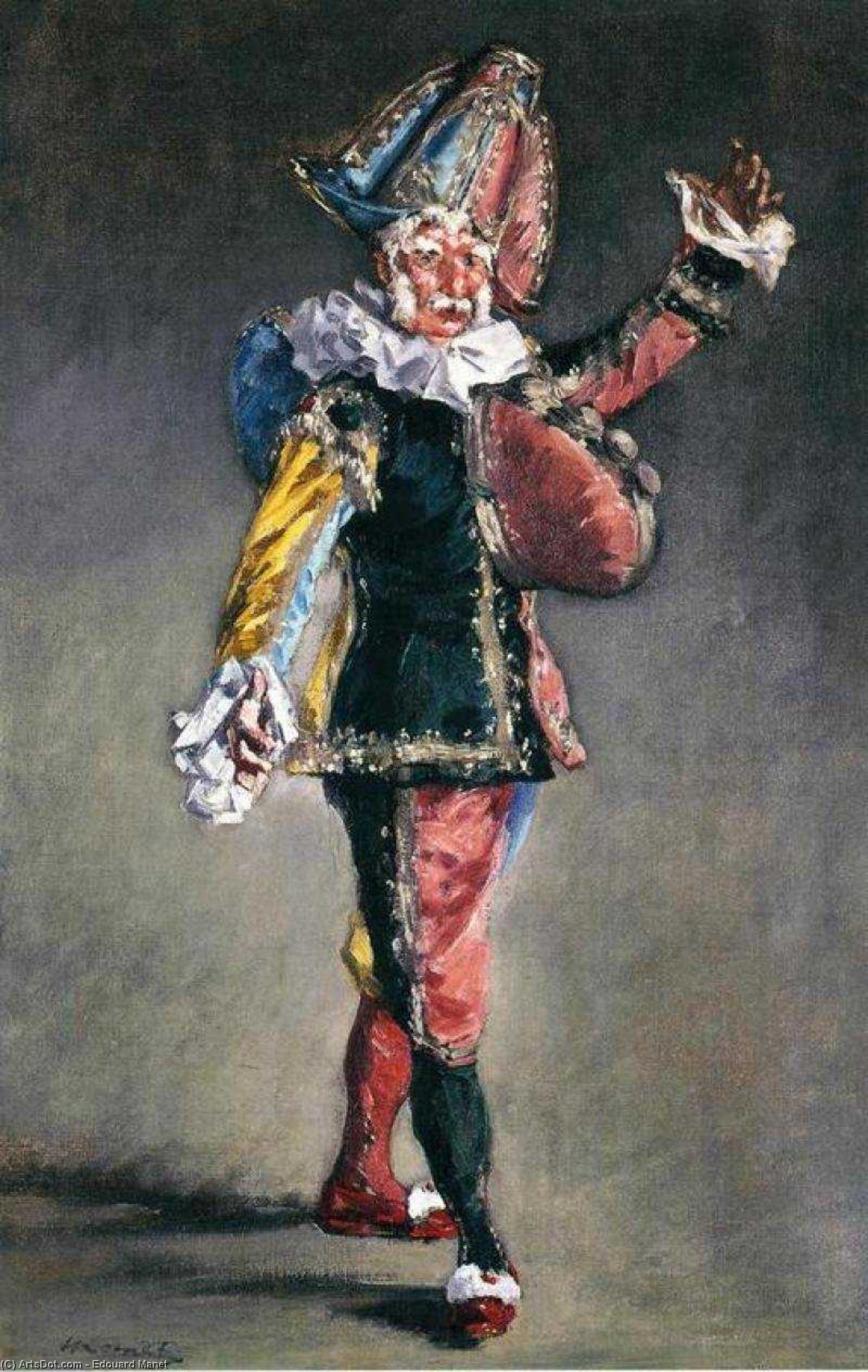
Édouard Manet’s “Polichinelle,” completed in 1873, stands as a cornerstone of Impressionism while simultaneously embodying the spirit of Realism. More than just a depiction of a performer—a clown or jester—the painting delves into themes of identity, social commentary, and the elusive nature of artistic representation itself. Measuring 50 x 34 cm, this oil on canvas exemplifies Manet’s meticulous attention to detail and his masterful manipulation of light and color.
Composition and Technique: Capturing Fleeting Moments
The scene unfolds against a dark backdrop that serves to heighten the vibrancy of the central figure—a man dressed in flamboyant attire. His outstretched arms hold aloft a ball and a hat, gestures characteristic of theatrical performance yet imbued with an unsettling stillness. Manet’s brushstrokes are loose and expressive, prioritizing capturing the immediacy of observation over precise imitation. He employs a technique reminiscent of Velázquez, utilizing subtle gradations of color to create depth and texture—particularly noticeable in the folds of the costume and the man's face.
Historical Context: Challenging Academic Conventions
Painted during a period of significant artistic upheaval, “Polichinelle” reflects Manet’s rejection of the rigid formalism championed by the Académie des Beaux-Arts. Influenced by artists like Hals and Caravaggio, he sought to portray subjects with honesty and psychological insight—a deliberate departure from the idealized depictions favored by his contemporaries. The painting's subject matter – a performer – resonated deeply with Manet’s fascination for capturing the everyday realities of Parisian life.
Symbolism: Isolation and Performance
Beyond its visual beauty, “Polichinelle” carries symbolic weight. The man’s solitary pose suggests an alienation from society—a feeling prevalent in Impressionist circles grappling with anxieties about modernity. Simultaneously, his theatrical gestures convey a sense of performance, highlighting the constructed nature of identity and challenging viewers to consider how appearances conceal deeper truths. The dark background amplifies this effect, emphasizing the figure's presence as if illuminated by an inner radiance.
Legacy: An Icon of Impressionist Art
"Polichinelle" resides in the Staatliche Museen zu Berlin, a testament to its enduring artistic significance. Its influence extends far beyond the confines of the 19th century, inspiring artists across generations who strive to capture fleeting moments and explore complex psychological landscapes. Reproductions of this masterpiece offer an opportunity to appreciate Manet’s genius and immerse oneself in the captivating atmosphere of Impressionist art.