A Stage Presence: Édouard Manet’s Portrait of Faure
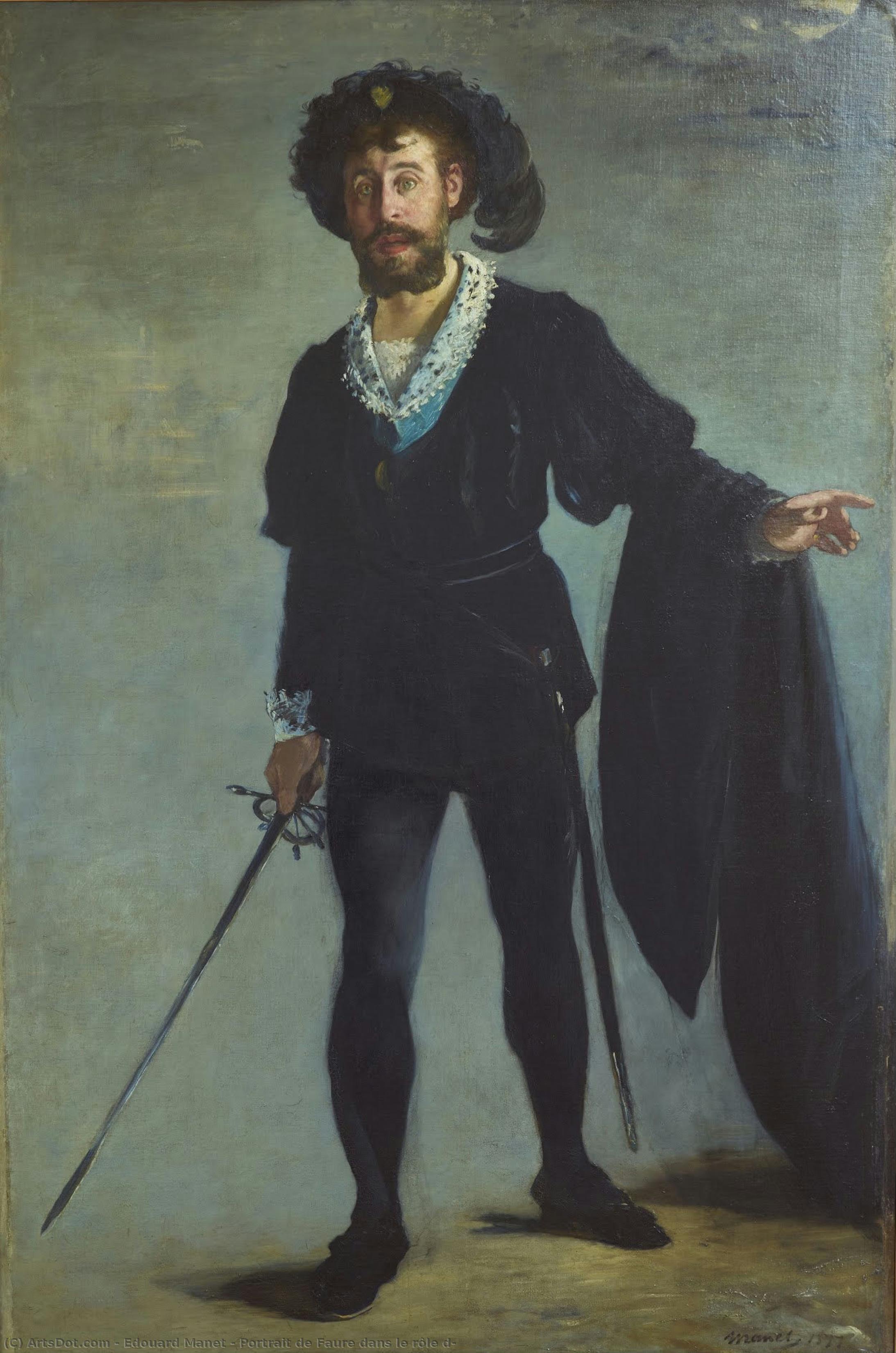
This captivating portrait by Édouard Manet presents a compelling study of Ernest Ange Duez, known professionally as Faure, depicted not in his everyday guise but *in role* – embodying a character from the stage. The painting is a fascinating intersection of realism and theatricality, characteristic of Manet’s innovative approach to portraiture during the mid-19th century.
Subject & Historical Context
Ernest Ange Duez (Faure) was a celebrated French actor renowned for his dramatic performances and expressive delivery. Manet, fascinated by modern life and its figures, chose to portray Faure not as himself, but *as* an actor – specifically, in a role that allowed him to showcase the power of performance and illusion. This choice reflects Manet’s engagement with contemporary Parisian culture, where theatre held significant social importance. The painting dates from a period when Manet was actively challenging academic conventions, seeking new ways to represent the world around him.
Style & Technique
The artwork demonstrates Manet's evolving style, bridging the gap between Realism and Impressionism. While rooted in realistic representation – evident in the detailed rendering of Faure’s costume and features – Manet employs a looser brushstroke and dramatic *chiaroscuro* (the contrast between light and dark) to heighten the emotional impact. The visible impasto—thickly applied paint—particularly on the velvet doublet, cloak, and beard, adds texture and depth, creating a dynamic surface that draws the viewer in. The composition is deliberately focused on Faure, with an indistinct background serving to emphasize his presence and theatrical persona. There's a deliberate flattening of perspective, reminiscent of Renaissance portraiture, yet Manet infuses it with a distinctly modern sensibility.
Symbolism & Interpretation
Faure’s attire – the dark blue velvet doublet, ruffled collar, black cloak, and prominently displayed sword – immediately suggests nobility or military authority, hinting at the character he is portraying. The gesture of his extended left arm could be interpreted as an offering, a command, or simply a dramatic flourish typical of stage performance. However, it’s the subject's expression that truly captivates: a subtle blend of dignity and melancholy. This introspective quality suggests a depth beyond mere theatrical display, perhaps hinting at the actor’s own contemplation of his role or the human condition itself.
The sword, while signifying power, also carries connotations of conflict and mortality, adding layers to the painting's symbolic weight.
Emotional Impact & Aesthetic Appeal
“Portrait de Faure dans le rôle d\” is a powerful and evocative work that transcends its subject matter. It’s not simply a portrait of an actor; it’s a meditation on performance, identity, and the complexities of human emotion. The painting's dramatic lighting, rich colors, and expressive brushwork create a visually arresting experience.
Its dignified seriousness mixed with subtle sadness resonates deeply, inviting viewers to contemplate the inner life of the subject and the nature of representation itself. This artwork would be a striking addition to any collection, lending an air of sophistication and intellectual depth to both classic and contemporary interiors.
Key Features for Collectors & Designers
- Artist: Édouard Manet (1832-1883)
- Style: Realism, transitioning towards Impressionism
- Medium: Oil on Canvas
- Mood: Dignified, Melancholic, Dramatic
- Color Palette: Rich blues, blacks, and subtle earth tones