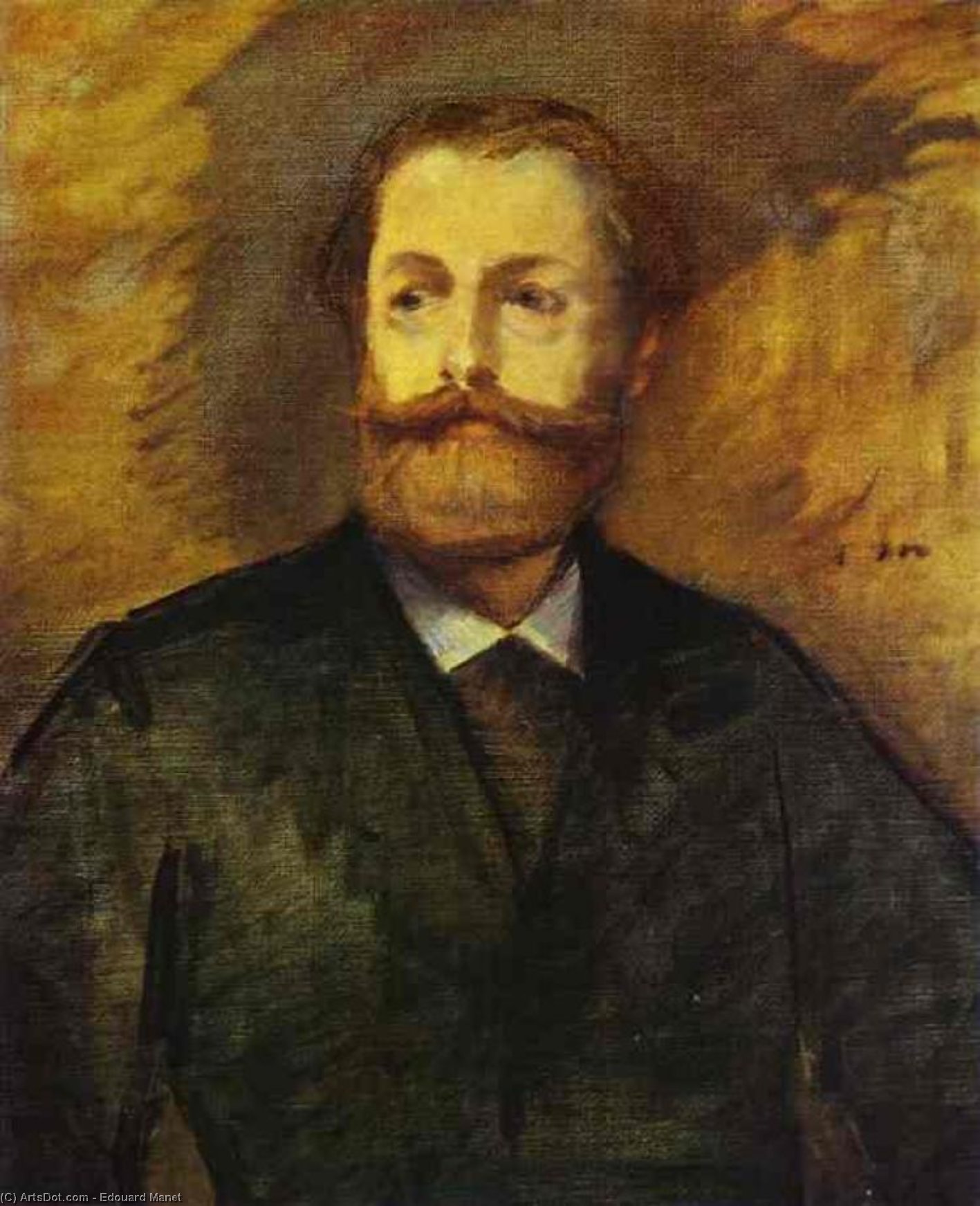
Portrait of Antonin Proust (Study): A Pioneering Vision of Modernity
Édouard Manet’s *Portrait of Antonin Proust (Study)* stands as a cornerstone of Impressionism, encapsulating the artist's revolutionary approach to depicting contemporary life and marking a decisive break from academic conventions. Completed in 1877, this oil on canvas painting transcends mere likeness; it embodies Manet’s masterful manipulation of light and color to convey psychological depth and an understated elegance that continues to resonate with viewers today.
- Subject Matter: The portrait focuses on Antonin Proust, a prominent French diplomat and literary figure, capturing him in a moment of quiet contemplation. Unlike idealized depictions prevalent in academic art, Manet presents Proust as a man of flesh and bone, imbued with palpable presence.
- Style & Technique: Characteristic of Manet’s oeuvre, *Portrait of Antonin Proust (Study)* eschews meticulous detail and smooth tonal transitions—traits deemed unacceptable by the Salon establishment. Instead, he employs loose brushstrokes and a palette dominated by warm yellows and oranges, creating an atmosphere that feels both intimate and subtly luminous. The artist's deliberate rejection of academic precision signaled a fundamental shift toward Impressionistic aesthetics.
- Historical Context: Painted during Manet’s formative years as an Impressionist, this work exemplifies the movement’s ambition to capture fleeting impressions of reality—a departure from historical narratives and mythological allegories favored by earlier generations. It aligns perfectly with Manet's broader exploration of urban life and social dynamics, mirroring the spirit of a burgeoning artistic landscape eager for innovation.
Symbolism & Emotional Resonance
The muted color scheme—primarily yellows and oranges—serves not merely as decorative element but as a conduit for conveying Proust’s character. The warm hues evoke feelings of warmth, sophistication, and perhaps even melancholy, reflecting the complexities inherent in human experience. Furthermore, Manet's subtle portrayal of Proust’s gaze invites contemplation about inner thoughts and emotions—a hallmark of Impressionist psychology.
- The Background: The yellowish-orange backdrop contributes to the painting’s vintage charm and enhances its sense of depth. It subtly contrasts with Proust’s attire, emphasizing his formal demeanor and reinforcing the portrait's connection to a specific historical period.
- Attention to Detail: Despite Manet’s stylistic choices, he meticulously renders Proust’s suit and tie—a testament to his dedication to capturing accurate representations of everyday objects. These details underscore the painting’s realism while simultaneously elevating it beyond mere visual depiction.
Manet's Legacy & Comparative Artworks
Édouard Manet’s *Portrait of Antonin Proust (Study)* stands as a pivotal work in art history, foreshadowing the stylistic breakthroughs that would define Impressionism and influencing countless artists who followed. Its enduring appeal lies in its ability to convey profound emotion through understated technique—a legacy that continues to inspire admiration and scholarly debate. For those seeking inspiration or exploring similar artistic visions, consider examining Gustave Courbet’s *The Stone Breakers*, which similarly championed realism and challenged academic conventions. Alternatively, delve into the contemplative gaze of Gustave Courbet's *Head of Jean Baptiste Faure*—another masterful portrayal capturing a moment of quiet introspection. Finally, appreciate the grandeur of Gustave Courbet: 705px-L°/°27 Origine du monde – an ambitious canvas that embodies Courbet’s commitment to depicting the natural world with uncompromising honesty.