Explore Édouard Manet (1832-1883), a pivotal figure bridging Realism & Impressionism. Discover iconic works like 'Le Déjeuner sur l'herbe' and 'Olympia,' and his lasting impact on modern art.
Explore centuries of art at the Hamburger Kunsthalle! Discover masterpieces by Rembrandt & more across three stunning buildings in Hamburg's historic Altstadt.
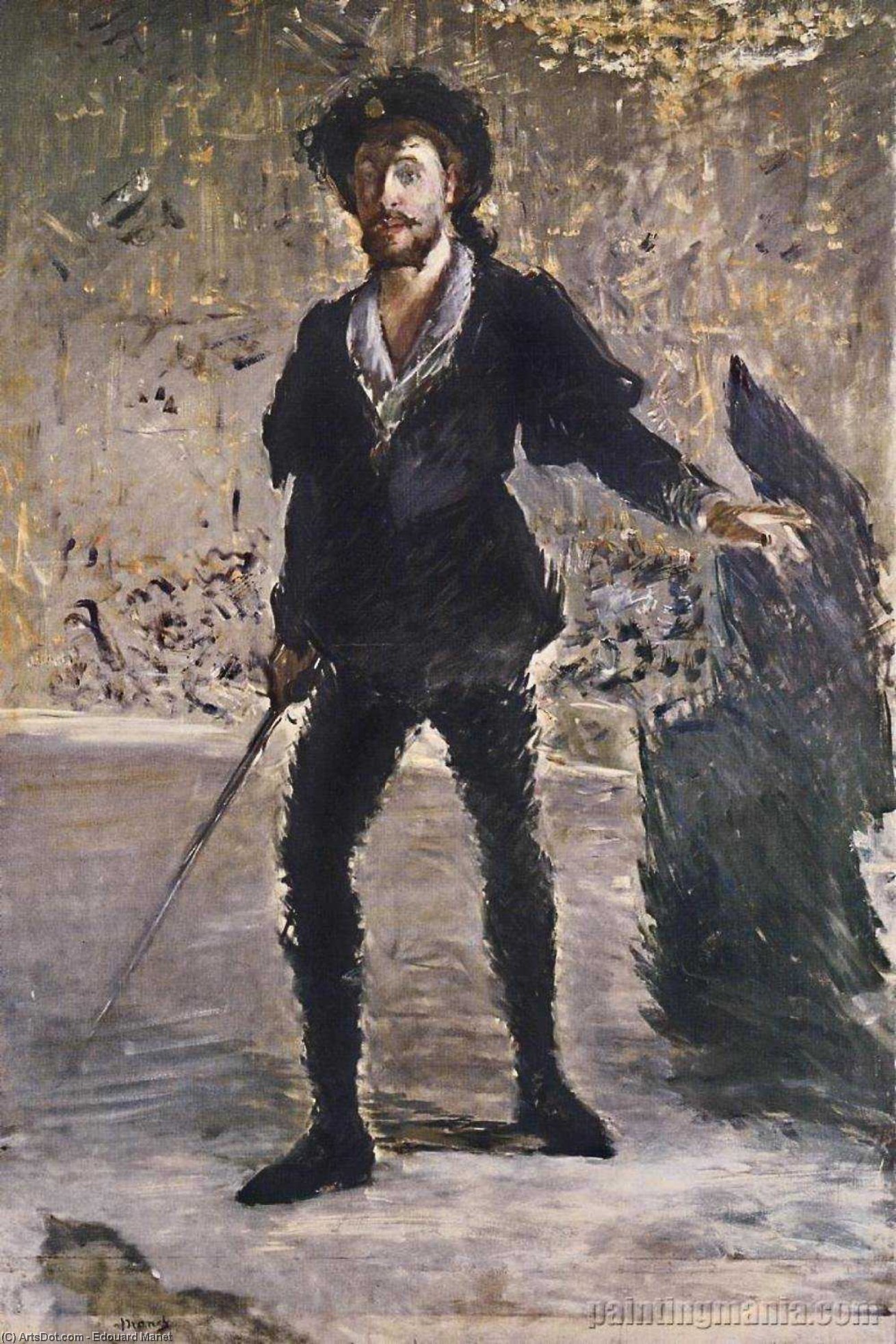
Portrait of Faure as Hamlet
Édouard Manet’s *Portrait of Faure as Hamlet* stands as an arresting intersection of artistic innovation and cultural fascination—a snapshot of Parisian intellectual life captured in pastel on paper, housed at the Hamburger Kunsthalle. Painted in 1877, this artwork isn't merely a likeness of Jean-Baptiste Faure, a celebrated French baritone known for his interpretations of Verdi operas; it’s an audacious reimagining of Shakespeare’s Hamlet, transforming the iconic prince into a subject of portraiture itself. This bold decision cemented Manet’s reputation as a pioneer who challenged conventions and pushed the boundaries of artistic expression.
The Painting's Details
Manet employed pastel—a technique favored for its luminous qualities and ability to blend colors seamlessly—to achieve an ethereal effect that contrasts sharply with the starkness of Faure’s attire. The portrait depicts Faure in a black suit, clutching a sword, positioned against a snowy backdrop populated by indistinct figures. This deliberate compositional choice underscores themes of isolation and dramatic tension, mirroring the psychological complexities inherent in Hamlet's character. The artist meticulously rendered Faure’s facial features with remarkable precision, capturing an expression of intense concentration—a gaze directed outwards as if contemplating the weighty implications of his role. Subtle shading and textural variations contribute to a palpable sense of atmosphere, elevating the portrait beyond mere representation.
Artistic Style and Composition
Manet's stylistic approach aligns closely with Impressionism’s core tenets: prioritizing fleeting impressions over meticulous realism. However, unlike many Impressionists who focused on capturing outdoor scenes, Manet turned inward, exploring the inner landscape of his subject—a daring move that distinguished him from his contemporaries. The pastel medium lends itself beautifully to conveying mood and emotion, mirroring the dramatic spirit of Shakespeare’s play. Furthermore, Manet skillfully utilizes chiaroscuro—the interplay of light and shadow—to sculpt Faure's form and heighten the visual drama. The composition is balanced yet dynamic, drawing the viewer’s eye towards Faure while simultaneously hinting at the broader context of theatrical performance and intellectual discourse.
Historical Context
Manet’s work emerged during a period of significant artistic upheaval in France—the burgeoning Impressionist movement was actively rejecting academic traditions and embracing new visual languages. Artists like Claude Monet and Pierre-Auguste Renoir were experimenting with plein air painting, capturing the immediacy of natural light and color. Manet's *Portrait of Faure as Hamlet* reflects this spirit of experimentation, demonstrating a willingness to challenge established norms and explore unconventional subjects. The painting’s genesis coincided with the revival of interest in Shakespearean drama—a cultural phenomenon that profoundly influenced artistic sensibilities during the Belle Époque.
Relevance and Legacy
More than just a portrait, *Portrait of Faure as Hamlet* embodies Manet's conviction that art could engage with literature and theater, mirroring the intellectual currents of his time. It serves as a testament to Manet’s ability to distill complex ideas into visual form—a feat achieved through masterful technique and astute observation. The painting continues to fascinate viewers today, prompting contemplation on themes of identity, performance, and artistic ambition. Its enduring appeal underscores Manet's position as one of the most influential artists of his era—a visionary who irrevocably altered the course of modern art history. For those seeking inspiration or desiring a stunning reproduction of this masterpiece, explore *Portrait of Faure as Hamlet* alongside other captivating works by Édouard Manet on ArtsDot.com.